
Skip to content
Search

Latest Stories

Follow Us:
Top Stories

Top 5 numbers from the bible of the 2018 election

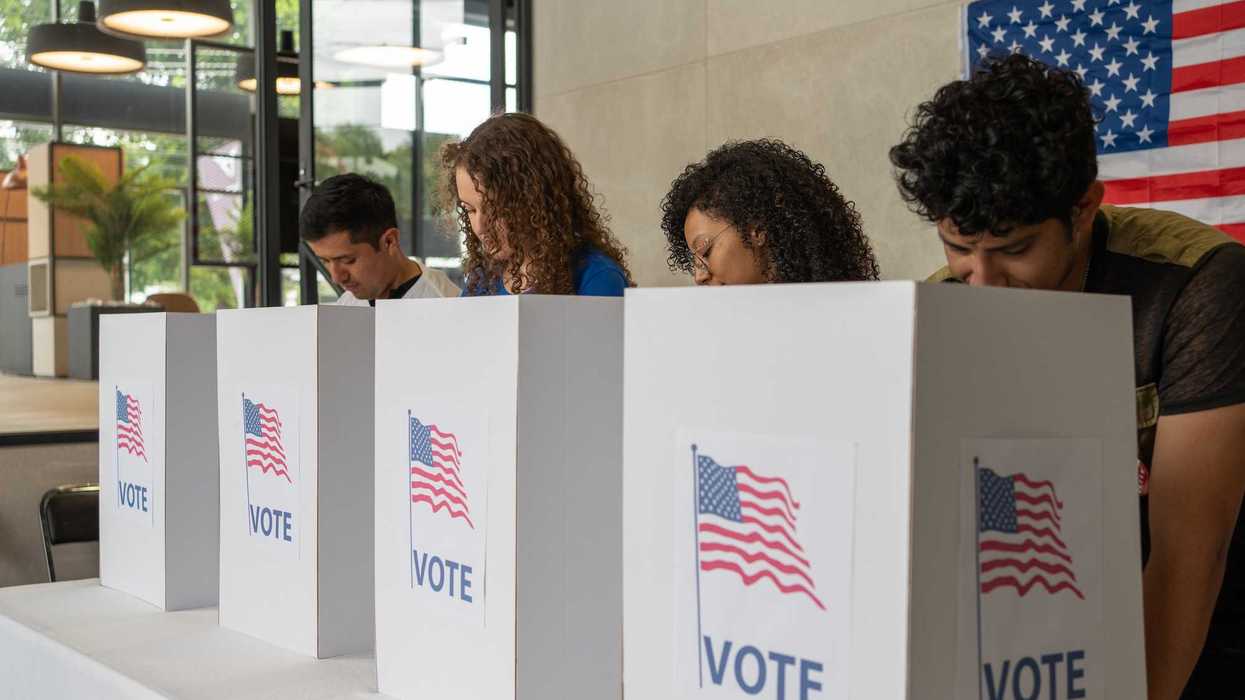
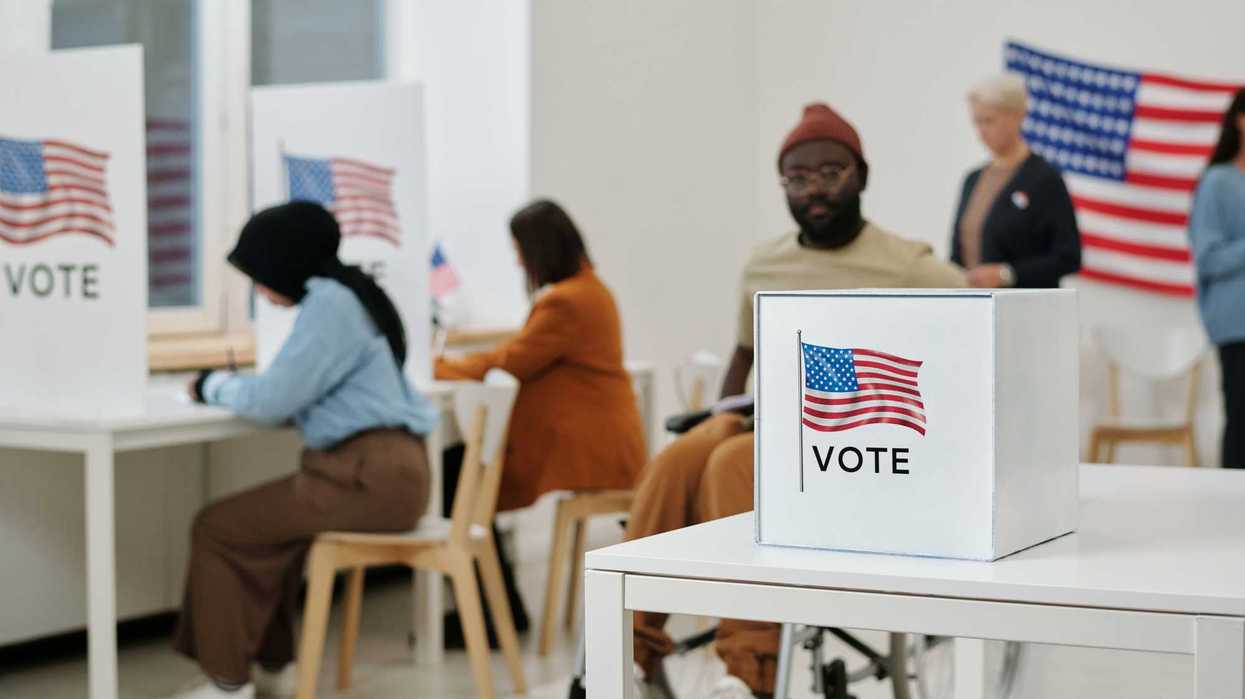
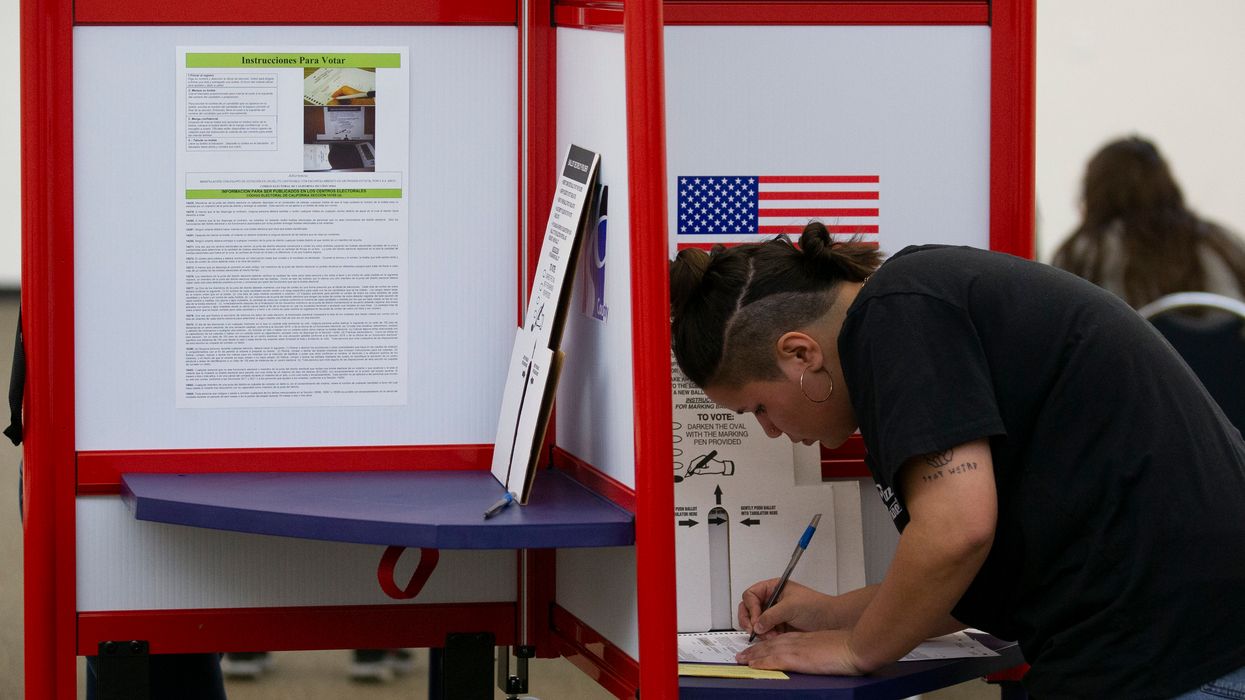
Voter filling out a ballot

A voter fills out her ballot at a Salida, Calif., polling place on Election Day 2018. The 52 percent turnout for the midterm elections far exceeded the 33 percent turnout in 2014.

Alex Edelman/Getty Images

The Election Administration and Voting Survey, published after every federal election since 2004, is the numerical bible of all things electoral.

Clocking in at 251 pages, the newly released report on the 2018 midterm elections doesn't lack for interesting statistical tidbits.


Here then are five of the most interesting nuggets from the report, issued by the Election Assistance Commission.

  • 120 million Americans – 52 percent of voting-age citizens – cast a ballot. That's a huge jump from the 2014 midterms, when turnout was 33 percent.
  • The states with the highest turnout were Minnesota (64.2 percent) and Colorado (63.8) percent. The lowest turnout was in Arkansas (35.8 percent) and Hawaii (38.9 percent).
  • Alaska, Kentucky and the District of Columbia all report having more people on their voter rolls than in the Census estimates of their voting age population – an undeniable sign their records are not up to date.
  • While more than half of Americans who voted did so on Election Day, one-quarter voted by mail and another one-fifth voted in-person at early voting sites.
  • More than 200,000 polling sites were in use on Election Day, staffed by more than 600,000 poll workers. Still, a survey of election officials included in the report found 70 percent stating that it was "very difficult" or "somewhat difficult" to find enough poll workers.


Read More

People voting at voting booths.

A little-known interstate compact could change how the U.S. elects presidents by 2028, replacing the Electoral College with the national popular vote.

Getty Images, VIEW press

The Quiet Campaign That Could Rewrite the 2028 Election

Most Americans are unaware, but a quiet campaign in states across the country is moving toward one of the biggest changes in presidential elections since the nation was founded.

A movement called the National Popular Vote Interstate Compact (NPVIC) is happening mostly out of public view and could soon change how the United States picks its president, possibly as early as 2028.

Keep ReadingShow less
An illustration of a paper that says "Ranked-Choice" with options listed below.
Image generated by IVN staff.

Why Mathematicians Love Ranked Choice Voting

The Institute for Mathematics and Democracy (IMD) has released what may be the most comprehensive empirical study of ranked choice voting ever conducted. The 66-page report analyzes nearly 4,000 real-world ranked ballot elections, including some 2,000 political elections, and more than 60 million simulated ones to test how different voting methods perform.

The study’s conclusion is clear. Ranked choice voting methods outperform traditional first-past-the-post elections on nearly every measure of democratic fairness.

Keep ReadingShow less
Three people looking at a gerrymandered map, with an hourglass in the foreground.
Image generated by IVN staff.

Missouri’s Gerrymander Faces a Citizen Veto, but State Officials Aren't Taking 'No' for an Answer

People Not Politicians (PNP) submitted over 305,000 signatures last week to freeze a congressional gerrymander passed by the Missouri Legislature in September. However, state officials are doing everything they can to pretend this citizen revolt isn’t happening.

“The citizens of Missouri have spoken loudly and clearly: they deserve fair maps, not partisan manipulation,” said PNP Executive Director Richard von Glahn.

Keep ReadingShow less
California’s Governor Race Is a Democratic Nightmare, But There’s One Easy Fix
Photo by Tim Mossholder on Unsplash.

California’s Governor Race Is a Democratic Nightmare, But There’s One Easy Fix

A new Emerson College poll of California’s 2026 governor’s race confirms what many election observers have suspected. California is entering a high stakes primary season with no clear front runners, a crowded field, and an election system where the outcome often depends less on voter preference and more on mathematical luck.

Emerson poll

Keep ReadingShow less