

Skip to content
Search

Latest Stories

Follow Us:
Top Stories

Lawsuit targets restrictive voting laws in Mississippi

Mississippi voting

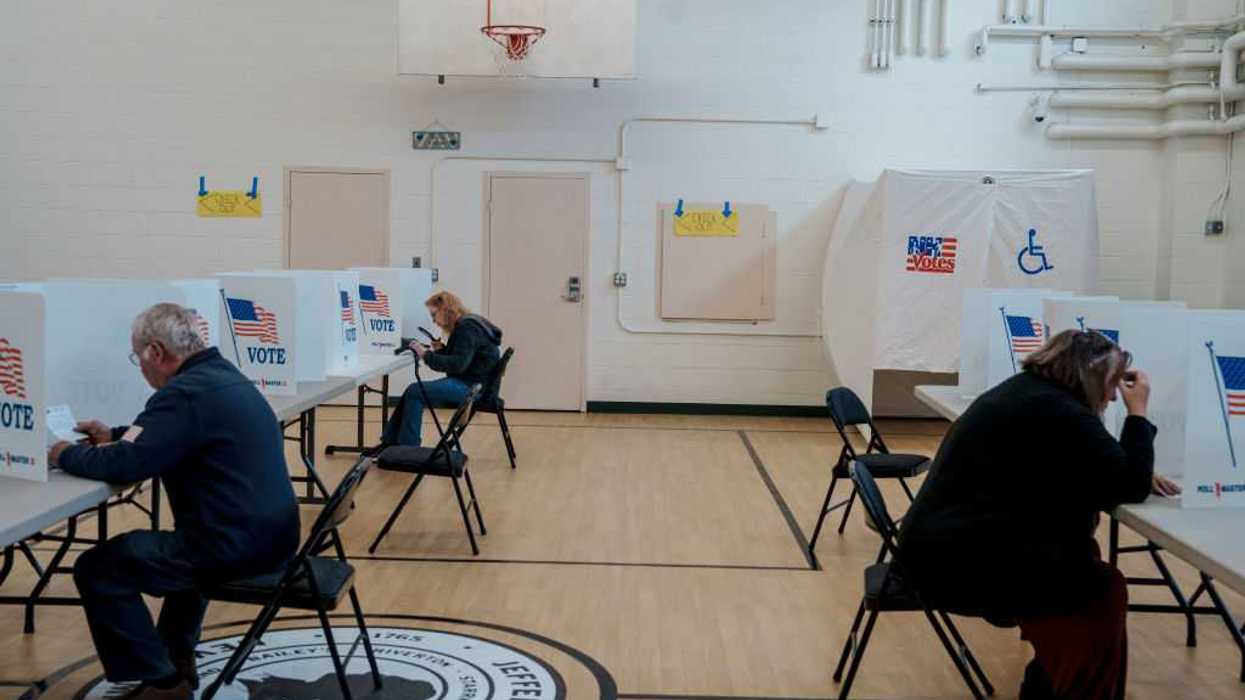
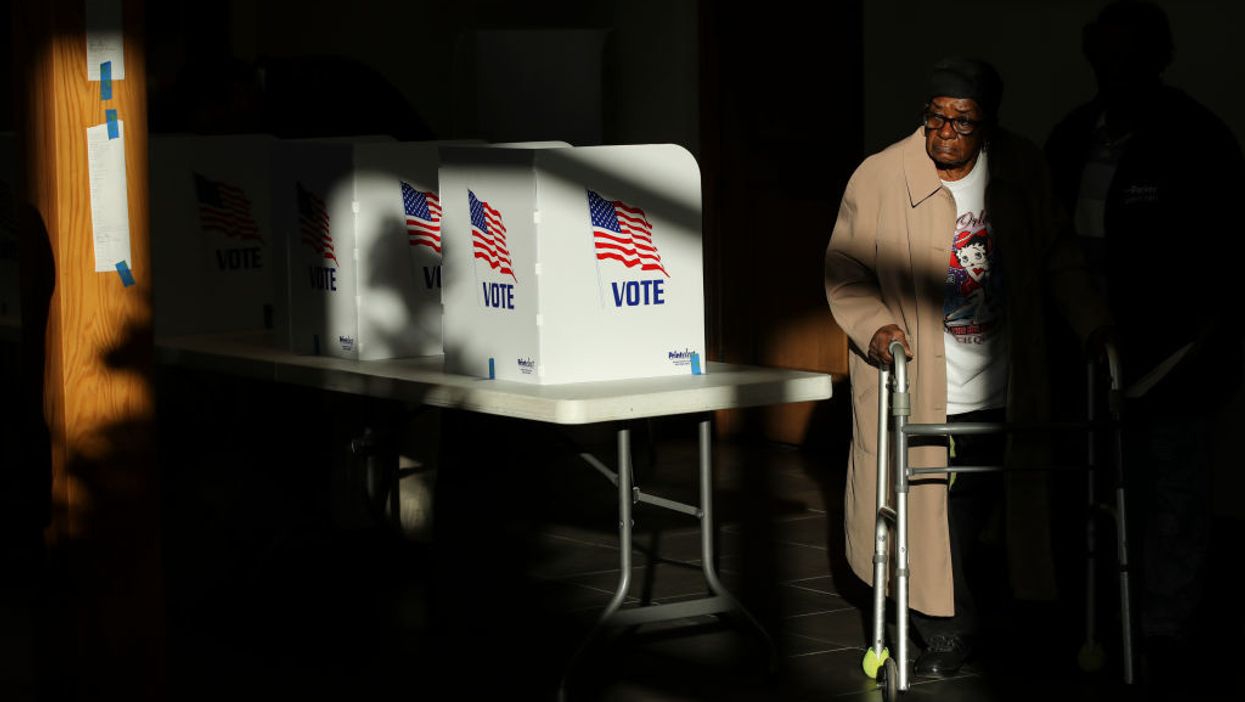
Mississippi is facing a lawsuit challenging its restrictive law governing who can vote by mail and who must go to the polls, like this 2018 voter in Ridgeland.

Drew Angerer/Getty Images

A lawsuit filed Thursday in federal court challenges the requirements governing voting by absentee ballot in Mississippi — among the most restrictive of any state.

The suit takes issue with the rule that people have an excuse in order to vote by mail, that absentee ballots must be notarized, and that the state has no provision for notifying people if an absentee ballot has been rejected so voters can fix the problem.

Mississippi is one of just seven states that requires an excuse for people to receive an absentee ballot for the November election, according to the National Conference of State Legislatures. A majority of states already have "no excuse" absentee voting and several more are making an exception for the 2020 general election because of the coronavirus pandemic.


The Lawyer's Committee for Civil Rights Under Law and the Southern Poverty Law Center, among others, filed the lawsuit on behalf of the League of Women Voters Mississippi, the Mississippi State Conference of the NAACP and three voters. The defendants are Secretary of State Michael Watson and Attorney General Lynn Fitch.

The plaintiffs are asking that the requirements for absentee ballots be ruled unconstitutionally strict and that preliminary and permanent injunctions be granted to block them in advance of the November election.

"Mississippi has some of the most restrictive burdens on absentee voting in the nation that run afoul of the Constitution and have a particularly stark impact on Black voters," said Jennifer Nwachukwu, counsel at the Lawyers' Committee for Civil Rights Under Law.

Legislation signed this summer by Gov. Tate Reeves adds being under "physician-imposed quarantine" for Covid-19 or "caring for a dependent" with the disease as valid reasons for allowing people to cast an early in-person absentee ballot.

But the law does not make those excuses allowable for voting by mail.

The legislation passed this summer did make one change praised by voting rights activists. Previously, absentee ballots had to arrive at the election offices by Election Day in order to be valid.

Now, absentee ballots will be counted if they arrive within five days after the polls close and are postmarked by Election Day.


Read More

Fierce Urgency of Remembering
Dr. Martin Luther King, Jr. gives a speech

Fierce Urgency of Remembering

The floorboards of American democracy creak under the weight of our collective amnesia. Every January, the image of Martin Luther King Jr. is polished and presented, made to appear harmless and easily shared. This is no more than another federal holiday, with his famous dream reduced to a recurring line or two and an oft-repeated photograph, both stripped of their original challenge. But in 2026, this custom feels different. The air feels tighter. There is a sense that something threatening lies beneath the commemorations—a growing worry that the democracy King strove to protect is not just vulnerable but on the verge of failing, struggling to survive during Trump’s second presidency.

America has always lived in urgent tension with itself. King understood this better than most. His moral and spiritual imagination pierced patriotic veneers, exposing the greed and violence woven into American life, the ways whiteness functioned as inheritance for some and dispossession for many others. Even amid technological marvels and global ambition, the questions King posed half a century ago remain not just unanswered, but pressing: Who belongs? Who bears the cost of our prosperity? Can a genuine moral community exist without truth-telling and repair?

Keep Reading Show less
Why Aren’t There More Discharge Petitions?

illustration of US Capitol

AI generated image

Why Aren’t There More Discharge Petitions?

We’ve recently seen the power of a “discharge petition” regarding the Epstein files, and how it required only a few Republican signatures to force a vote on the House floor—despite efforts by the Trump administration and Congressional GOP leadership to keep the files sealed. Amazingly, we witnessed the power again with the vote to force House floor consideration on extending the Affordable Care Act (ACA) subsidies.

Why is it amazing? Because in the 21st century, fewer than a half-dozen discharge petitions have succeeded. And, three of those have been in the last few months. Most House members will go their entire careers without ever signing on to a discharge petition.

Keep Reading Show less
​A billboard in Times Square.

A billboard in Times Square calls for the release of the Epstein Files on July 23, 2025 in New York City. Attorney General Pam Bondi briefed President Donald Trump in May on the Justice Department's review of the documents related to the Jeffrey Epstein case, telling him that his name appeared in the files.

Getty Images, Adam Gray

FBI–DOJ Failure on 1996 Epstein Complaint Demands Congressional Accountability

On Aug. 29, 1996, Maria Farmer reported her sexual assault by Jeffrey Epstein and Ghislaine Maxwell to the New York Police Department. Ms. Farmer contacted the FBI as advised by the police. On Sept. 3, 1996, the FBI identified the case as “child pornography” since naked or semi-naked hard copy pictures existed.

It wasn’t until Nov. 19, 2025 when the Epstein Files Transparency Act became law whereby all files – including Farmer’s 1996 complaint -- were to be made public by Dec. 19. Pam Bondi’s Department of Justice (DOJ) failed to release 100% of the files as mandated by law.

Keep Reading Show less
U.S. Capitol.
As government shutdowns drag on, a novel idea emerges: use arbitration to break congressional gridlock and fix America’s broken budget process.
Getty Images, Douglas Rissing

Congress's productive 2025 (And don't let anyone tell you otherwise)

The media loves to tell you your government isn't working, even when it is. Don't let anyone tell you 2025 was an unproductive year for Congress. [Edit: To clarify, I don't mean the government is working for you.]

1,976 pages of new law

At 1,976 pages of new law enacted since President Trump took office, including an increase of the national debt limit by $4 trillion, any journalist telling you not much happened in Congress this year is sleeping on the job.

Keep Reading Show less