


Skip to content
Search

Latest Stories

Follow Us:
Top Stories

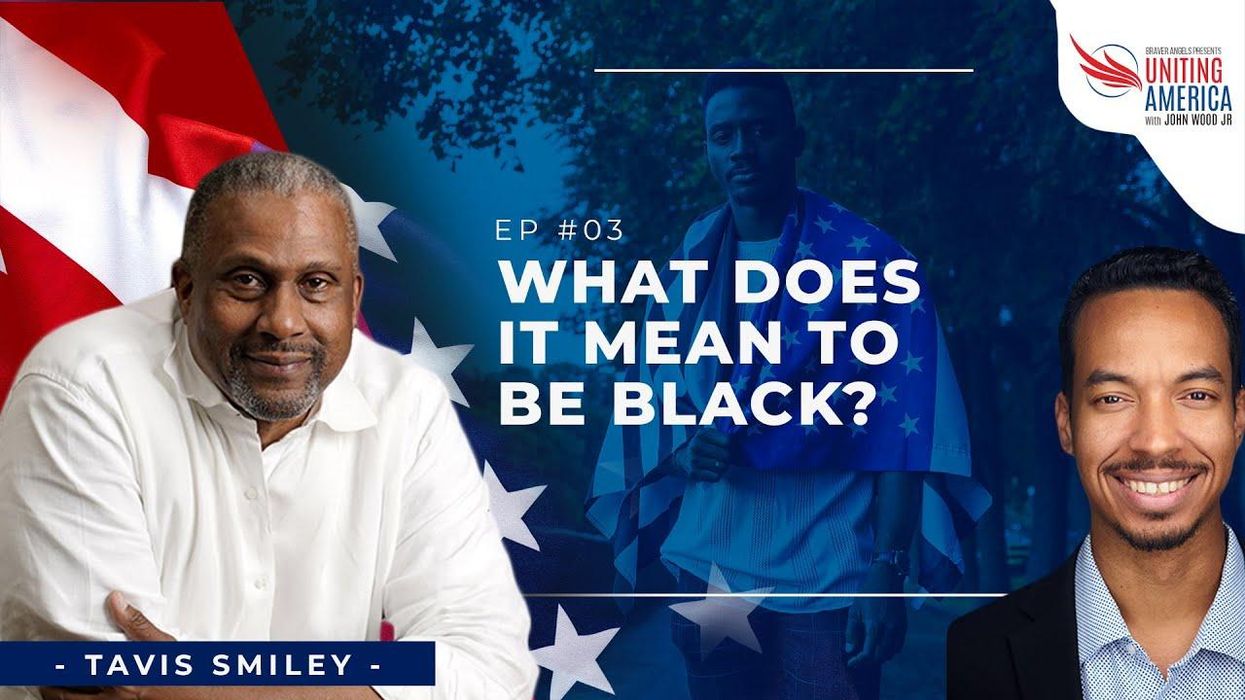
Video: What does it mean to be Black?

Tavis Smiley is one of the most prominent journalists in America, and one of the most accomplished African-American journalists and commentators there has ever been. Smiley was the first African-American to host national shows on NPR as well as PBS. For years, he was the host of BET tonight, the winner of many NAACP Image Awards, and more recently he launched KBLA in Los Angeles, the only black owned political talk radio network west of the Mississippi River.

This was a sweeping conversation about what it is to be black in America that sees host John Wood Jr. and Tavis trading perspectives on many things including black conservatism and black liberalism, racial assimilation and black identity, race versus class, the work of William Julius Wilson, Bob Woodson and more.



Read More

Wisconsin Bill Would Allow DACA Recipients to Apply for Professional Licenses

American flag, gavil, and book titled: immigration law

Photo provided

Wisconsin Bill Would Allow DACA Recipients to Apply for Professional Licenses

MADISON, Wis. — Wisconsin lawmakers from both parties are backing legislation that would allow recipients of the Deferred Action for Childhood Arrivals program to apply for professional and occupational licenses, a change they say could help address workforce shortages across the state.

The proposal, Assembly Bill 759, is authored by Republican Rep. Joel Kitchens of Sturgeon Bay and Democratic Rep. Sylvia Ortiz-Velez of Milwaukee. The bill has a companion measure in the Senate, SB 745. Under current Wisconsin law, DACA recipients, often referred to as Dreamers, are barred from receiving professional and occupational licenses, even though they are authorized to work under federal rules. AB 759 would create a state-level exception allowing DACA recipients to obtain licenses if they meet all other qualifications for a profession.

Keep ReadingShow less
Overreach Abroad, Silence at Home
low light photography of armchairs in front of desk

Overreach Abroad, Silence at Home

In March 2024, the Department of Justice secured a hard-won conviction against Juan Orlando Hernández, the former president of Honduras, for trafficking tons of cocaine into the United States. After years of investigation and months of trial preparation, he was formally sentenced on June 26, 2024. Yet on December 1, 2025 — with a single stroke of a pen, and after receiving a flattering letter from prison — President Trump erased the conviction entirely, issuing a full pardon (Congress.gov).

Defending the pardon, the president dismissed the Hernández prosecution as a politically motivated case pursued by the previous administration. But the evidence presented in court — including years of trafficking and tons of cocaine — was not political. It was factual, documented, and proven beyond a reasonable doubt. If the president’s goal is truly to rid the country of drugs, the Hernández pardon is impossible to reconcile with that mission. It was not only a contradiction — it was a betrayal of the justice system itself.

Keep ReadingShow less
Ending the Cycle of Violence After Oct. 7

People visit the Nova festival memorial site on January 23, 2025 in Reim, Israel.

(Photo by Chris McGrath/Getty Images)

Ending the Cycle of Violence After Oct. 7

The United States and Israel maintain a "special relationship" founded on shared security interests, democratic values, and deep-rooted cultural ties. As a major non-NATO ally, Israel receives significant annual U.S. security assistance—roughly $3.3 billion in Foreign Military Financing and $500 million for missile defense—to maintain its technological edge.

BINYAMINA, NORTHERN ISRAEL — The Oct. 7 attack altered life across Israel, leaving few untouched by loss. In its aftermath, grief has often turned into anger, deepening divisions that have existed for generations. But amid the devastation, some Israelis and Palestinians are choosing a different response — one rooted not in vengeance, but in peace.

Keep ReadingShow less