




Warfare is never decent or civilized. But since 1949, one hundred ninety-six nations, including the United States, Iran, and Israel, have subscribed to a set of principles designed to make it as decent and civilized as it can be.
That is when the Geneva Convention laid out a series of principles for the conduct of war. Central to that endeavor was the Convention’s effort to protect civilian non-combatants.
The Convention states that during wartime, “constant care must be taken to spare the civilian population, civilians and civilian objects. All feasible precautions must be taken to avoid, and in any event to minimize, incidental loss of civilian life, injury to civilians, and damage to civilian objects.”
As the war in Iran goes on, the cost to civilians living there rises, and their suffering escalates. Americans owe it to them to be concerned about that suffering, not just because of our commitment to the Geneva Convention, but because the founding principles of this country are universal.
The Declaration of Independence is an invitation, borrowing from the philosopher Martha Nussbaum, “to put… right before country, and universal reason before the symbols of national belonging.”
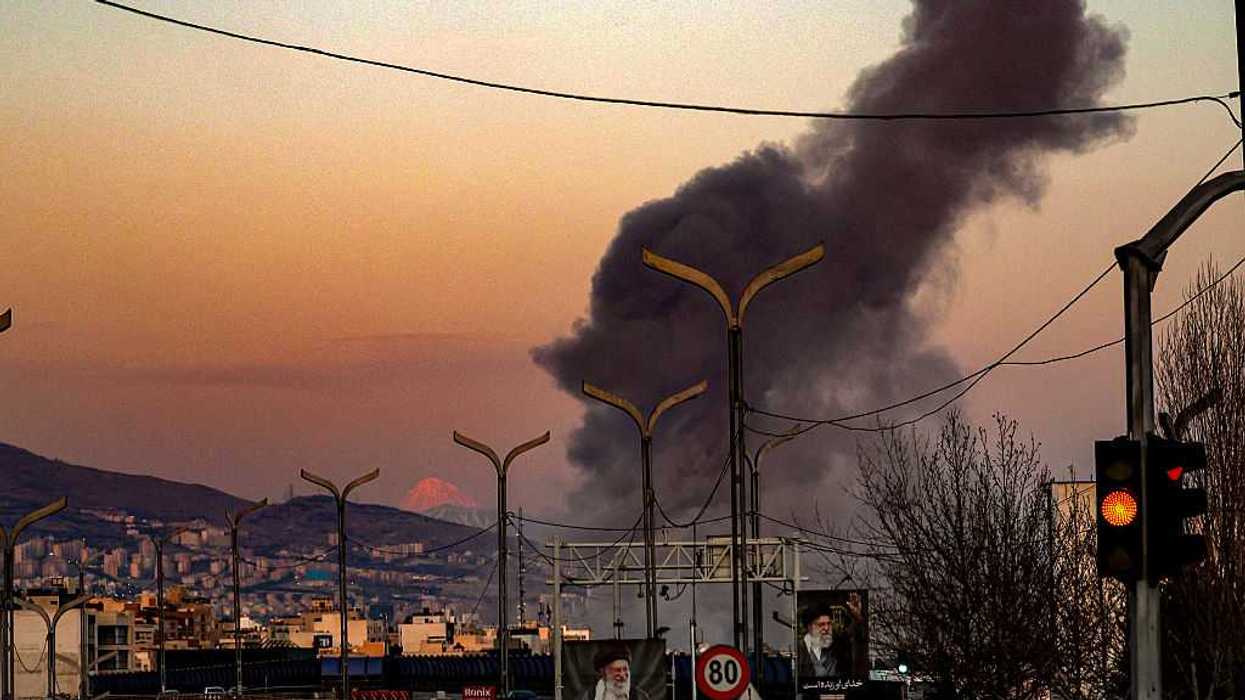
Putting right and reason first and exercising “Constant care” and “all feasible precautions” hardly seem to describe what is now unfolding in Iran and other Middle Eastern nations. On July 31, the New York Times reported that the United States had dropped a two-thousand-pound bomb on the home of an Iranian family, killing the father, mother, and one of their children.
That same day, a Washington Post story described the broad array of targets now being hit by American bombs, including “at least six bridges and tunnels surrounding the port city of Bandar Abbas…Elsewhere in the south, strikes damaged communications lines, a rail station and a desalination plant… and a rail line in a province bordering Turkmenistan.”
The Trump Administration claims that all of these are so-called dual-use facilities serving both the military and civilians. But that seems to be little more than a pretense.
On July 22, President Trump made clear how little he cares about the dual-use issue or the Geneva Convention. “Any time the Islamic Republic of Iran shoots at a ship in the Strait of Hormuz, whether it be by missile, rocket, drone, or any other device or weapon,” he wrote on Truth Social, “the United States will bomb and destroy one bridge or power plant, including those located next to, or in, the Capital City of Tehran.”
Six days later, he threatened to take out Iranian bridges and power plants if the Iranians do not resume negotiations and crowed that he had destroyed most of the country. “I could take out most of their bridges in one hour and their power plants in one day. They know I am going to do that.”
Then, “We are going after destalinization plants.”
The president made even more blatant threats against Iran’s civilian population in April when he wrote, “A whole civilization will die tonight, never to be brought back again. I don’t want that to happen, but it probably will.”
At the time, Yale Law Professor Harold Hongju Koh said, “’International humanitarian law protects from attack objects indispensable to the survival of civilians, so if implemented, the attacks Trump threatens could constitute war crimes.’”
He was joined by one hundred experts in international law who published an open letter expressing their serious concerns “about strikes that have hit schools, health facilities, and homes.” Their letter noted that “The Iranian Red Crescent reports that ‘67,414 civilian sites have been struck, of which 498 are schools and 236 health facilities.’ A report by leading civil society organizations found that at least 1,443 Iranian civilians, including 217 children, were killed by U.S. and Israeli forces between February 28 and March 23. “
All of this was before the latest round of attacks.
And recall last February when Trump told the New York Times, “I don’t need international law.” In response to the question of whether he saw “any checks on your power on the world stage? Is there anything that could stop you if you wanted to?,” he responded, “Yeah, there is one thing. My own morality. My own mind. It’s the only thing that can stop me.”
His own morality is not stopping him from destroying civilian infrastructure and inflicting misery on the Iranian people. As the Post reports, “U.S. attacks triggered power outages, water and fuel shortages, and trade slowdowns. Without regular water and electricity and intact delivery networks, factory and farm output slackens, goods are slower and more costly to ship, and industries dwindle, mired in expensive uncertainty.”
“The expanded economic pain,” the Post observed, “could push millions more Iranians into poverty.”
That should be deeply troubling to all Americans. As Nussbaum explains, “If we really do believe that all human beings are created equal and endowed with certain inalienable rights, we are morally required to think about what that conception requires us to do with and for the rest of the world.”
That is why, when it comes to wars, constitutional democracies should fight differently, and why rheir citizens should care about the suffering of citizens living in distant places.
In 2022, the Defense Department acted on that premise and issued a “Civilian Harm Mitigation and Response Action Plan.” Signed by Secretary Lloyd Austin, it started this way: “The protection of civilians is a strategic priority as well as a moral imperative. Our efforts to mitigate and respond to civilian harm directly reflect our values and also directly contribute to achieving mission success.”
The document said that the American military would “integrat(e) civilian protection into our mission objectives from the start.” Secretary Austin committed to establishing a Civilian Protection Center of Excellence,” with the mission of expediting and institutionalizing the latest knowledge about protecting civilians throughout the armed forces.
He called that effort, “the right thing to do.
“The idea,” ProPublica explains, “was to embed prevention specialists within targeting teams and foster a culture that prioritizes civilian security in accordance with U.S. law and international rules of war,… expressing both a moral obligation to safeguard civilian life and a necessity to hit their intended targets.”
Give credit to Jim Mattis, Secretary of Defense in the first Trump Administration, who initiated the effort that eventuated in the 2022 civilian harm reduction plan.
But that was then. Now, neither Pete Hegseth, Trump’s current Defense Secretary, nor the president has any use for such niceties.
That’s why they still have not released a report on the February attack that killed dozens of children and teachers when a missile struck a school, and has gutted the civilian harm reduction effort, reducing by 90 percent the Civilian Harm Reduction mission.
Innocent Iranians are paying the cost. Americans should not look away or be so consumed by high gas prices and our own deteriorating standards of living that we do not notice the suffering being inflicted in our name, that we do not care about the much greater suffering people just like us are enduring in Iran.
Austin Sarat is the William Nelson Cromwell professor of jurisprudence and political science at Amherst College.










The President Invited Iran to Bomb My Home