



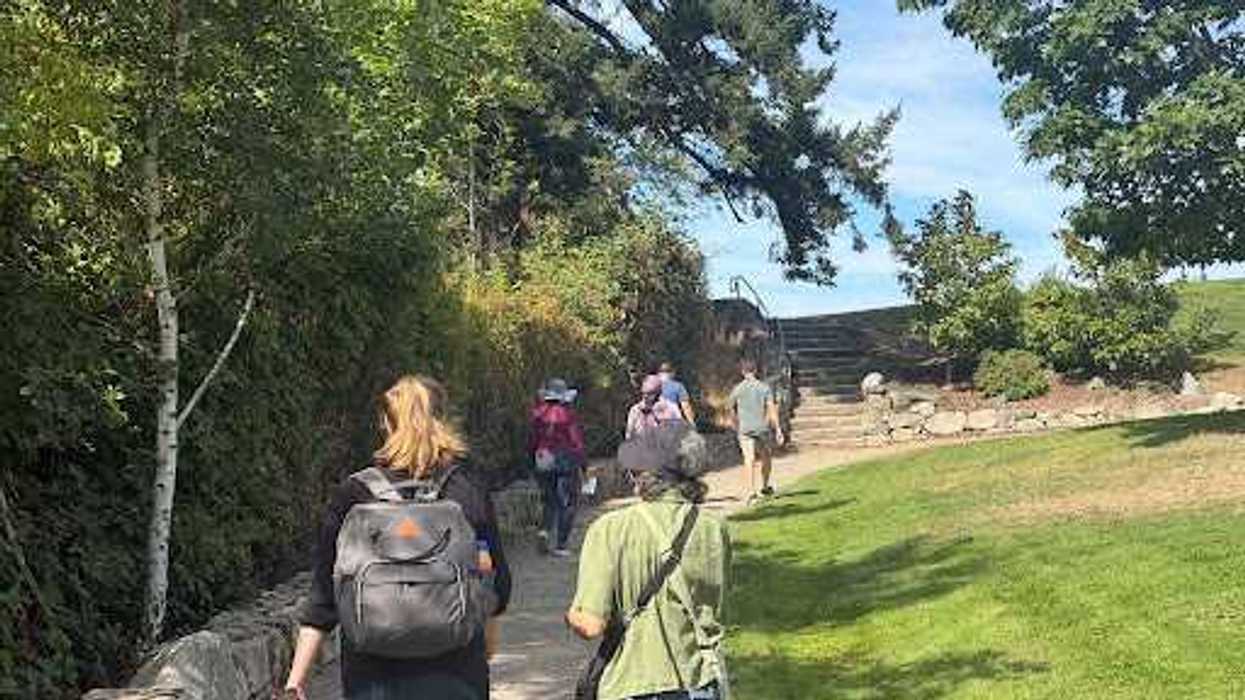

Roberto arrives five minutes early at Heritage Park. A small group has already gathered in the shade by the entrance. He recognizes four of the six faces; a few months ago he didn't know any of them. They talk about autumn plans and neighborhood history until one o'clock, when everyone opens the same app to see who they've been paired with. Roberto's screen says: “Your Walking Partner: Ken.” Then the group sets off down the path above Lake Washington.
Roberto learned about Acquaint Walks months earlier while exploring job and volunteer opportunities on Linkedin. The post said, “Take a Walk with Us: Join us in Testing a Nonprofit App for Organizing Local Walks!”
Roberto later shared, “An active life is my priority, and it’s a great way to get to know other people.” Throughout the summer of 2026, Roberto joined over a dozen “Acquaint Walks” – small group walks designed to get communities walking and talking together. He kept showing up, despite what turned out to be a difficult summer: A leak forced Roberto and his wife to leave their home. He flew to Mexico to attend his mother’s funeral. He became an empty-nester when his second son left for college. All the while, he kept searching for the right job opportunity.
The walks didn't solve any of these challenges. However, on the walks, an opportunity to share and face our challenges together emerged. As a new parent, it was great for me to learn about Roberto’s parenting journey and for him a time of reflection. Most of us experience fewer of those moments to connect with the community than we used to.
Disconnection as a societal problem is receiving increasing attention. Some leading voices describe it as a shortage of places to meet or things to do together. Yet opportunities to connect are everywhere. Take walking for example. Per the CDC, nearly six out of ten Americans walk for leisure. Yet we walk past each other without interacting. What’s missing isn’t just proximity. It doesn’t feel like a good use of time to try to connect with the person next to us.
Acquaint Walks is our effort to fill that gap. The invitation isn't "come make a friend." It's "come help build a neighborhood where people know each other" — which is why we call everyone who shows up a volunteer. We get a lot of questions about how this is volunteerism and the short answer is that, just as our physical environment needs care, so do our communities and each of us can help. The walk isn't just for you. It's for the community around you.
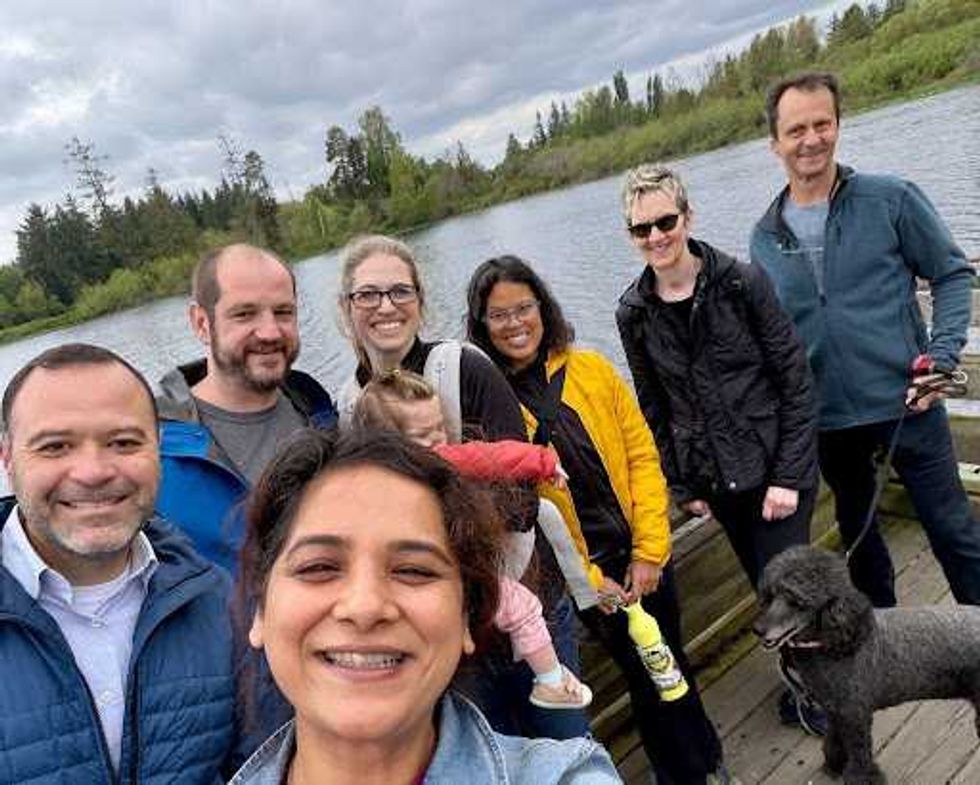
Acquaint Walks are structured to eliminate barriers to connection. Volunteers are paired at random into groups of two or three, and everyone follows the "anyone commitment": walk and talk with whoever you get paired with, regardless of age, culture, personality, or any of the filters we might apply when sizing up a potential friend. Friendships do happen. They just aren't the stated purpose. Instead, we try to focus on the value of showing up – something we can control – rather than outcomes that can’t be forced.
Organizing anything can be a barrier to it happening in the first place. Having an app helps with the logistics — finding walks, keeping groups small enough to avoid disruption, and pairing people once everyone arrives. Then we put our phones away.
Several dozen volunteers joined Acquaint Walks across King County, Washington this summer to test the program and helped get the app approved in the Apple and Google Play stores. People joined the walks without anyone needing to host or organize them. And more than two-thirds of volunteers who joined one walk returned for another. Coming from many different backgrounds, they all had one thing in common: they already walked regularly. They took something they were already doing and used it as a way to build community.
The walks themselves tend to be filled with surprises and interesting stories. On his walk with Ken, Roberto discovered that they had spent years working in the same building but never met each other until now.
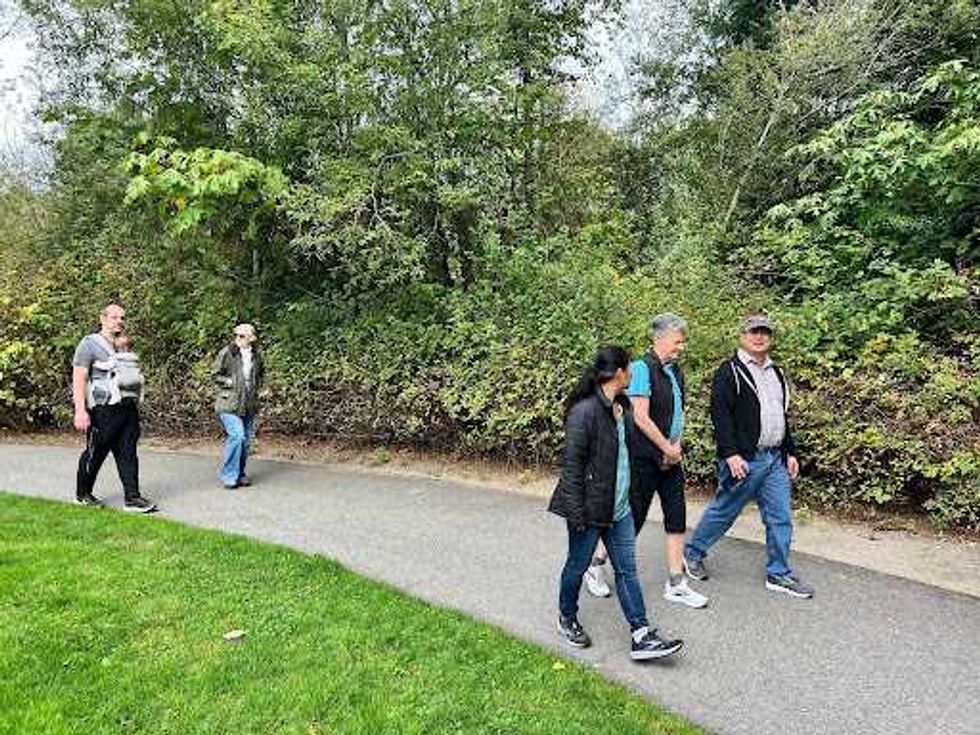
Many of us have some version of this: people we've been near for years and never spoken to. Asked to imagine striking up a conversation with a stranger on their morning commute, riders in Epley and Schroeder's study expected the worst: an awkward ride with a seatmate who'd rather be left alone. Riders actually assigned to do it reported the opposite — a more pleasant trip than those who kept to themselves.
Although my work revolves around trying to create better ways to build community, I find it challenging to connect with new people. As a regular walker myself, I had always been content to either walk with my husband Alex (Acquaint’s other Co-founder), or alone with my headphones. I’ve spent years passing neighbors on the sidewalk every day, not knowing their names. Working with Acquaint was previously all virtual – we’ve run a program since 2021 called “Global Conversations” that connects people from across 110+ countries for 1:1 audio conversations.
Katherine Mahon is Co-Founder and CEO at Acquaint.