



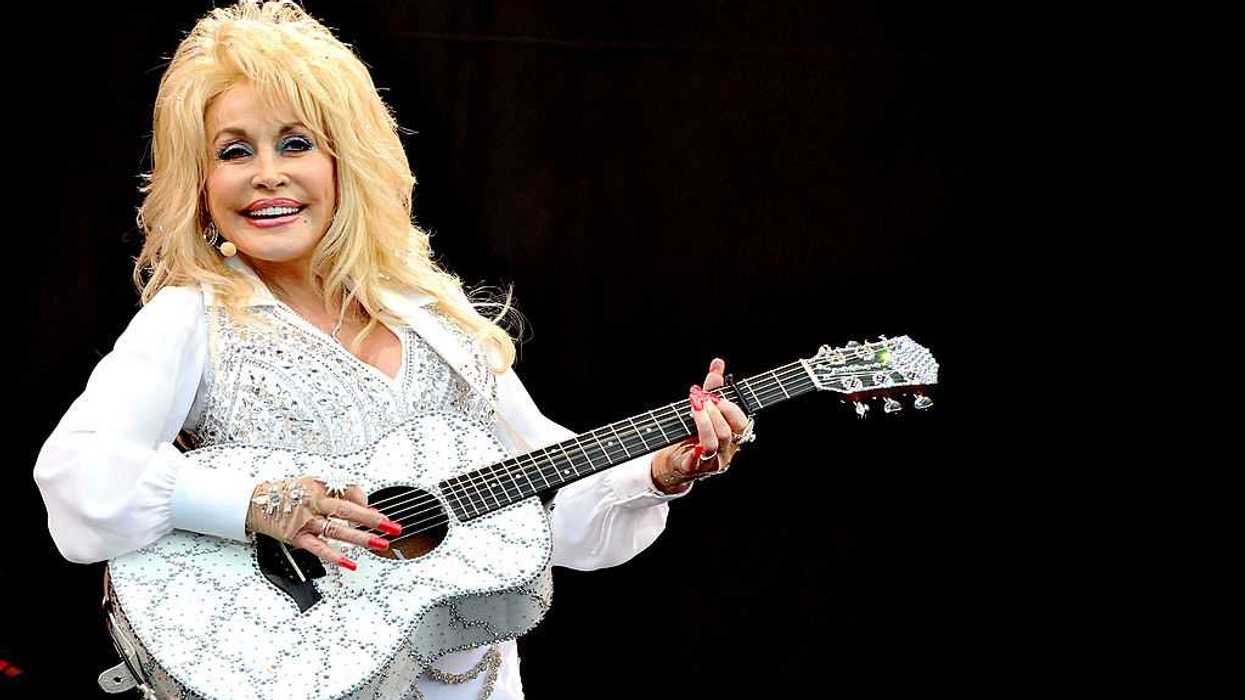
At a time when many Americans are retreating into rigid identities, Dolly Parton has been one of the few public figures able to speak to every corner of America. She had appeal across the board, no matter whether people were from the rural areas, the cities, the evangelical groups, or the gay community. She was not simply loved; she was trusted too. And in these deeply polarized times we are living in, trust is in desperately short supply.
For sixty years, Dolly Parton has stood as an example of the kind of pluralism based on dignity that our politics has lost and that many people have sadly rejected. She never preached her beliefs and seldom, if at all, talked about politics. Instead, she showed through her life how one can respect one's roots without using them as weapons. Dolly welcomed diversity without fear, and built bridges without ever giving a speech on bridge-building. Because she lived out the beliefs she sang about, she became one of America's most effective advocates for dignity.
Living in “Two Different Worlds” — And Loving Both
Psychologists sometimes refer to “The Dolly Parton Effect,” the phenomenon whereby she enables people from completely different backgrounds to enter the same emotional state. At her concerts, you find conservative churchgoers next to drag queens, coal miners next to college students, and families next to activists.
Very few tried to analyze it. Nobody seemed to question it. Her followers lived it together— joyfully.
When asked how she maintains loyal fan bases among groups often portrayed as cultural opposites, Dolly offered one of the clearest statements of pluralism any public figure has ever made:
“It’s two different worlds, and I live in both, and I love them both, and I understand and accept both.”
It wasn't a strategy; it was just Dolly's nature, and it's why so many loved her.
Dolly sang about dignity, and she lifted it!
Although her songs are not political, more of our elected representatives should take her message to heart since they teach empathy, resilience, and the intrinsic value of everyone, values which form the foundation of a healthy democracy.
Coat of Many Colors: The Politics of Human Worth
The song 'Coat of Many Colors', which is autobiographical and addresses poverty and bullying, shows how kind Dolly was. In this famous song, she describes a childhood when her clothes were made from rags; although her classmates teased her, she knew that "Momma sewed the rags together, sewing every piece with love".
The lesson we have today is clear: our personal and national values should not be judged by position but by the spirit of our people and our nation.
Dolly embraced that truth; she never concealed her modest origins, and by doing so, she connected with millions of Americans and reminded them that hardship is not something to be ashamed of, since it is part of being human.
A Message for Today
Since Dolly died, I have listened to songs I last heard many years ago, and I have come to see how strongly her message resonates with our country right now:
“9 to 5” is an anthem that brings working people together, a song that does not split them along ideological lines but instead ties them together through their shared experiences.
“I Will Always Love You” is a love song, yes, but also a lesson in grace during disagreement. “Wildflowers” celebrates growth anywhere.
“Wildflowers don’t care where they grow.” A reminder that America’s strength comes from diversity of place, identity, and experience.
From Music to Her Life:
Dolly didn’t merely sing about dignity and hope; she lived those values and left behind a legacy that will endure forever.
She would not take part in political party activities. She had once stated, "I am not in politics. I am an entertainer. But I do care about people."
She showed this in how she lived her life. She supported LGBTQ fans without attacking religious conservatives. She respected her Appalachian origins without dwelling on the difficulties. She welcomed glamour while maintaining authenticity.
She was, in every sense, a bridge — not because she intended to be, but because she was one.
A Lesson Dolly Offers a Broken Nation
Dolly Parton reminds us of a truth which America once knew—that common ground is not the result of agreement but rather of shared humanity.
It is a simple plan for our country: respect our differences without prejudice, reject contempt, tell stories that humanize rather than divide, and let kindness be your main message.
When you turn on the news today, you will see that politics has become like a contest to see who can shout the loudest. Dolly Parton has demonstrated that gentleness can be powerful, that joy has a unifying effect, and that love, when expressed without pretense, can still move a nation.
She never set out to be a leader, but by living out the beliefs she sang about, she became one.
One of the most radical aspects of Dolly Parton's beliefs is that she has always held on to the idea of an America in which people can disagree without treating one another as less than human, in which dignity is not dependent on circumstances, and in which a sense of belonging is not a zero-sum game.
Let us pay our respects to her legacy by recalling that democratic renewal is not achieved merely in legislatures or courtrooms, but also in the stories we tell, the kindness we show, and the bridges we build in our day-to-day lives.
Will we decide to live the kind of life that Dolly spent her lifetime singing about?
David Nevins is the publisher of The Fulcrum and co-founder and board chairman of the Bridge Alliance Education Fund.










The President Invited Iran to Bomb My Home