
Vibrant murals with warm, sunlit colors scatter the Reno, Nevada landscape.
Mexican muralist Edwin Martinez brings his heritage and Latinidad to his murals through recognizable, bright colors. One such piece is “Raíces Brillantes,” a mural painted outside the Latino Research Center at the University of Nevada, Reno.
The piece spans three walls with a vibrant color scheme that blends together untold history and heritage. To prepare for the work, Martinez conducted research by visiting Virginia City, Nevada, and searching public records, uncovering history about the Mexican Maldonado brothers.
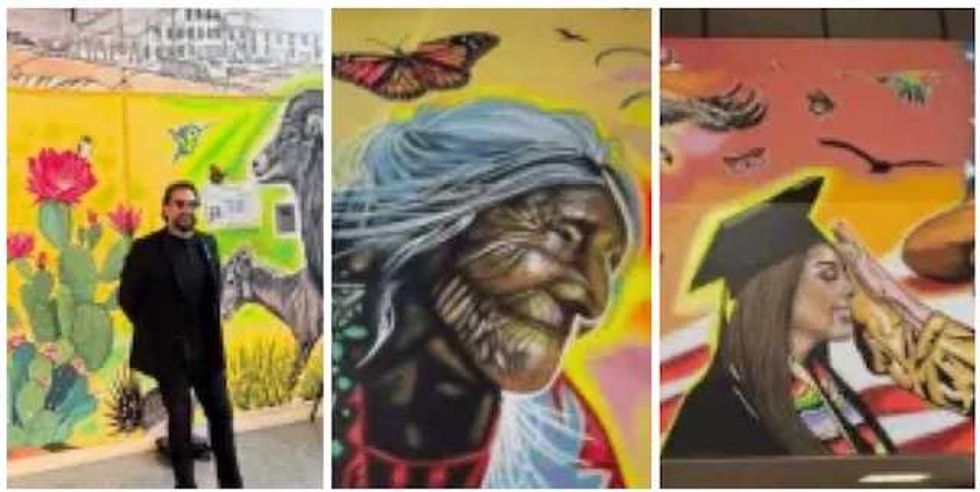 Raíces Brillantes mural at the University of Nevada (Credit: University of Nevada)
The brothers owned a mine where they employed hundreds of people in Northern Nevada, creating a lucrative business. They also employed John Mackay—a wealthy mine operator with an extensive history in Nevada—and shared valuable mining expertise with him.
In the same mural, Martinez included a bird or flower representing each Latin American country to highlight the distinct cultures within Latinidad. He also sought to honor the Latinos of Northern Nevada by featuring their history and local roots.
“There’s a lot of places in Nevada that people don’t think have Hispanic influence, but we’re everywhere,” Martinez said.
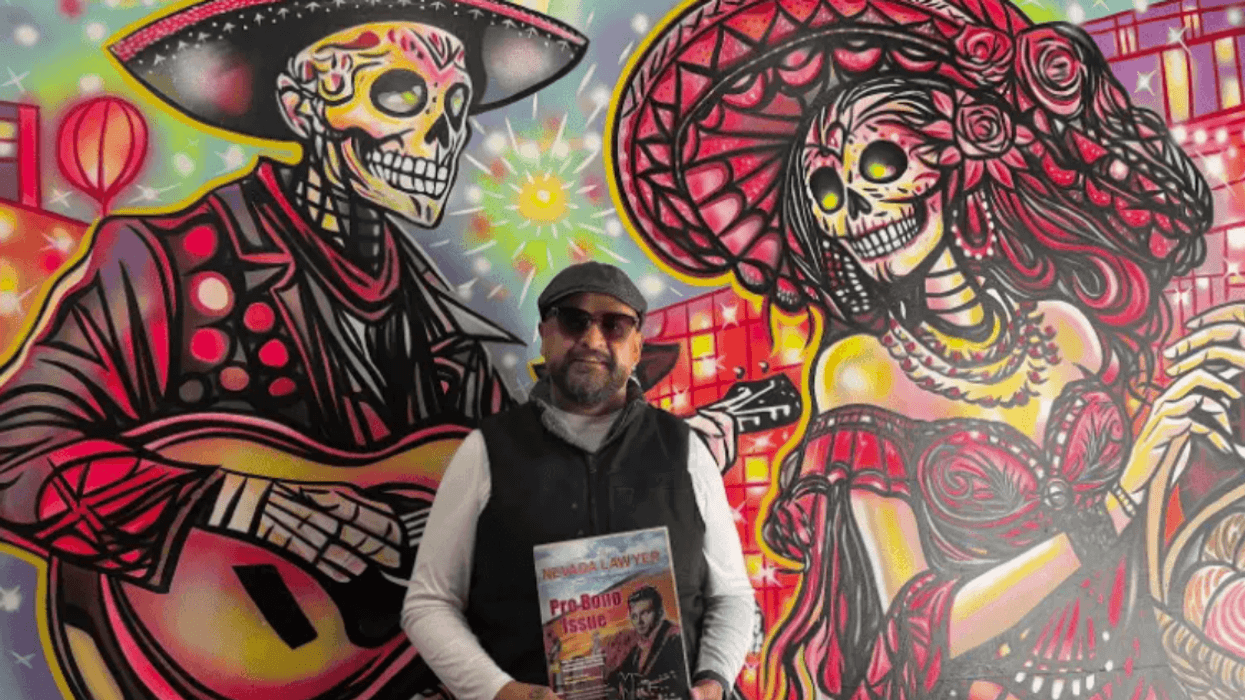
Another of his murals, located in a Mexican restaurant called Los Chilaquiles, depicts two calaveras playing guitar and dancing to music, their prominent red color palette juxtaposed against a cool blue background.
While Martinez brings elements of his heritage to the forefront of his art, he has also expanded his scope to leave a mark on rural Northern Nevada towns like Lovelock and Winnemucca.
An organizer of the Winnemucca Murals & Music Festival invited Martinez to participate in the event’s second run. Held from May 28 to May 31, 2026, the festival featured artists transforming downtown Winnemucca alongside live music performances.
Martinez brought Johnny Cash to life on the dusty Winnemucca walls, honoring an artist he has loved since his teenage years. Cash wrote the song “I’ve Been Everywhere,” which mentions traveling down the Winnemucca road. An avid record collector, Martinez owns more than 150 albums by Cash.
Even if it’s not a piece about heritage, Martinez believes it holds a different, but valuable message.
“It was more a musical, personal type of taste, but at the same time, it brings us together,” Martinez said.
When a friend of Martinez learned he was in Winnemucca, they called their local parents, who brought him carnitas and breakfast. For Martinez, this warmth exemplifies the sense of community that murals generate.
While sitting in Los Chilaquiles, Martinez is warmly greeted by staff and presented with complimentary food—a testament to his local impact.
His Johnny Cash mural landed on the cover of Nevada Lawyer, a state legal magazine.
In Lovelock, Martinez painted the spirit dance, or ghost dance, of the Paiute tribe. He explored Lovelock’s caves—a site used for shelter and storage by the Northern Paiute people—and incorporated Indigenous designs from Central America and Mexico as an ode to how Indigenous cultures endure across borders.
He loves exploring the diverse traditions that shape Nevada beyond Hispanic influences, including Basque and Indigenous heritages.
“I love that, because the more I paint and explore those cultures, I learn more about the history of Nevada and rural Nevada,” Martinez said. “And not just Nevada, but the United States itself.”
He recalls residents in these rural towns thanking him and fellow muralists for their work.
“They would look at us, like, we’re some type of big city artists. No, we’re just local artists, but we’re putting color and they’re very appreciative,” Martinez said.
Even in works that do not directly reflect his heritage, Martinez includes subtle personal touches, such as his mother’s name or a Monarch butterfly, referencing his birthplace in Michoacán, Mexico.
As Martinez expands his reach, he hopes to further make a splash in the international scene, painting in countries like Guatemala.
–
Edwin Martinez: Latino Muralist Brings Color to Rural Nevada was first published by the Latino News Network and is republished with permission.
Malory Shaw is a student at the University of Nevada, Reno and a Fall Fulcrum Fellow.