Skip to content
Search

Latest Stories

Follow Us:
Top Stories

Podcast: When the stars begin to fall with Dr. Theodore R. Johnson

Podcast: When the stars begin to fall with Dr. Theodore R. Johnson

Dr. Theodore R. Johnson is the great-grandson of sharecroppers who, unfathomably, believed in what Johnson calls “the Promise,” that we Americans are created equal and that “each of us will respect and defend the rights and liberty of others.” Willie and Annie Johnson so believed in that promise that they named Dr. Johnson’s grandfather and namesake Theodore Roosevelt Johnson, after our 26th president invited the first black man, Booker T. Washington, to the White House for dinner. Dr. Johnson shares his family’s deep reverence for this American experiment, but also believes our failure to bind together around our highest ideals is an existential threat to our future.

Listen to Village Squarecast's recent podcast where Dr. Johnson makes an invitation—and a challenge—to all of us, born of lived experience as a black son of the American south and love of this country he took an oath to preserve.


When the Stars Begin to Fall with Dr. Theodore R. Johnson

When the Stars Begin to Fall with Dr. Theodore R. Johnson
open.spotify.com


Read More

Protestors holding signs at a rally, one reads, "Trump is not above the law."

Protesters gather at a Nobody Is Above the Law rally protesting President Trump's interference in the Mueller investigation on November 08, 2018 in Washington, DC.

Larry French/Getty Images

The Double Standard Presidency: When We Watch Leaders Act Above the Law

Americans are told that no one is above the law. Yet every day, they watch a president behave in ways that would get any ordinary citizen fired, disciplined, confronted, or held accountable — and they watch some Americans excuse it. What makes this moment even more striking is that critics across the political spectrum, including conservatives, now warn that the presidency is operating on a dangerous double standard. This is not a partisan concern. It is a constitutional one. And it is tearing at the fabric of our democracy.

For generations, the Constitution has provided guardrails — separation of powers, checks and balances, oversight mechanisms, and limits on executive authority — designed to prevent any leader from functioning above the law. The framers feared concentrated power more than anything else. They believed that the presidency must be constrained not only by written law but by norms of restraint, dignity, and respect for institutions. Those norms held for centuries because presidents understood that the office was larger than any individual, and Congress understood that oversight was not optional.

Keep ReadingShow less
Donald Trump’s Third World presidency

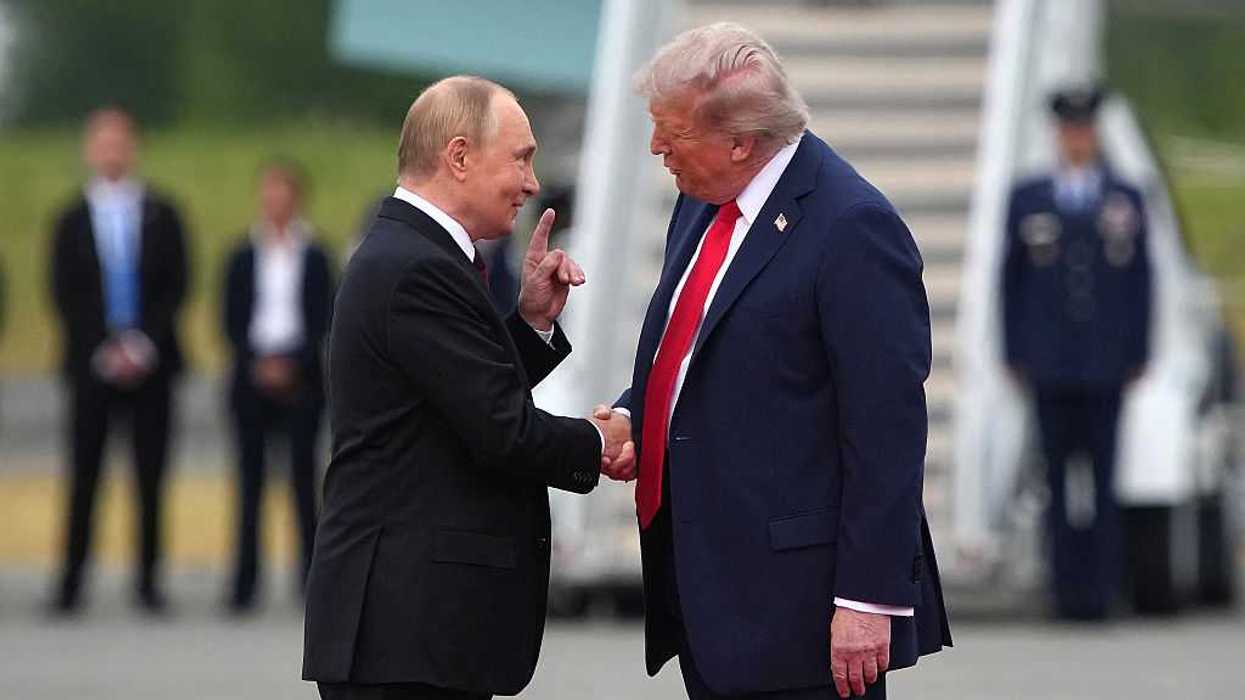
President Donald Trump walks off of Air Force One at Newark Liberty International Airport on Aug. 7, 2026, in Newark, New Jersey.

(Eric Lee/Getty Images/TCA)

Donald Trump’s Third World presidency

In October 1980, then-candidate Ronald Reagan asked voters a very important question: “Are you better off than you were four years ago?”

It was during the only televised debate he had against incumbent President Jimmy Carter, whose presidency had been marred by one crisis after another, from record-high inflation and rising unemployment, to soaring gas prices and the Iran hostage crisis.

Keep ReadingShow less
The GOP isn’t always the best party for conservatives

President Trump has moved the GOP left on abortion right, trade and industrial policy over his two terms.

(Saul Loeb/AFP/Getty Images/TNS)

The GOP isn’t always the best party for conservatives

I often get asked for my advice on how to vote. I’m the first to concede these requests come from a very niche slice of the electorate — that tiny remnant of people who know who I am, value my opinion and share my exasperation with both parties.

I am going to answer the question. But first let me explain why I don’t like it.

Keep ReadingShow less