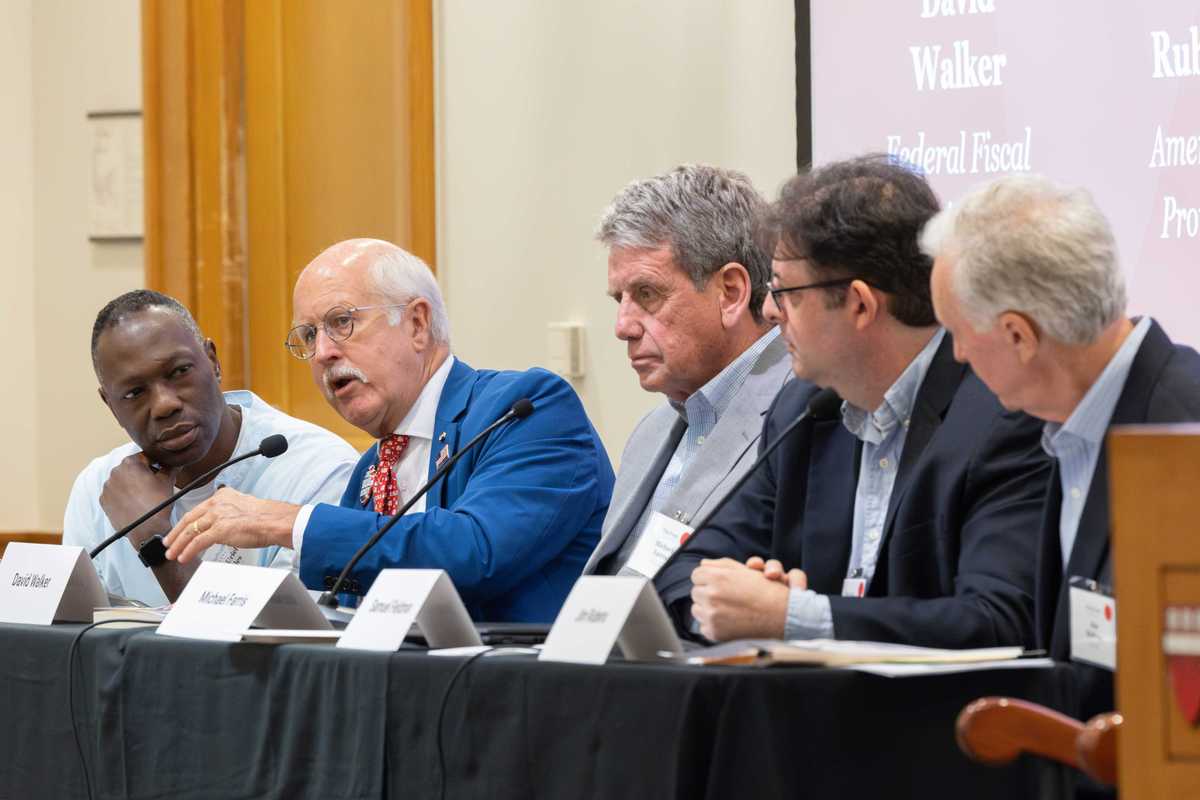
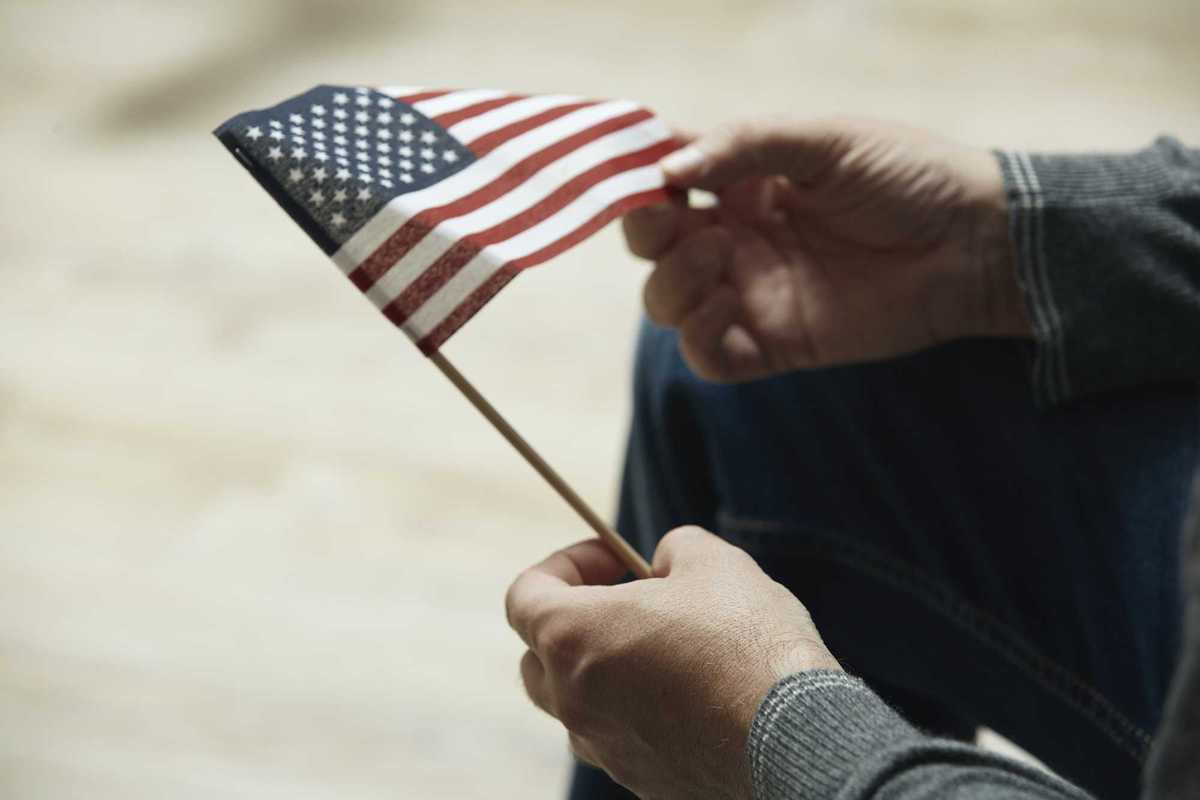

Given the dangerous rise of political extremism in America, it's well past time we stopped wagging our fingers and do a bit of soul searching of our own about why our society is producing so many citizens unmoored from the connections that support moderation. Pastor Gary Shultz of First Baptist Church, Dr. Dan Leshem of FSU Hillel, Father Tim Holeda of St. Thomas More Co-Cathedral, and Pastor Joseph Davis, Jr. of Truth Gatherers Community Church join Village SquareCast to discuss.
Site Navigation
Search
Latest Stories
Join a growing community committed to civic renewal.
Subscribe to The Fulcrum and be part of the conversation.
Top Stories
Latest news
Read More

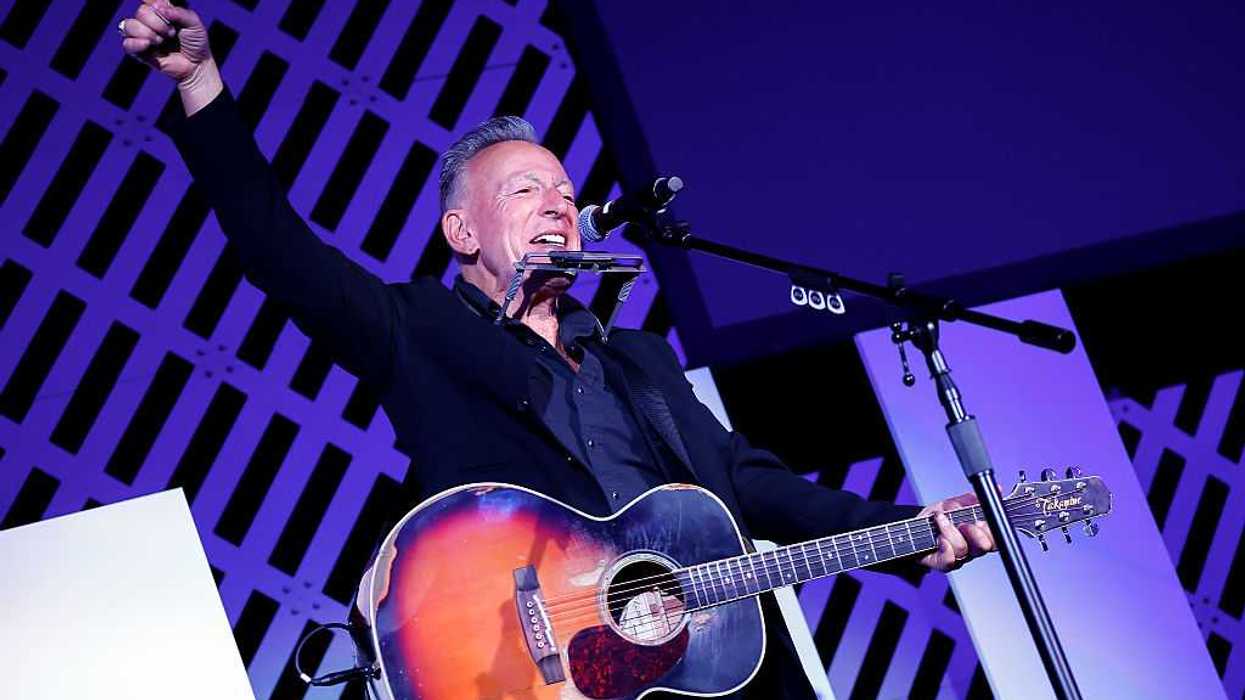
Bruce Springsteen and the E Street Band in concert at Nationals Park on May 27, 2026 in Washington, DC.
Paul Morigi / Getty Images
Springsteen’s October D.C. Festival Pushes Music Into Democracy Fight
Jul 05, 2026
Bruce Springsteen has always spoken his mind through politics and expressed it through his music. For decades, he has treated the stage as a platform for the causes he believes in — a place where songs become arguments, and performance becomes a form of public conscience. His work has long insisted that American culture and American democracy are intertwined, that the stories we tell ourselves shape the country we become. So when he steps onstage in October for the “Power to the People Festival” in Washington, D.C., it is likely that this will just be the next chapter in his lifelong effort to defend democratic values through art.
Bruce Springsteen has spent the past year making no secret of his views on the current administration, expressing them with increasing bluntness from the stage. His recent performances have shown that when he believes democracy is at risk, he does not whisper — he raises his voice. Given that history, no one should expect him to be quiet in October. So when he stepped onstage in Washington, D.C., and previewed the upcoming “Power to the People Festival,” it felt less like a surprise and more like the next verse in a long American tradition of artists using their platforms to defend democratic values.
The festival, curated by Tom Morello and set for October 3 at Merriweather Post Pavilion, is being billed as a non‑partisan celebration of peace, justice, solidarity, and civic action. The lineup reads like a cross‑section of modern protest music: Springsteen, Foo Fighters, Joan Baez, Dave Matthews, Brittany Howard, Cypress Hill, Killer Mike, and more. Shepard Fairey, whose artwork has become visual shorthand for political conscience, designed the festival’s imagery.
On paper, it’s a cultural event. In practice, it lands one month before the 2026 midterms, a moment when nearly everything in American life will be interpreted through a political lens, whether intended or not. The festival’s timing could influence the national mood at a particularly charged moment, energizing audiences to engage with the issues at stake or to participate more fully in the democratic process. Its proximity to the election adds weight to its message and positions it as more than just a concert—it becomes part of the broader conversation about the country's future.
That tension is impossible to ignore. Springsteen has never hidden his distaste for Donald Trump, and Trump’s supporters have never hidden their distaste for Springsteen. In a less polarized era, an artist’s political leanings might have been a footnote. Today, they are headline material. When Springsteen speaks out, it doesn’t drift into the background — it rockets to the top of mainstream news coverage and often draws immediate condemnation on Truth Social from President Trump himself. Even a call for unity can be read as a provocation. Even a celebration of civic participation can be cast as coded partisanship.
This is not the first time Springsteen has tried to shake audiences out of political resignation. In my earlier writing, I warned that democratic erosion rarely arrives with dramatic ruptures — it arrives with shrugs, with citizens numbed into silence while guardrails weaken one by one. That is why his protest tour mattered then, and why this festival matters now. As I wrote in April, Springsteen understands that “the survival of a republic depends on ordinary people refusing to be quiet when it matters most.” His message in Manchester — that “the America I love… is currently in the hands of a corrupt, incompetent, and treasonous administration” — was not aimed at Democrats or Republicans, but at citizens. The Power to the People Festival is a continuation of that call: not left or right, but a reminder that democracy endures only when people raise their voices against authoritarian drift.
But that is precisely what makes this festival interesting. It is attempting something that has become rare: reclaiming a civic space that is neither a campaign rally nor a culture‑war skirmish. Morello has framed it as a gathering where music can remind people of their shared democratic inheritance — the idea that participation, solidarity, and justice are not partisan slogans but civic responsibilities. The festival’s own description reinforces that ambition. Organizers note that, beyond the two stages of performances, attendees will be able to engage directly with nonprofit organizations, advocacy groups, artists, and community partners inside the festival’s Freedom Village, an immersive space highlighting opportunities for civic engagement, grassroots organizing, education, mutual aid, and social‑impact initiatives. And as a further signal of intent, a portion of all ticket proceeds — and 100% of net proceeds from VIP tickets — will support VoteRiders, which works to eliminate ID‑related barriers to voting, and HeadCount, which will be on-site helping fans register and learn how to participate in upcoming elections. In other words, the festival is not only invoking democratic values; it is operationalizing them.
Whether such a space still exists in America is an open question. The country is so extremely polarized that even the most earnest attempts at non‑partisanship can be pulled into the partisan rancor. Yet the festival's organizers have said their aim is to spark meaningful civic engagement and create an environment where people from all backgrounds can come together to reflect on the nation's challenges, not just to perform or listen to music. They hope to inspire attendees to rediscover a sense of shared purpose and to encourage public action that transcends party lines. A festival held in October featuring artists known for their political voices will inevitably be interpreted by many on the left as a mobilizing force against those on the right.
And yet, there is something hopeful in the attempt. American democracy has always depended on more than ballots and campaigns. It has depended on the cultural rituals that remind people they share a country, a story, and a future. Music has played that role before — in abolitionist hymns, in Dust Bowl ballads, in the anthems of the civil‑rights movement. It can play it again, if we let it.
The Power to the People Festival may backfire and increase, not reduce, tension between culture and politics. It may not escape the partisan interpretations that now cling to almost everything. But it does speak to a broader truth: that democracy is not only something we vote in, but something we live in. And sometimes, the best way to remember that is to gather in a field, listen to a guitar, and let a song remind us of the country we still hope to be.
David Nevins is the publisher of The Fulcrum and co-founder and board chairman of the Bridge Alliance Education Fund.
Keep Reading
Show less
Recommended

Imagine a democracy concert followed by a yearlong democracy call to action roadshow—designed to build a new civic movement
Getty Images, gilaxia
A Hollow Song for a Hollow Patriotism: Reclaiming the Real Patriotic Ballads
Jun 22, 2026
After musician after musician pulled out from Trump’s June 24 “Freedom 250” concert, we’re left with Lee Greenwood and an opera tenor. The anthem that made Greenwood a star, “God Bless the USA,” was written in 1985 during the height of the Cold War. It begins with the specter of loss—“If tomorrow—all the things were gone, I’d worked for all my life / And I had to start all over with my children and my wife.” Then the wounds disappear before they’re felt: “I’d thank my lucky stars to be living here today / Because the flag still stands for freedom and they can’t take that away.”
Ronald Reagan made the song his campaign theme while launching a new age of American inequality by systematically busting unions and cutting taxes for the wealthiest. Greenwood treats layoffs and the resulting toll on ordinary lives as a mere inconvenience. As the refrain shifts from violins and a church organ to a military march, he repeats, “I’m proud to be an American, where at least I know I’m free / And I won’t forget the men who died who gave that right to me.”
Honoring those who died resonates powerfully. Those who risk taking bullets to defend our country deserve respect for their service and sacrifice. Yet this gives us no special grace over citizens of other lands. And doesn’t answer the question of whether or not it was necessary to put them in harm's way. Because Greenwood says nothing about what freedom might demand of us, it becomes just an empty phrase, blessing all that our leaders may do, no matter how arrogant or destructive.
We were defending freedom in this view, when supporting dictators from Chile’s Augusto Pinochet to the Iranian Shah, whose brutal rule laid the groundwork for the current theocracy and the war of choice that we hope has now finally ended. We’re supposedly defending freedom now as Trump cozies up to dictators like Vladimir Putin, Turkey’s Recep Erdoğan, and Saudi Arabia’s Mohammed bin Salman, and while ICE agents grab innocent people off America’s streets. When Greenwood sings, “There ain’t no doubt I love this land. God Bless the USA,” he never suggests what qualities of justice would redeem the love he declaims.
Greenwood wrote the song after we invaded the 95,000-person country of Grenada, wanting to reflect “the spirit of America being proud.” Reagan made it his campaign theme, and Greenwood has been singing it at Republican rallies and conventions ever since. Because Greenwood says that just living in America makes us free, his version of patriotism gets reduced to signing a blank check for whatever our leaders choose to do. It’s a perfect match for this or any president who seeks to erase all limits on their power.
But Greenwood’s isn’t the sole patriotic ballad to choose from. The late Waylon Jennings’ “America” reached number six on the charts the year “God Bless the USA” first came out. Written by Sammy Johns, the song affirms connection to native soil, as Jennings repeats, “America, America,” slowly and tenderly as if to a woman he loves; then admits, softly, “You’ve become a habit to me.” But he also makes tough demands—recounting his own history as an Anglo yeoman “from down round Tennessee,” then continuing, “But my brothers / Are all black and white / Yellow too / And the red man is right / To expect a little from you / Promise and then follow through / America.”
In a similar vein, “America the Beautiful” writer Katherine Lee Bates celebrated “purple mountain majesties,” but actively opposed America’s imperial adventures, so added lines like “God mend thine every flaw / Confirm thy soul in self-control / Thy liberty in law!” Bruce Springsteen’s whole career has been about honoring the courage and dignity of ordinary Americans, from “The Promised Land” celebrating those with “dreams that break your heart,” to “The Rising’s” portrait of 9/11 firefighters, to the “Streets of Minneapolis” chorus, “Singing through the bloody mist, we’ll take our stand for this land.”
Hard as it is, we’re stronger for engaging the difficult questions about who we’ve been as a country and who we want to be. Patriotic ballads don’t have to be political manifestos. But the best celebrate our diverse and contradictory land and acknowledge that true greatness does not flow like automatic grace. Rather, it’s fulfilled through honoring common responsibility and connection.
With democracy profoundly threatened, we need true patriotism more than ever. We can choose a patriotism of blind adulation. Or we can embrace the songs that demand the most of us.
Keep Reading
Show less

Stephen Colbert attends the 51st Chaplin Award Gala honoring George Clooney at Alice Tully Hall, Lincoln Center on April 27, 2026 in New York City.
(Photo by Gilbert Carrasquillo/GC Images)
Colbert’s Final Late Show Reveals What We’re Losing in Public Dialogue
May 24, 2026
Stephen Colbert hosted The Late Show for the last time last week.
Tributes have been pouring in for Colbert’s nightly monologue and comedic genius. And rightly so. He has a unique and deeply humane way of making the unbearable bearable, giving us a little light and lift on our darkest days.
There’s even an unfolding argument that The Late Show’s premature cancellation signifies the end of late-night shows more broadly. David Letterman captured the sentiment brilliantly last week, “What will become of the Jimmys? Are they going to be all right?”
To most, Stephen Colbert offered nightly entertainment and commentary.
To me, he was my north star for having meaningful conversations that help everyone feel more human.
I’ve spent 25 years designing and facilitating conversations professionally — in boardrooms, in crises, in strategy sessions where the ability to hear each other was the whole point. I co-authored a bestselling book on what makes conversations transformational rather than transactional. I trained for years to support “Interpersonal Dynamics” at Stanford Business School — known to generations of students as “Touchy Feely” — built on a radical premise: through unscripted dialogue, you learn more about yourself as others share their experience of you. The more you reveal, the more the other person reveals. Trust builds as surface area grows.
We are living through a collapse of conversational infrastructure. The forums, institutions, and shared spaces where Americans once worked things out together are cratering. Public trust is at a historic low, polarization at an all-time high. My take on what’s missing is simple: visible examples of what it looks like when conversation fosters learning, strengthens trust, and helps people leave more human than when they arrived.
For eleven years, Stephen Colbert has been that example — demonstrating every night what it looks like when conversation fosters learning, strengthens trust, and helps people leave more human than when they arrived.
The more human the conversation, the more human the response.
Stephen Colbert knows how to ask a great question — but it’s how he responds to the answers that often feels magical. Watch him receive an unexpected answer: you can see him absorb it, recalibrate, and go somewhere he hadn’t planned with ease and grace. Improvisers call this practice “accepting the offer” — building on what’s unfolded rather than sticking to a rigid script. It looks effortless because he’s been practicing it for decades.
His curiosity spans the depth and breadth of his own reservoir of interests and talents. He can pull from literature, theater, the Bible, history, music, food, culture, and even more cult-like topics like Tolkien and Dungeons and Dragons. I heard him bust out conversational Latin the other day as if he was asking someone to pass the salt. That range allows him to ask questions that range from “is a hot dog a sandwich?” to someone’s deep origin story in a single segment.
And regardless of the guest, he honored whoever sat next to him with his full presence and energy. He brought the same visceral quality of attention to Barack Obama on the weight of the presidency as he did to Paul Simon on creativity and mortality, or deep reverence and respect for Barbra Streisand, who almost never gives interviews, or to a beloved colleague like Jon Stewart who appreciated taking the guest seat. The content differed, but the quality of presence and respect never did.
His conversation with Anderson Cooper about grief remains one of the most extraordinary pieces of public dialogue I’ve witnessed — two people, on television, talking deeply and frankly about loss with shared compassion, vulnerability, and care.
Many years ago, I got to see a live taping of The Late Show. Watching Colbert work in person was nothing short of magic. He came out before the show to connect with the audience, earnestly answering our questions with attention. You could feel his chemistry building in real time with the hundreds of audience members lucky enough to be present at the glorious Ed Sullivan Theater. We were in on the jokes and banter, as if we had a stake in the experience.
Good conversations are designed.
In a media climate optimized for performative extremes, creating the conditions for authenticity is both rare and radical. It happens before a single question is asked — in the introduction of the guest, the welcome to the stage, the opening greeting, and the signals you send about what may unfold. Colbert did this so consistently that it looked natural and emergent, but it was built on careful choices, made every night, to prioritize genuine exchange over performative spectacle.
Sometimes the conversations centered on a shared experience, like mixing a drink, evoking nostalgia with a picture or prop, or even changing the environment for the interview, as when he would lie down on a picnic blanket with guests and ask big questions while looking up at the “stars.” When Kamala Harris sat down for one of her first post-election interviews, Colbert handed her a Miller High Life. It was unpretentious, a little surprising, and quietly radical: a way of saying, we’re just two people talking. His choices created the conditions for something more vulnerable and connected than a standard interview.
A couple of weeks ago, he sat down with a roomful of elementary school kids to brainstorm a new talk show format. His group facilitation prowess was on full display. He greeted every child by name, as if they’d been friends forever. His questions built on each other in a deliberate arc of engagement. He noticed who hadn’t spoken and made space for them. And when enthusiasm spilled into dancing, he joined right in. When the session ended, he didn’t just summarize where they landed — he built the prototype of what they created together. That’s the difference between facilitation that documents and facilitation that transforms.
What We Can Take Forward
How We Future is built on the belief that the future isn’t something that just happens to us — it’s shaped by the quality of our conversations, our capacity to imagine together, and our willingness to stay genuinely curious about each other.
Stephen Colbert, night after night, reminded us that this is a choice we can make.
He was modeling something we desperately need more of: the belief that real dialogue — across difference, across discomfort, across the unexpected — can actually build trust, understanding, and a shared sense of what’s possible. In a time when so many of our public conversations have collapsed into performance, he kept showing us what it looks like to actually be in one.
For 1,810 episodes, Colbert was doing for conversation what TED did for public speaking — making excellence visible, repeatable, and worth studying. We’ve never had a public model for what great dialogue looks like, the way we have for great presentations. We had one, five nights a week.
After The Late Show ends, no one will fill that seat. But there can be recognition of what was actually happening on that stage and what we can continue to learn from it.
Colbert has made me a better facilitator — more present, more willing to follow an unexpected answer, and more committed to building rather than just capturing. Sure, I’ll try to channel his humor and grace. But what I’m really taking into every room is his commitment to the craft and to building the conditions where people leave more human than when they arrived.
Thank you, Stephen. You showed us how.
Lisa Kay Solomon is a faculty member at Stanford University's design school, host of the podcast and Substack “How We Future," and a creator of civic futures programs like Vote by Design, The Futures Happening, and The Team.
Keep Reading
Show less

Chris Stapleton performs onstage during the 59th Annual CMA Awards at Bridgestone Arena on November 19, 2025 in Nashville, Tennessee..
(Photo by Astrida Valigorsky/WireImage)
Stapleton’s Colbert Performance Shows Power of Nonpolitical Messages
May 10, 2026
On May 6th, I watched Chris Stapleton perform “Living in the Promiseland” on The Late Show with Stephen Colbert. The song, a Willie Nelson classic from 1985, hit me hard. Originally, Nelson released it at a time when debates about immigration and the American dream were in the headlines, and the song became an anthem of hope and inclusivity. These days, almost everything gets viewed through a political lens, but the song’s opening lines felt powerful without being political:
Give us your tired and weak, and we will make them strong
Bring us your foreign songs, and we will sing along
Leave us your broken dreams, we'll give them time to mend
There's still a lot of love living in the promised land
Our dreams are made of steel
The prayer of every man is to know how freedom feels
There is a winding road across the shifting sand
And room for everyone living in the promiseland
So they came from a distant isle
Nameless woman, faithless child, like a bad dream
Until there was no room at all
No place to run and no place to fall
Was Stapleton just singing a song he loves, or was he making a political statement, or maybe something in between? In an interview, Stapleton explained that he chose to cover "Living in the Promiseland" because he feels the song "speaks to the heart of what America strives to be—welcoming, inclusive, and compassionate." He added, "Music has a way of reaching people regardless of the noise around them, and this song is about hope." I think his approach lands somewhere in the middle: personal, values-driven, but not overtly political.
In a 2024 interview with The Guardian, Stapleton expressed his discomfort with celebrities wading directly into politics: “I’m not saying celebrities shouldn’t endorse people — that’s American. I also think the right to keep that private, and the right to let politicians be politicians, to let people make their own choices based on what politicians say and do … that’s American, too.”
That feeling sums up Stapleton’s unique style. While artists like Bruce Springsteen, Jason Aldean, and Taylor Swift sometimes make politics part of their public image, Stapleton focuses on values instead of politicians. He sings about fairness, empathy, and the real lives of working-class Americans. His “Promiseland” performance shows this well: it’s moving, caring, socially aware, but not political.
Stapleton doesn’t endorse candidates, rarely talks about elections, and often says he wants his music to speak for itself. Even when he addresses social issues, like supporting Black Lives Matter in 2020 or talking about gun violence in “Watch You Burn,” he does it without linking his message to any politician or party. In contrast, Springsteen is open about his politics, Aldean connects with a conservative audience, and Swift is clear about her advocacy and efforts to get people to vote.
Stapleton is different. His songs have a strong moral message, but he avoids the political spotlight that often comes with them. Basically, he’s saying: I’ll talk about people, pain, and America, but not about politicians.
When Stapleton sang the final verse on Colbert’s stage, the strength of his approach was clear:
Give us our daily bread, we have no shoes to wear
No place to call our home, only this cross to bear
We are the multitudes, lend us a helping hand
Is there no love anymore living in the promised land?
Living in the promiseland
Our dreams are made of steel
The prayer of every man is to know how freedom feels
There is a winding road across the shifting sand
And room for everyone living in the promiseland
This was a reminder that artists can share powerful social messages without getting involved in politics.
It also showed that artists don’t need to pick sides to say something important. Sometimes a message matters not because it’s debated, but because it’s felt.
You can watch the full performance and decide for yourself:
- YouTube www.youtube.com
David Nevins is the publisher of The Fulcrum and co-founder and board chairman of the Bridge Alliance Education Fund.
Keep Reading
Show less
Load More


God Squad: Lonely and Extreme