


Garson is legal counsel and chief of staff for the Bridge Alliance, which houses The Fulcrum.
A couple of weeks ago, on June 12, I watched Sachi Bajaj announce VoteAmerica as a winner of the 5th American Civic Collaboration Awards. It was the culmination of six months of hard work by the Bridge Alliance’s talented young intern (who was a college freshman when she joined us).
In many ways, Sachi’s work to revive the Civvys (which were last awarded in 2020) were worthy of a Civvy. At the heart of the award is the idea that together we can make a greater impact than we could ever make as individuals. That requires learning from each other and setting aside our egos for the greater good.
Sachi most certainly did that by:
- Following and adapting the template that Caroline Klibanoff of Made By Us created when she ran the Civvys.
- Using all of the Bridge Alliance’s communications tools to solicit a record-breaking number of nominations.
- Bringing the Bridge Alliance team together to winnow the nominees to 17 finalists.
- Recruiting leaders from throughout the democracy movement to choose winners among the finalists.
- Working with the Made By Us team to present the Civvys at the kickoff event for the first ever Civic Season in Atlanta.
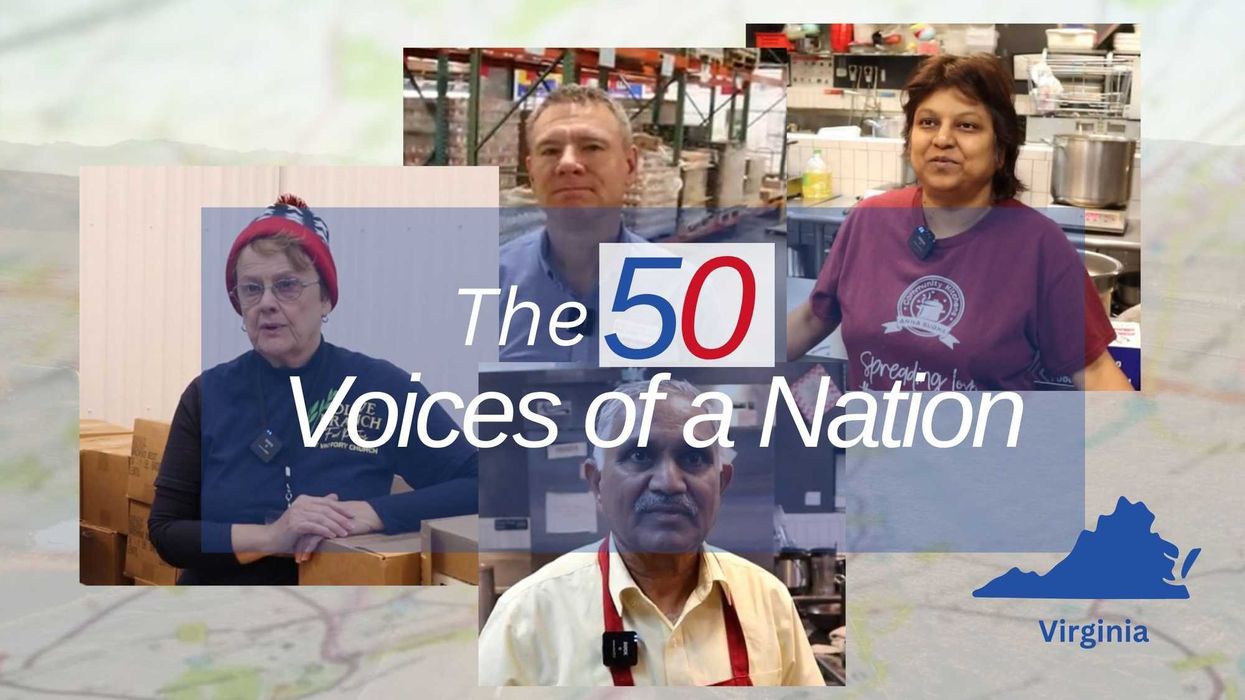
Fortunately for the actual nominees, the Civvys can’t win a Civvy. Instead, we were treated to the inspiring stories of VoteAmerica (National category), Voters First Virginia (Local) and Kentucky YMCA Youth Association (Youth), as well as a touching message from Ellen Perry – the wife of Lifetime Achievement Award winner Rob Stein.
At a time when our nation’s future feels less certain than it has in decades, each of these organizations shows us that there is a growing segment of the American public ready and able to take our power back.
And the key word is “our,” as in all of us as Americans.
VoteAmerica is making it easier for every American to be an agent of change by incorporating civic engagement into our everyday lives. Whenever someone checks their credit score, files their taxes, changes their home address, or registers for classes, vital information about voter registration, vote-by-mail, early voting, voter ID, and more can be built directly into the platform’s user experience. More than 4 million Americans used VoteAmerica’s services in 2020 alone.
Voters First Virginia proved that we can make popular voting reforms happen, including in contested states like Virginia. They successfully led bipartisan coalitions that 1) instituted a citizen-led redistricting commission, 2) created a ranked-choice voting pilot, 3) made absentee voting improvements and 4) increased access to party nominating processes. The VFV model is now being used in Colorado and Arizona.
The Kentucky YMCA Youth Association is bringing together young people from throughout the Bluegrass State. The association has impacted tens of thousands of young men and women from nearly all of Kentucky’s 120 counties, and has sent a message by welcoming people of all backgrounds and experiences to its programs. Given the national footprint of the YMCA community, it isn’t hard to envision the team’s approach catching on across the country.
Finally, Rob Stein’s death was mourned throughout our movement. He helped set the tone for the democracy movement, and his positive impact will be felt for generations to come. When we received news of his passing, we knew we had to honor him, which we did with the first ever Lifetime Achievement Award.
As we honor and celebrate these incredible individuals and organizations, it’s important to remember why we’re doing this, and why the Bridge Alliance is a driving force behind two honors programs (the Civvys and the Democracy Awards). These award ceremonies provide roadmaps for success. By broadcasting the winners to a national audience, we are hoping to inspire people across the country to think big and understand that, together, we can help our beloved America better reflect the values and aspirations of we the people.
And so, as I watched Sachi leave the podium to catch a flight back home, I remembered that what we were doing that day wasn’t a vanity project. All of our work at the Bridge Alliance is driven by the idea that Americans can and will take back their power, and that young leaders like Sachi will be at the forefront of that effort in the years and decades ahead. The Civvys provide a piece of the map that they will use to get us there.



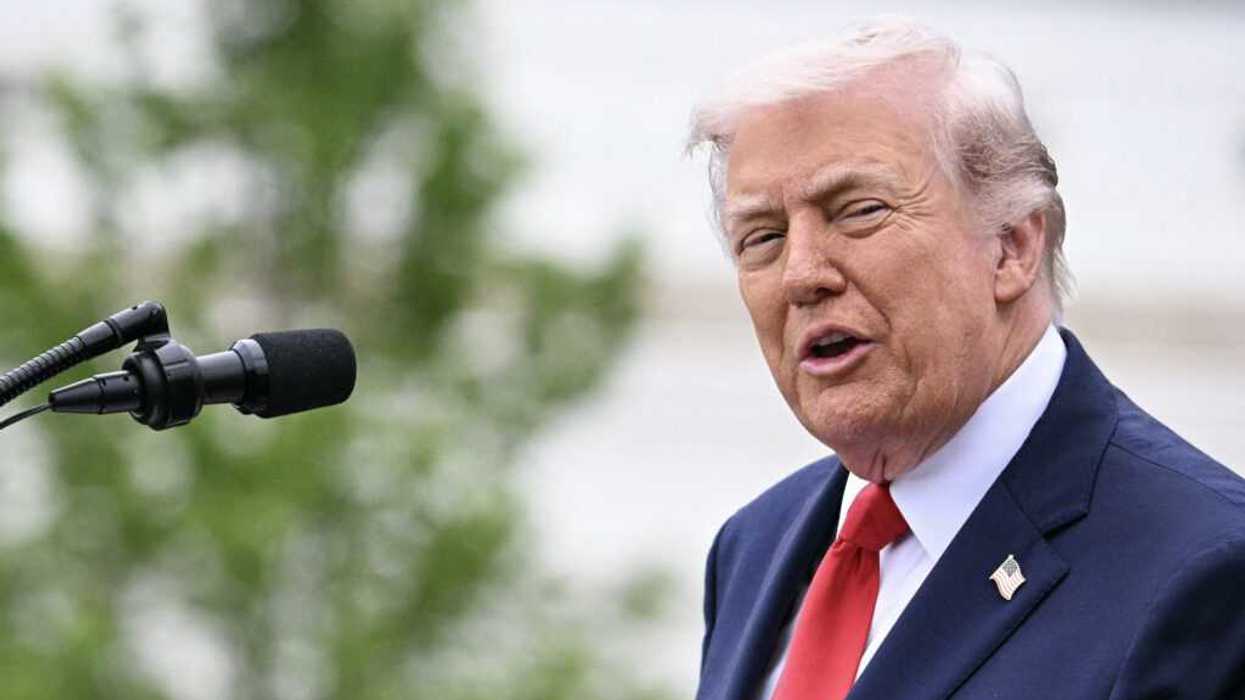


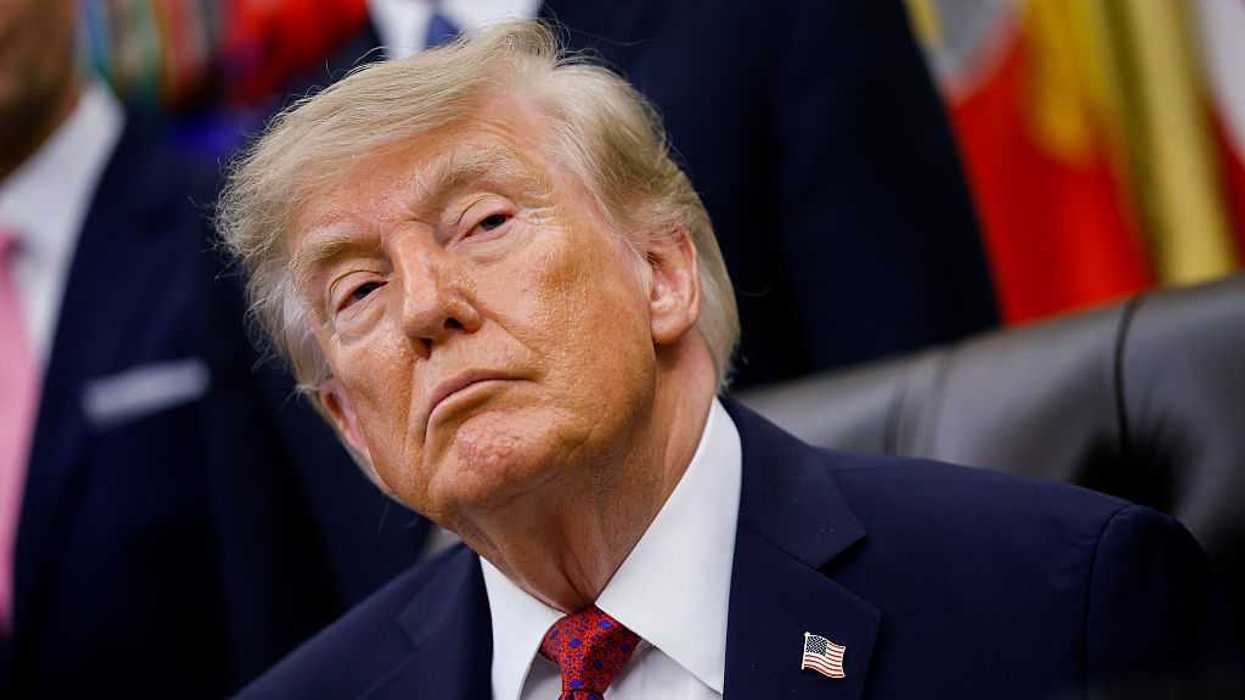
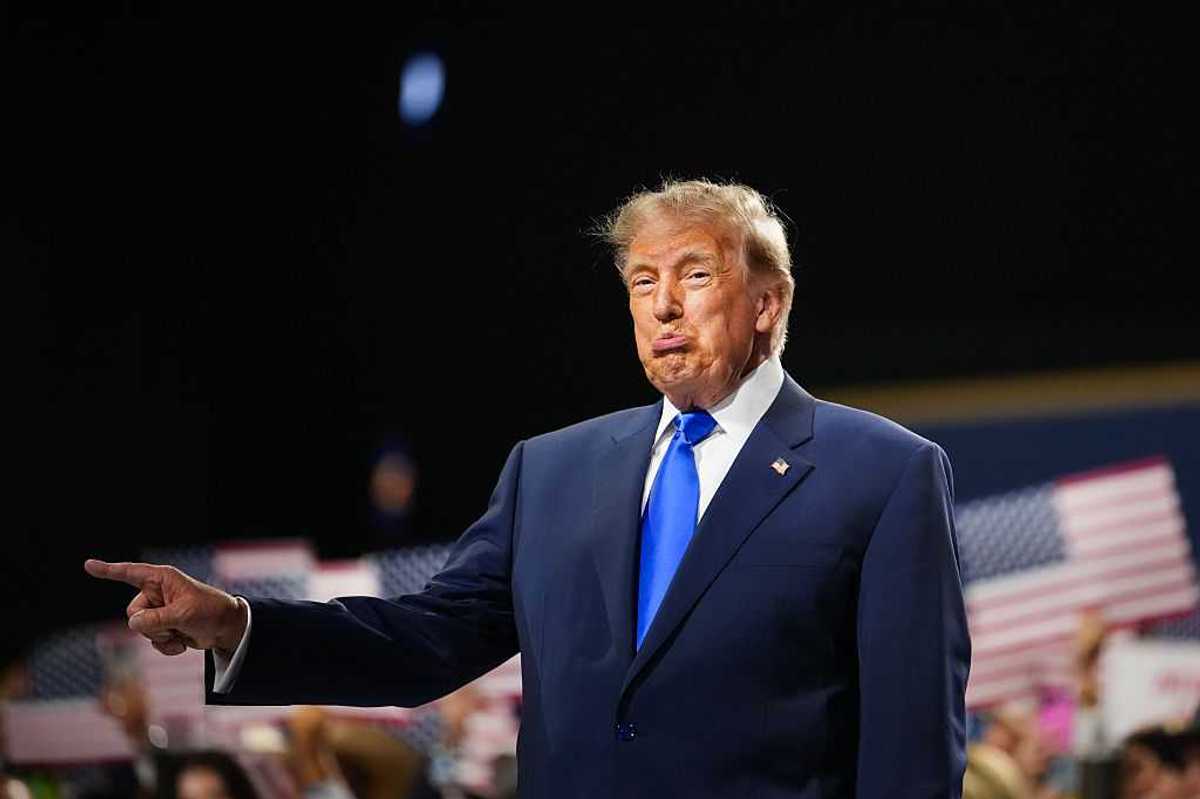
U.S. President Donald Trump speaks during a“ Steel Across America” event ahead of the 25th anniversary of the Sept. 11th attacks on the Ellipse near the White House on Sept. 8, 2026 in Washington, D.C. President Trump welcomed 9/ 11 first responders to the Tunnel to Towers Foundation’ s“ Steel Across America” event featuring a 16,900- pound, 21- foot steel beam recovered.
For Trump, even 9/11 is an opportunity
There was a reason organizers of the 9/11 ceremony in Manhattan told President Trump he could not speak at this year’s memorial service.
A good one, it turns out.
Because in a speech he gave on Tuesday in Washington, he did exactly what they were presumably worried about — he made it about himself.
According to The New York Times, Trump had wanted a speaking role at the service, but the National Sept. 11 Memorial and Museum, which oversees the site, said no, as they’ve maintained for the past decade-plus that the venue and event should be nonpartisan.
Trump has long used awful tragedies to either puff himself up, trash political opponents, or sell lies to the American people.
He blamed a deadly plane crash at Washington National Airport last year on diversity, equity and inclusion policies. He blamed Puerto Ricans for the devastation they endured after Hurricane Maria in 2017. He reportedly considered withholding disaster relief after the California wildfires based on the way affected regions voted. In an interview on Fox News meant to commemorate the 75th anniversary of D-Day in Normandy, he used the occasion to slam former House Speaker Nancy Pelosi…with graves of the dead behind him.
And now, as we approach the 25th anniversary of what many New Yorkers consider the darkest day in modern history, Trump has done it again.
He told a rambling, nonsensical story — one he’s told before — about going to Ground Zero just after terrorists flew two commercial jets into the twin towers. In the story, which no one has been able to verify, despite multiple attempts, he says firefighters had to carry him out of One Liberty Plaza, also known as the U.S. Steel Building, because they thought it was about to collapse.
As CNN fact checker Daniel Dale notes, there’s no evidence Trump went into this building, especially at a time when NYPD and NYFD had locked down the area. There’s no evidence that building was collapsing — in fact, it was deemed structurally sound and reopened within two months of the attacks. There’s no evidence he was carried out of it by firefighters.
But the lie isn’t even the worst part. Pretend it was all true — why would the leader of our country, and a New Yorker, decide to make that tragic day about himself?
Because that’s who Donald Trump is. He’s a malignant narcissist.
He’s also, incidentally, a terrible and ineffectual president, who’s made ill-fated decisions that he has to keep defending, and there’s nothing he won’t do to make himself look and feel better.
Within the first two minutes of his speech, he was cravenly using 9/11 to justify and promote his dumb war in Iran — two events separated by 25 years and 6,000 miles.
“And I will tell you, we’re right now fighting because we have a certain nation that wanted a nuclear weapon, they were very close to getting it, and now they have no chance at getting it. They will never have a nuclear weapon. Iran will not have a nuclear weapon. And they’ve been punished greatly. As you know, we’ve really taken it to them.”
As a New Yorker who lived through 9/11, still one of the worst days of my life, I’m utterly sickened by Trump’s crass, political, and self-promotional framing of that awful day.
And I’m relieved he won’t be given a platform to do it again on Friday’s anniversary in lower Manhattan.
Because for Trump, everything is his for the taking, and absolutely nothing is sacred.
S.E. Cupp is the host of "S.E. Cupp Unfiltered" on CNN.