

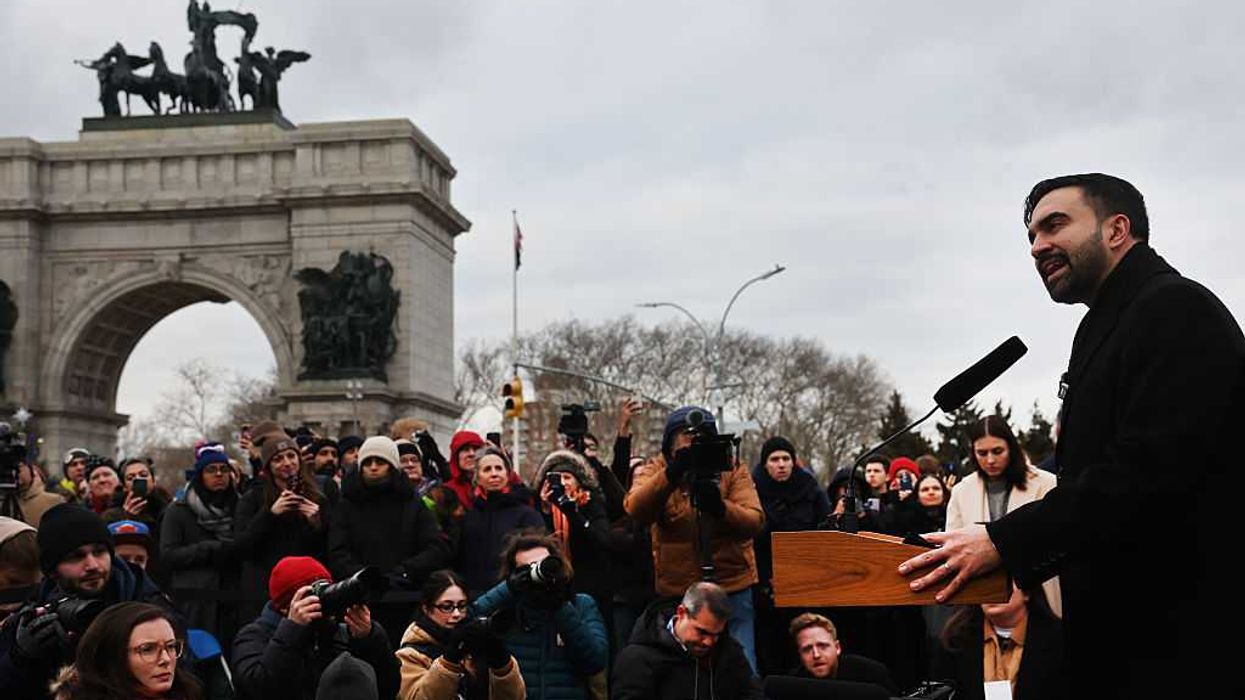

The campaign against Mamdani by some conservative Jewish leaders and others, calling him antisemitic, has just reached a new level with accusations of antisemitism from Israel.
From almost the beginning of his campaign, Mamdani has faced charges of antisemitism because he was critical of Israel's conduct of the war in Gaza and because he has spoken against the proclamation that Israel is a "Jewish state." The fact that his faith is Islam made him an easy target for many.
However, the accusations against Mamdani are totally unfounded. He has clearly and unambiguously stated his strong feelings against antisemitism. Mamdani has consistently spoken of the importance of combating antisemitism. He has said that New York is experiencing a "crisis of antisemitism," and that “Antisemitism is not simply something that we should talk about — it’s something that we have to tackle.”
What is the claimed "proof" of his antisemitism? The main proof lies in this disapproval of the definition of Israel as a "Jewish state."
First of all, to be anti-Zionist is not the same as being antisemitic. As a Jew, while I fully support the State of Israel and the necessity of its establishment, I cannot overlook the basic facts of the situation. Jews took land that had been in the hands of Arabs (Palestinians) for generations, and they are continuing in that tradition now in the West Bank. I am not a Zionist. Neither is Mamdani, but he supports the existence of the State of Israel.
By saying this, I am not saying the blame for the ongoing conflict between Israel and the Palestinians lies solely with Israel. As I have written previously, there is plenty of blame on both sides. (See my post, "Is There a Solution to the Ongoing Middle East Crisis?")
Second, in 2018, 60 years after the creation of the State of Israel, the Israeli parliament (Knesset) passed a law defining Israel as "a nation-state of the Jewish people." You would think this law would have passed by a landslide, but the vote in the Israeli legislature was 62-55. Clearly, even in Israel, this statement was controversial. So to be against this statement is not proof of antisemitism.
Israel is a democracy, but it is a flawed one. Its Palestinian citizens—yes, Palestinians who reside in Israel are citizens of Israel—have always been second-class citizens. Their villages receive substantially less support than Jewish villages, and they, as individuals, receive less support. But clearly, Israel is much more than the nation-state of Jews.
What would Jews think if Congress passed a bill recognizing the United States as a Christian state, since Christianity is the religion of the majority (64%) of U.S. citizens? The outrage would be huge.
As a Jew, I feel it is important to say that to conflate being against current policies of the State of Israel or its defining itself as a "Jewish" state with being antisemitic is false and is pandering to the Jewish vote. Those feelings might coexist, but often do not. That is certainly the case with Mamdani.
The most recent piece of "proof" of Mamdani's antisemitism is his revocation of two of then-Mayor Eric Adams' Executive Orders as part of his revocation of all Orders from the period after Adams' indictment. The one order prevented city agencies from boycotting or divesting from Israel. The other adopted the IHRA's (International Holocaust Remembrance Alliance) definition of antisemitism.
First, Mamdani revoked all of Adam's Executive Orders issued after he was indicated, not just the two regarding Israel.
More importantly, what is the IHRA definition of antisemitism? It is a very broad definition, with many supporting examples, none of which apply to the actions of Mamdani.
Even the IHRA is very careful to say that criticism of Israel is not, in and of itself, an indication of antisemitism. It is in the criticism of Jews (as Jews) causing harm that antisemitism lies. But Mamdani has not said that. Rather, he—as I—is against the actions of Netanyahu, and his ultra-nationalist supporters, as prosecutors of the war in Gaza as well as the "nation-state" law. One can be 100% in support of Israel and yet be 100% against what Netanyahu is doing. This is not antisemitism.
The one IHRA example that enemies of Mamdani have seized upon is "denying the Jewish people the right to self-determination." But saying that he is against the 2018 proclamation that Israel is a Jewish state does not deny Israeli Jews the right of self-determination. Surely the many Israeli legislators who voted against this law were not against Jews' right of self-determination.
And now, Israel has accused Mamdani of antisemitism, saying that he has "shown his true face" by "scrapping the IHRA definition of antisemitism." That he has thrown "antisemitic gasoline" on the fire.
It is true that Mamdani has apparently chosen not to reinstate the IHRA definition Order. In response to criticism, he has said that he doesn't think the IHRA definition helps protect Jewish New Yorkers. I would respectfully disagree. Given my interpretation noted above, there is no reason not to adopt the definition. I would thus advise Mamdani to do so, as his action has become "proof" of his antisemitism, or at least his insensitivity to the issue.
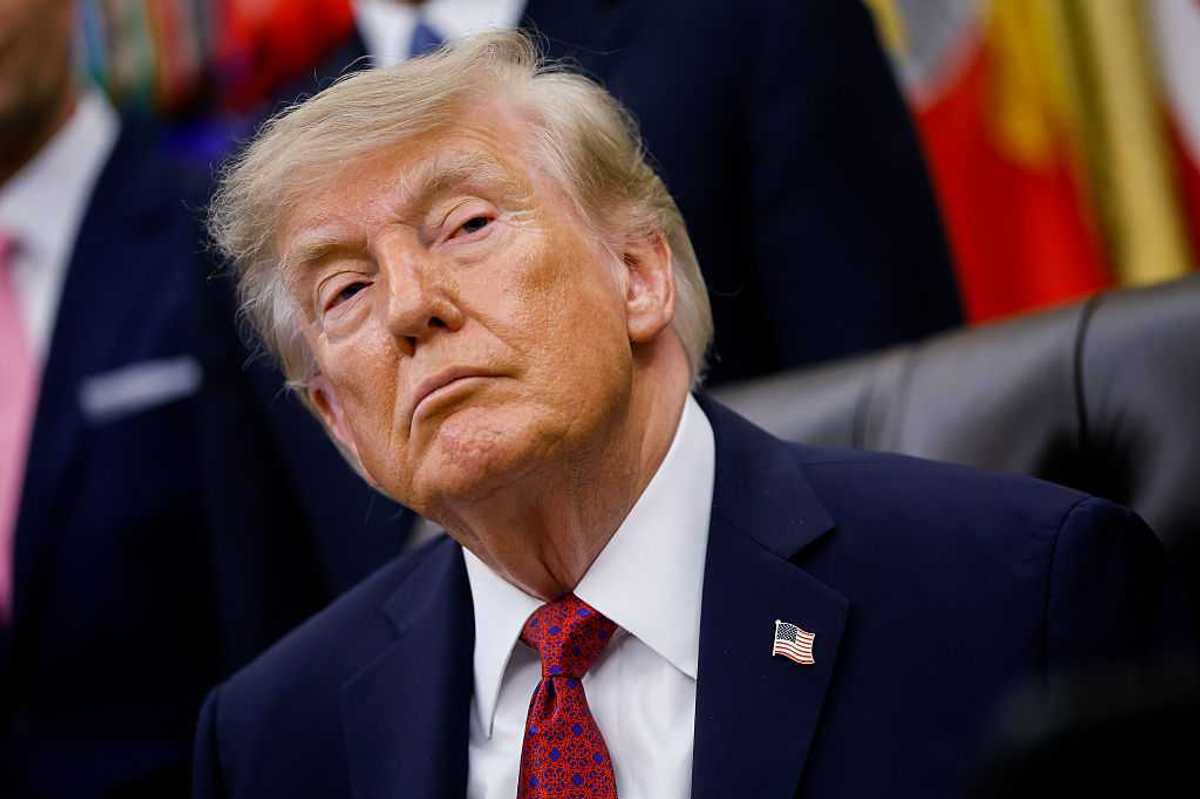
This campaign against Mamdani is typical Trump-era tactics. By distorting the facts and appealing to emotions, those opposed to him seek to turn Jews against Mamdani.
But these campaigns could be counter-productive: To say, as Councilwoman Ms. Vernikov (R) did, that "pro-Hamas antisemites" are emboldened by Mamdani, or to say, as then-Mayor Adams did, that Jews "had reason to be fearful of their safety" under Mamdani, is to encourage that very activity by distorting Mamdani's views and thus encouraging antisemites to feel they have found a comrade.
Mamdani has the intent to be a mayor who makes life in New York better and safer for all New Yorkers, with a special emphasis on support for workers. He has set an ambitious set of goals for his administration. He deserves and needs the support of all New Yorkers if he is to have a chance at fulfilling these goals over the objections of various entrenched interests.
Ronald L. Hirsch is a teacher, legal aid lawyer, survey researcher, nonprofit executive, consultant, composer, author, and volunteer. He is a graduate of Brown University and the University of Chicago Law School and the author of We Still Hold These Truths. Read more of his writing at www.PreservingAmericanValues.com