
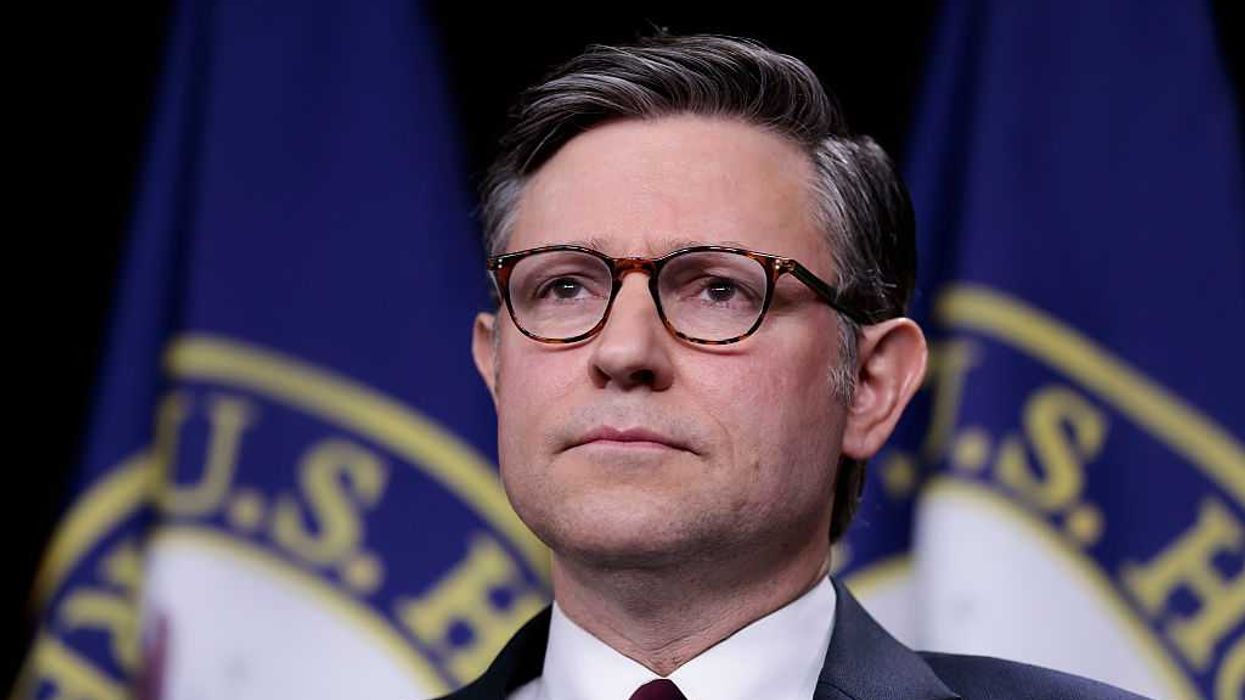
Two weeks ago, a column in the Fulcrum warned that Speaker Mike Johnson was entering a political season defined by "ritual human sacrifice," noting that in a Trump‑branded GOP, someone must absorb the blame when governing goes sideways. In this context, the "sacrifice" refers to the erosion of institutional norms, accountability, and the potential jeopardy of individual reputations. Jonah Goldberg wrote that "Mike Johnson might as well be tied to a stake in the lion’s den."
That line feels understated now, as cascading crises over the past several days have closed in even further around Speaker Johnson.
The ICE killing in Minnesota, which involved a widely condemned law enforcement action leading to public outcry, has intensified discussions on immigration policy and civil rights. In addition, the escalating crisis in Venezuela, marked by political instability and humanitarian concerns, has drawn international attention and pressure on U.S. foreign policy. Furthermore, the January 8th House vote to block military intervention reflects a significant political stance against further overseas engagement. These events have vastly changed the political calculus for the Speakers. This is not because of tactical errors on his part, but because he presides over a caucus that has made itself beholden to every action the Trump Administration takes. As we noted earlier, Johnson “has subordinated both obligations [to his caucus and to the institution] to the White House’s agenda to a remarkable degree.”
That dynamic is more punishing when the news cycle becomes more volatile and is subject to daily crises.
Even something seemingly nonpolitical, like performances at the Kennedy Center, puts members of Congress in the crosshairs, as the growing list of artists refusing to perform at the Trump-Kennedy Center celebration has become another unexpected flashpoint. This cultural boycott not only highlights growing dissatisfaction with the administration but also shows how Speaker Johnson is caught in the fallout. Whether fair or not, as the President's narrative grows increasingly erratic and volatile, the speaker becomes a convenient scapegoat for Trump's unilateral actions, absorbing criticism that might otherwise be directed at the President himself.
As if the above wasn’t enough, then came the Greenland episode. Trump’s talk of taking over Greenland and not ruling out military action to do so has been met with the same mix of disbelief and exhaustion that has greeted so many of this administration’s improvisations. Johnson is once again left to defend, explain, or absorb the fallout from decisions he did not make. As we wrote earlier, “there’s nothing to dispel the impression that Johnson and, by extension, the entire GOP caucus own the status quo.” That impression is now calcifying.
Inside the House GOP, the incentives haven’t changed. Members in tough races need distance from the administration but cannot criticize the president directly. Ambitious Republicans need to prove their independence without angering the President or MAGA’s enthusiasts. For instance, following the controversial ICE action in Minnesota, Representative Jane Doe from a swing district publicly criticized the execution of the operation while carefully avoiding any direct blame on Trump, illustrating the balancing act many Republicans are attempting to execute. Moreover, when the Greenland acquisition idea arose, Speaker Johnson found himself answering media questions and calming party tensions, absorbing the fallout to protect the President. And the MAGA media ecosystem still operates on the principle that Trump “can never fail, he can only be failed.” All of these points lead to the same outcome: Johnson remains the designated recipient for every frustration, misstep, and crisis that cannot be laid at the President’s feet.
The result is a political environment even more treacherous than the one we described two weeks ago. Johnson was already "being set up to be MAGA's fall guy." Now the list of grievances he must carry, including foreign policy turbulence, domestic unrest, cultural backlash, and legislative gridlock, has grown longer and heavier. And the year has barely begun. Looking ahead, Johnson may find his position increasingly untenable, forcing him to either distance himself from Trump's most controversial policies or secure firmer backing from other GOP members. Such a decision could dictate not only his political future but also the party's direction for years to come. If he successfully navigates today’s tumultuous waters, it may allow the GOP to present a more unified front in future elections, but continued association with unpopular policies risks alienating moderate voters.
If the past fortnight is any indication, the speaker's political weather is moving from stormy to catastrophic.
David Nevins is the publisher of The Fulcrum and co-founder and board chairman of the Bridge Alliance Education Fund.