


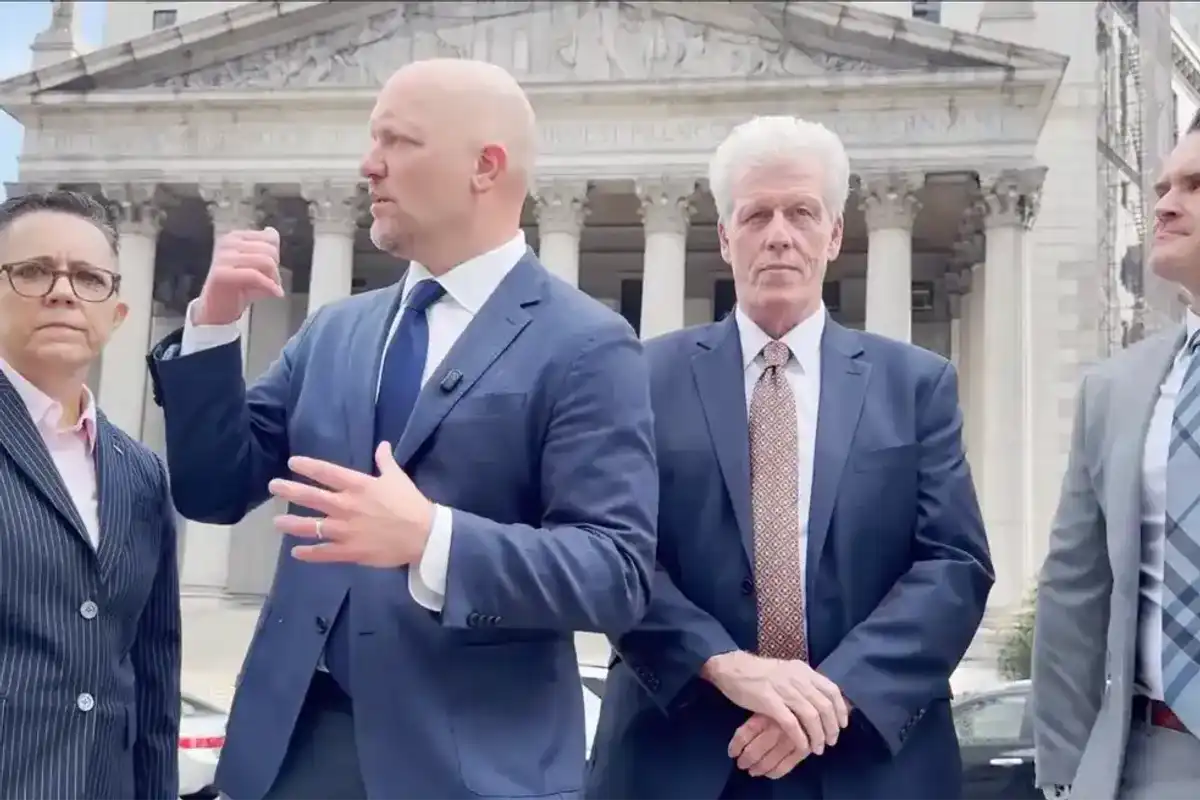
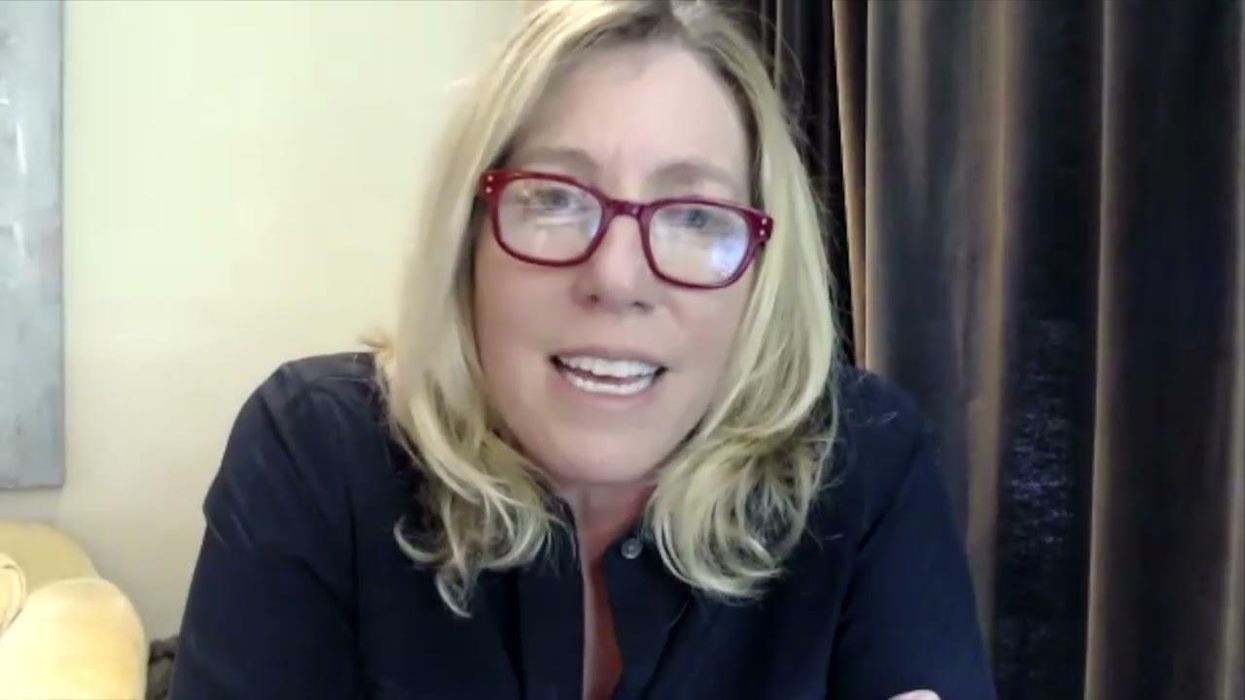
Barbara Walter is a political scientist and professor at the University of California San Diego who specializes in studying civil wars. She joins Braver Angels CMO Ciaran O'Connor for a wide-ranging conversation on the current state of political violence in the United States, what America can learn from civil conflicts in other countries, and how we, together as citizens, can take a stand for peace.
Site Navigation
Search
Latest Stories
Join a growing community committed to civic renewal.
Subscribe to The Fulcrum and be part of the conversation.
Top Stories

Latest news

Read More
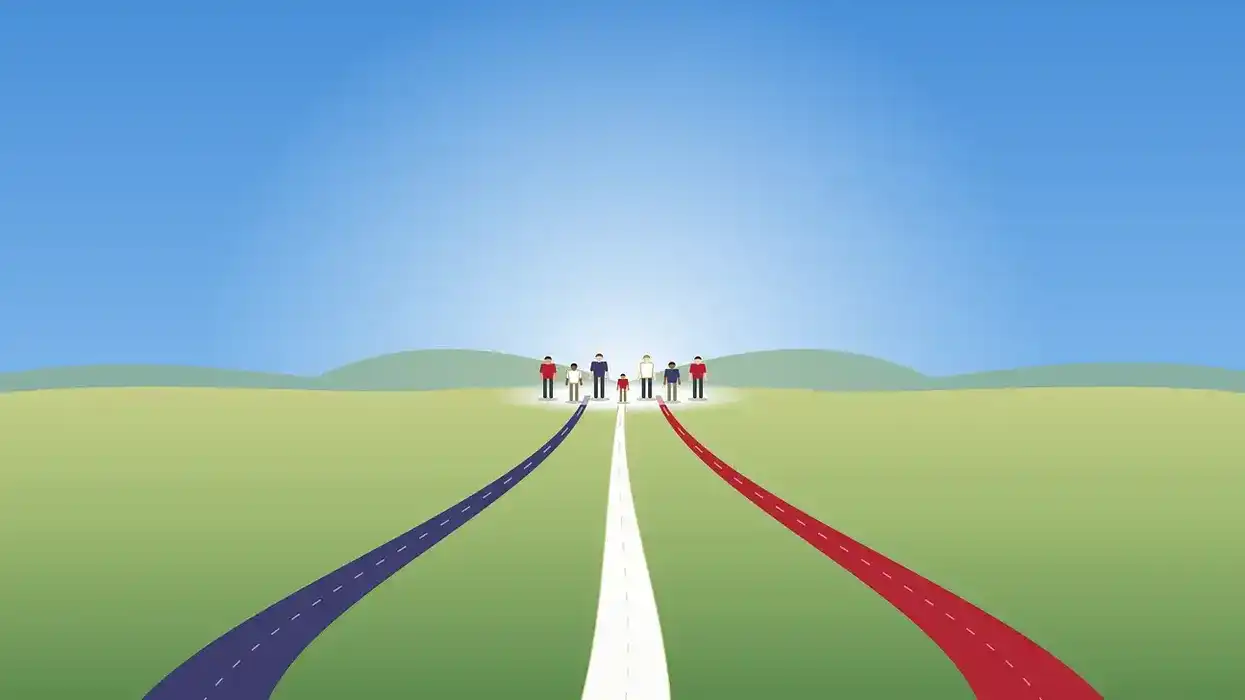
Illustration of three highways with a group of people at the end
Illustration provided
A Third Force
Oct 20, 2026
In my last essay, I described how a nationwide deliberation campaign could produce a People’s Proposal: a common-ground agenda for renewing our system of self-governance, sourced directly from the American people. But a proposal, however broadly the people support it, is not self-enacting. Someone has to carry it into state and national legislatures, onto referendums, and, for the deepest reforms, into the Constitution itself. Who carries the People’s Proposal matters as much as what it contains. If one party shoves reforms through over the other’s objection, it will become simply another round in the toxic partisan boxing match that has left Americans exhausted and bruised.
Thanks for reading Democracy Renewal Group! Subscribe for free to receive new posts and support our work.
What the People’s Proposal needs is a Third Force, a transpartisan movement – rather than a single party – made up of Americans across the political landscape who want the rules of our democratic republic repaired, updated, and improved and who are willing to build the power required to make that happen.
I want to be clear that, by transpartisan, I do not mean a mushy middle that compromises until proposals become meaningless. I mean a powerful force composed of conservatives, progressives, and independents who disagree a great deal yet share the conviction that our system of self-governance needs to be renewed. They transcend their differences to find creative solutions for improving the system even while continuing to debate policy differences. Fix the system now, and argue about the specifics of tax policy later. Transpartisans bring an open mind to the table and judge ideas against their shared principles, regardless of who contributes the proposal. Some of the most valuable transpartisans are people who have broken with their own side on principle, because their commitment to our country’s shared democratic values runs deeper than their allegiance to a party.
A significant percentage of the movement’s constituent base — already forming — is the citizens taking part in a nationwide deliberation campaign. In Nevada, New Hampshire, and South Carolina this year, deliberative forums organized by coalitions of leaders from both parties are gathering residents’ priorities, and representative citizens’ assemblies are turning them into nuanced proposals for state lawmakers. Those leaders are committed to carrying the state’s proposal forward together. The widespread civic participation in these deliberative processes provides a supermajority popular mandate no party can claim, and the political leaders give the base a pathway to enact their proposal into law. The same dynamic will continue as new states join the process and as the Great American Deliberation expands to the national level.
Are We Talking About a New Political Party?
Skeptics will say third parties have never succeeded in the United States, and history supports them to a degree. In our winner-take-all system, new parties face tremendous obstacles and tend to fade away.
Only once has a new party replaced a major one in the U.S. The Whigs held Northern and Southern voters together by keeping slavery off the table, until the Kansas-Nebraska Act of 1854 made that silence impossible and the party fractured. As it broke apart, the Whigs’ antislavery wing — including Abraham Lincoln, William Seward, and eventually Thaddeus Stevens — joined with Free Soilers and antislavery Democrats to build the new Republican Party, which won the presidency in 1860. Other Whigs drifted to the anti-immigrant American Party (commonly nicknamed the Know-Nothings), and a remnant formed the short-lived Constitutional Union Party.1 The antislavery coalition is what endured – and led the Second Founding following the Civil War.
Even though most third parties eventually fade, their ideas often do not. Richard Hofstadter compared third parties to bees, which sting and then die. The two major parties have repeatedly absorbed third-party causes to win back their voters.2 The People’s (Populist) Party is a clear case: it carried several states in 1892 and fused with the Democrats behind William Jennings Bryan in 1896 before it faded. Yet, much of its platform, from the graduated income tax to the direct election of senators, later became law. The party faded away, but its agenda won.3
Consider Ross Perot, who ran for president as an independent in 1992 and won nearly 20 percent of the popular vote — the strongest independent showing since Theodore Roosevelt in 1912.7 He forced the federal deficit into national discourse, which contributed to the balancing of the federal budget in 1998. Following Perot’s campaign, the major parties then worked together to close the openings that had allowed a political outsider to gather that much momentum.
Party realignment happens when a new or critical issue cuts across the old formations and splits both of them. We are living through such a moment now. Working-class voters have moved right, college-educated voters have moved left,4 and a record 45 percent of Americans now call themselves independents.5 The issue cutting across the old lines today is a widely shared sense that our system of self-governance no longer functions as intended. Distrust of Washington crosses party lines: only 17 percent of Americans trust the federal government to do what is right always or most of the time.6 Americans who disagree about nearly everything else agree by large majorities on many of the repairs the system needs. A movement organized around those proposals to renew American democracy can draw from both major coalitions at once, as the Republicans did in the 1850s and the Populists did in the 1890s.
Thankfully, we don’t need a new political party. What we need is a transpartisan coalition that can work together to renew our social contract and reform our system of self-governance. Despite the structural challenges to a Third Force, an independent political movement is rising again today. At the Independent National Convention last week, the message was clear: small third parties and nonpartisan reformers now have — this year, for the first time — a slate of credible congressional candidates willing to carry the political water on common ground reforms. Those candidates were chosen against rigorous criteria that include moral integrity. Among them are veterans who frame their candidacies as a continuation of their oath to the Constitution and an effort to break through roadblocks to new ways of governing.
If the major parties could join forces to keep new voices out of the political system, a transpartisan movement could unite small parties, disaffected Republicans and Democrats, independents, and reformers to fix the system.
Why It Has to Be Transpartisan
The poet Rumi, according to a well-known rendering, once wrote: “Out beyond ideas of wrongdoing and rightdoing, there is a field. I’ll meet you there.”8 The Third Force invites Americans to meet in a field beyond partisanship. If the democracy renewal movement is to succeed, it will be filled with committed Americans who can rise above party to act together during a critical moment in our country’s history. Cross-partisan civility — for example, disagreeing better and lowering the temperature — is necessary but not sufficient. What this moment demands is transpartisan leadership and action: people who not only argue more respectfully but actually stand and build together across our many divides. Why is that?
First, only a transpartisan coalition can break the vicious cycle we are in. Our politics is trapped in a doom loop:9 each side wins power, uses it to advance its program and constrain the other, and provokes a backlash that repeats the pattern. A change to the basic terms of our social contract — especially if it is to be written into the Constitution — would need to draw its legitimacy from having been made together by all Americans and for all Americans. A coalition that visibly spans our many divides would reframe the nature of the fight; it would bring together the power of all people who want to fix the system against those who profit from leaving it broken. And make no mistake: both major parties benefit from the status quo.
Second, only a transpartisan coalition can win a supermajority. Much of the People’s Proposal can be enacted through ordinary legislation and ballot measures in the states as well as in Washington. But the deepest common-ground reforms, those that must be entrenched against reversal, require the supermajorities that constitutional change demands: two-thirds of both houses of Congress and three-quarters of the states. By design, there is no partisan road to those numbers. That is how the Framers intended it to work.
Third, the very cultivation of the coalition would contribute to the healing our country desperately needs. I have argued in a previous essay that a Fourth Founding has two halves: a change in how we treat one another and a change in the rules we live by. A transpartisan political coalition as the visible tip of the democracy renewal movement would model in our institutions what the deliberations build at the grassroots: an understanding that people who disagree can still share a country and a purpose. When leaders stand together across the divide, they can give ordinary citizens permission to do the same.
Where the Third Force Gathers
If that is the coalition we need, where will it come from and where will it gather? Four places look promising.
Among voters. The ongoing political realignment has left millions of Americans without a comfortable political home. Many independents lean toward one party, but many are uneasy associating with both parties, which they see as feeding our toxic politics through divisive and undemocratic approaches. Some voters inside each of the major parties are uneasy with the extremes on their own side: 45 percent of Democrats and Democratic-leaning independents want their party to move toward the center, up 11 points since 2021, and about a quarter of Republicans want the same for theirs.10 These voters need not abandon their convictions. Voters, candidates, and elected officials may come to call themselves Transpartisan Democrats and Transpartisan Republicans. What they need is a movement that will create the space for them to join forces around shared interests.
In Congress. There are multiple strategies for bringing members of Congress together in common cause. The Problem Solvers Caucus brings Democrats and Republicans together in equal numbers, while each member continues to caucus with their own party. An Independent Fulcrum Caucus would ask more: its members would stop caucusing with either party and organize their votes around democratic renewal, in chambers so narrowly divided that a small bloc can decide who holds the gavel and which bills reach the floor. This latter idea was discussed at the recent Independent National Convention as a place to seed the Third Force inside Congress, with an open invitation to members of both parties who are dissatisfied with business as usual.
The sacrifice of not caucusing with either of the two main parties is real. Committee seats are nominated and approved through the party caucuses, and members who walk away would have to negotiate new arrangements. But committee seats mean little in a Congress whose committee system barely functions as intended. The core work of a member — writing legislation, questioning witnesses, and representing constituents — remains. By joining forces for democratic renewal, the members of an Independent Fulcrum Caucus would gain leverage, since a bloc that belongs to neither side is the one both sides must bargain with. A public pledge and a shared code of conduct would hold members to their commitment and enable voters to hold them accountable.
Among governors. As chair of the National Governors Association (NGA) in 2023–24, Utah’s Spencer Cox, a Republican, launched “Disagree Better” to model healthy disagreement among elected officials. Governors of both parties joined in, most prominently Maryland Democrat Wes Moore, and the effort has continued as an independent nonprofit; the NGA and Dignity.Us have since launched a Center for Dignity in Politics to help governors lead across disagreement.11 A transpartisan bloc of governors committed to democratic renewal could model collaboration across divides and pursue structural reforms in their own states relatively independent of federal government politics.
Among former officeholders. Former Presidents and cabinet secretaries, former governors, and former members of Congress share an asset active politicians lack: no one suspects them of angling for the next election. On January 3, 2021, all 10 living former secretaries of defense, appointed by presidents of both parties, published a joint warning that the military has no role in settling election disputes; their oath, they reminded the country, was sworn to the Constitution and not “to an individual or a party.”12 Assembled in advance, a circle of such figures could convene the Third Force and vouch for its good faith, as well as provide powerful leadership for the common ground People’s Proposal which will emerge from the Great American Deliberation.
In Ordinary Times and in Emergencies
A Third Force matters in ordinary politics, where it can carry the People’s Proposal into law. It will matter even more if our politics fractures faster than reform can work its way through the current system. When the Carnegie Endowment studied four countries that recently reversed serious democratic backsliding — Brazil, Poland, Senegal, and Zambia — it found two factors common to all of them: a resilient civil society and an opposition that built broad coalitions reaching well beyond its traditional supporters.13
Brazil is a vivid case. To defeat an incumbent widely seen as a threat to democracy in 2022, the left’s Luiz Inácio Lula da Silva assembled an alliance running from the far left to the center-right and chose as his running mate Geraldo Alckmin, a center-right rival he had faced in a previous presidential race. It was, in effect, a cross-partisan ticket assembled to save democracy. That kind of shared leadership grows from relationships and trust built beforehand, and every alliance forged now strengthens our capacity to come through an emergency with our system of self-governance intact and to build a more inclusive, participatory, and responsive system of self-governance in its wake. My next essay will take up the transitional mechanisms a democratic emergency would call for.
Nothing about our system of self-governance is set in stone. The roles and responsibilities of our political parties, the way Congress is structured, and the way we choose presidents are structures Americans built, and Americans can build differently. In a realignment, perhaps the U.S. could even see a presidential ticket that crosses the partisan divide — a candidate for president from one party and a candidate for vice president from the other, running together on a platform of democratic renewal. In addition to modern-day Brazil, there are examples of this in our own history. Lincoln did something like it in 1864, when Republicans and War Democrats formed the National Union Party and he ran with Andrew Johnson, a War Democrat, as his running mate. What may seem impossible in the abstract has repeatedly proved achievable when the stakes were the survival of a country’s democratic system.
The Third Force is less a blueprint than an invitation. The democratic renewal movement’s coalitions and approaches will need to be co-created by the people who build them, in the same spirit that our Founders embraced 250 years ago. To fix our system will take all of us – or at least a supermajority. Data about our shared values and common ground suggests that is possible. Beyond that, we have a strong foundation to build on as we continue to form a more perfect union. Won’t you join us?
This article was originally published by the Democracy Renewal Group, and republished here with the author’s permission.
Danielle M. Reiff is a retired American diplomat, peacebuilder, and writer.
Keep ReadingShow less
Recommended






New surveys of nearly 20,000 battleground voters find bipartisan majorities say Congress ignores the public, and that more public influence would help.
Philip Yabut/Getty Images
Americans Say the People Can Lead Congress to Common Ground; It Appears They Are Right
Oct 20, 2026
New surveys in battleground states and districts across the country, as well as nationwide, find that Americans—both Republicans and Democrats—believe Congress does what most Americans would do less than half the time.
They also found that majorities agree that if Congress were to be more influenced by the people, it would be more likely to find common ground. In fact, surveys show that majorities of Republicans and Democrats agree on what to do about many issues that Congress is stuck on.
These findings come from surveys conducted by the Program for Public Consultation (PPC) to nearly 20,000 adults in 11 competitive states and 28 competitive congressional districts, from May 27th to June 25th, as part of its Common Ground in the Battlegrounds? survey series. A national survey was also conducted from March 11-19 with 1,200 respondents.
Americans were asked to estimate what percentage of the time elected federal officials make the same decisions as the majority of Americans. Bipartisan majorities in every battleground surveyed and nationally say less than 50%. On average across the battlegrounds, the estimate is just 35%, with little difference between Democrats and Republicans (35% and 38%, respectively).
As research has shown, Americans are correct: Congress is out of step with public opinion on many policy issues. In particular, Congress is not passing laws that are supported by large majorities of Americans.
While Americans do not think that Congress should follow public opinion robotically, they think the people should have substantial influence. Presented with a scenario in which the majority of a Congressperson’s constituents agree on what should be done about a policy issue, and asked how much influence that opinion should have on a 0-10 scale, the mean response was not 10. But it was a robust 7.6.
Perhaps most significantly, over eight in ten say that if the people had more influence, Congress would be more likely to find common ground. In other words, they believe polarization in Congress is not a mirror of the people; polarization comes from the top, not the bottom.
But is the public right?
Surveys by PPC and others have consistently found that the public is correct. Across dozens of issues on which Congress has been unable to reach agreement, bipartisan majorities in the public actually converge. This is true nationally, and in PPC’s current study in the battlegrounds, which has found dozens of policies in numerous areas supported by clear majorities of Republicans and Democrats.
And Americans want their voice to be heard. Asked how often news pieces about a policy issue should include relevant public opinion data (when there is reliable data), over two-thirds of both Democrats and Republicans in every battleground say always or most of the time. Over six in ten say that if Congress is about to vote on a law, it is very or extremely important for news outlets to report on whether a majority of Americans favor or oppose that law.
The public’s desire to be heard is not new. The findings have remained the same, no matter which party is in power. And there are good reasons to believe that if the public’s views were more prominent in the public discourse – in Congress and the new media – this would have a stabilizing and unifying effect on our politics.
Dr. Steven Kull is Director and Evan Charles Lewitus is Associate Director of the Program for Public Consultation at the University of Maryland.
Keep ReadingShow less
Is America still great? An immigrant entrepreneur argues that free speech, opportunity, and the rule of law, not military or economic power, are the real test.
Getty Images
This Is What Makes America Great
Oct 20, 2026
After World War II, America stood victorious over Germany and Japan. Instead of permanent retribution, it helped them rebuild and welcomed former enemies as partners and allies. For me, that moment signaled America’s greatness: power guided by humanity. America earned something that power alone could never command — the respect and admiration of people around the world.
Today, a question once almost unthinkable is being asked: Is America still great — and will it remain so?
The answer depends on a more fundamental question: What makes a nation truly great? Is it military power? Every great military has eventually been surpassed. Is it economic dominance? Economies rise and fall.
America’s greatness rests on something more enduring: freedom of speech, freedom from fear, opportunity, and the rule of law. There is a simple test: Where do people around the world want to live, pursue their dreams, and raise their children with hope for the future?
For generations, millions have chosen America. America has given them the freedom to speak, the opportunity to build better lives, and the chance to turn ideas into reality. This is what makes America great. I know because I have lived it.
My journey began in India and took me through Oman, Dubai, and Canada before I settled in America more than three decades ago. I came here not expecting success, but hoping for opportunity.
Years later, my daughter and I built a technology company around a simple idea. That idea attracted investment from Maveron, the venture-capital firm co-founded by Starbucks founder Howard Schultz and Dan Levitan.
My experience is only a drop in the ocean. Consider Elon Musk, an immigrant who came to America and built companies that transformed industries. Whatever one thinks of Musk personally, his story demonstrates America’s extraordinary ability to attract ambitious people and provide the capital, talent, and markets that allow big ideas to become reality.
This is what makes America great. But opportunity is only part of the story.
America’s greatness is not that everyone agrees. It is that people are free to disagree — even with the most powerful person in the country.
Consider Juan Ciscomani. Born in Mexico, he came to America as a child and became a Republican member of Congress from Arizona. While President Biden was in office, Ciscomani openly criticized his administration’s handling of the southern border.
Then consider Zohran Mamdani. An immigrant who came to America as a child, he rose at 34 to become mayor of New York City, defeating seasoned political figures, including a former governor, despite strong opposition from the President.
Their politics could hardly be more different. That is precisely the point.
The point is not whether we agree with Ciscomani or Mamdani. The point is that they can speak, campaign, persuade, win, and govern without fear of government retribution. This is what makes America great. And now, the other side of that coin.
The President of the United States holds one of the most powerful offices in the world. He faces fierce criticism from citizens, journalists, political opponents, and elected officials. Yet presidential power remains bounded by the Constitution and the rule of law.
That restraint matters.
A nation is not truly free merely because its citizens can speak. It is free when those who hold enormous power respect their right to challenge them. This is what makes the office of the President of the United States great. And this is what makes America great.
America is not perfect. No nation is. Nor will America always possess the world’s strongest military or largest economy. Another nation may someday surpass it in military or economic power. That alone would not make that nation greater. America’s greatness lies elsewhere.
It lies in the freedom to speak without fear, in the opportunity for a newcomer with an idea to build something, and in a Constitution strong enough to protect critics while restraining the powerful.
Military power can make a nation feared. Economic power can make a nation prosperous. But only freedom, opportunity, and the rule of law can make a nation truly great. America has all three.
This is what makes America great.
Uday Walia is an entrepreneur who has lived and worked in India, Oman, Dubai, and Canada and has called America home for more than three decades. A former Indian Army officer who has traveled extensively around the world, he has spent more than a decade building Silicon Valley companies and working with entrepreneurs and investors.
Keep ReadingShow less
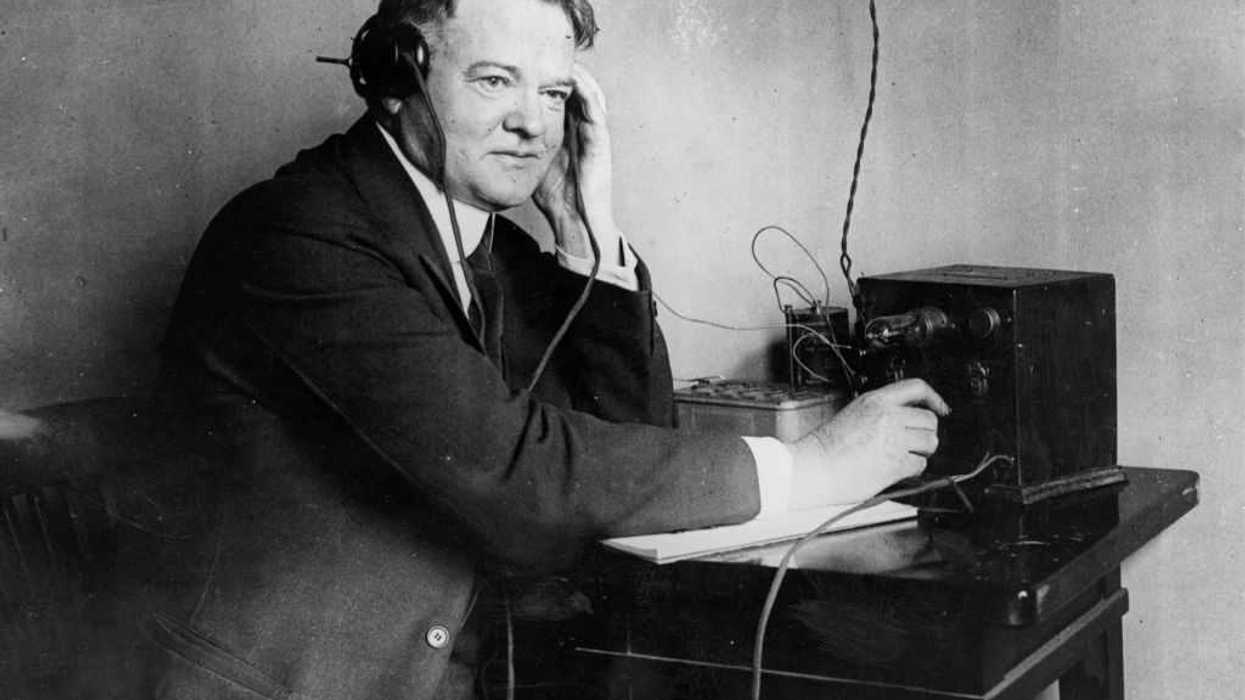
Herbert Hoover (1874 - 1964), Republican Party candidate for the Presidency of the United States of America, listening to a one valve radio set.
Topical Press Agency/Getty Images
A Second Axial Age Demands Global Leadership Rooted in Hoover’s Ideals
Oct 20, 2026
The time has come when we must take an enlarged vision of the future. (Herbert Hoover)
Our 31st President, Herbert Hoover, said this in 1926. Although one hundred years have passed since — and it is always time to take a larger view of the future — his proclamation rings truer now than ever.
The Axial Age refers to a period in human history and a turning point in human development, generally considered the 8th--3rd centuries BCE, when disparate societies shifted away from localized beliefs toward more universal truths. Urbanization, endless warfare, and the rise of empires had broken down tribal structures. With a new collective awareness, people instituted just moral codes and emphasized societal responsibility. These profound changes brought a time of great achievement and promise. Individuals took responsibility beyond their own societies, recognizing that the general good and an improved state benefited all. This “One for All and All for One” collective awareness resulted in a tremendous leap in human achievement.
Hoover was born in a simple two-room cottage in West Branch, Iowa, in 1874 and orphaned at ten. He was a self-made man. An expert mining engineer, he lived and traveled worldwide and was a millionaire by age 40. He gave away most of his fortune; when he made more, he gave away more. He was not motivated by money or by power. He wanted to serve.
Hoover lived a life of public service, embodying the vision our founding fathers had for our nation. The authors of the Constitution did not envision career politicians or PAC money, but people who would serve their constituents. They were to act as leaders, implementing visionary ideas to improve the welfare of individuals and families and thus enhance and promote our country’s welfare.
If there was a President who embodied what the United States strives to be, it was President Hoover, known as the Great Humanitarian. With extraordinary organizational skills, he had a strong ability to work with others and enlist cooperation toward a common goal. In one instance, as Director General of American Relief after World War I, he was responsible for feeding 350 million people in 21 countries. Millions of Europeans credited him with saving their lives.
Hoover served under Presidents Wilson, Harding, and Coolidge before assuming the presidency himself. He won a landslide victory in 1928 and served as president from 1929-1933. But our previous president, Coolidge, and our nation were deafened by the Roaring Twenties and did not listen when he, as Secretary of Commerce, repeatedly warned of impending financial disaster. Much as he tried to circumvent it, Hoover’s presidency was defined by the Great Depression. Yet, after losing to Franklin Roosevelt in 1933, Hoover continued to serve under two more presidents, Truman and Eisenhower.
Many contemporary philosophers believe we are now standing at the threshold of a second Axial Age. Driven by an impending planetary crisis with the triple worldwide threats of climate chaos, global conflicts, and accelerated technological advancement and our increasing dependence on it, we are on the precipice.
Such threats demand a worldwide shift from the “state” to a global perspective, yet we face this tipping point with a dangerously disturbed world order. Governing has a moral component that, if not upheld, will rot a society from within. The “Queen of Hearts” strategy of “off with their heads,” figuratively “decapitating” anyone who disagrees with the “ruler,” does not work now, if it ever did.
Whether millennia ago, during the first Axial Age, or a century ago when Hoover lived, the essential requirements remain the same. Humanitarian qualities must define this movement. Caring for one's fellow man is not a threat to individualism. This is not the time for isolation; it is a time to work together. It is not “us” or “them”; it is all of us.
Now is the time to advance just values and a clear vision. We need statesmen who can see the “bigger picture” and will truly “step across the aisle,” as so few have the courage to do.
There is no reason the United States should not lead the rest of the world as we plunge into this second “Axial Age.” And we will, if we act upon the ideals our country was founded upon.
Our individualism differs from all others because it embraces these great ideals: that while we build our society upon the attainment of the individual, we shall safeguard to every individual an equality of opportunity. I have had every honor to which any man could aspire. There is no place on the whole earth except here in America where all the (children) of man can have this chance in life…. (Herbert Hoover, once again)
Amy Lockard is an Iowa resident who regularly contributes to regional newspapers and periodicals. She is working on the second of a four-book fictional series based on Jane Austen’s “Pride and Prejudice."
Keep ReadingShow less
Load More