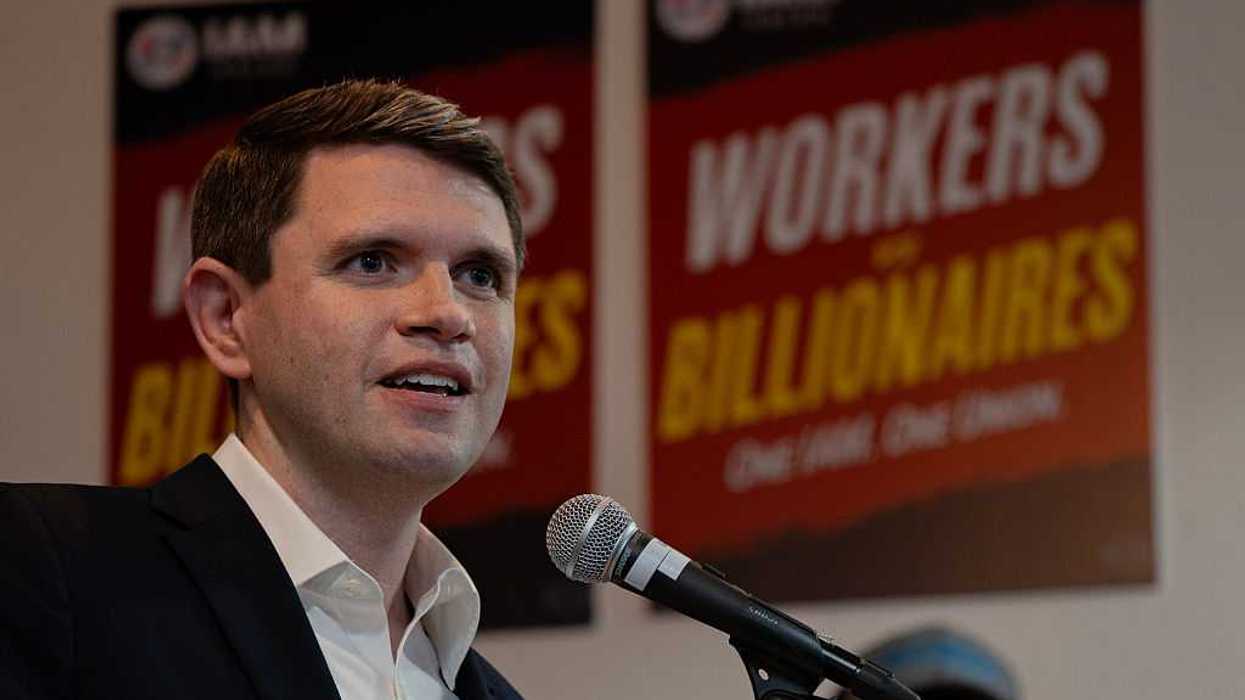


Clancy is co-founder of Citizen Connect and chief civic engagement officer of the Bridge Alliance. Citizen Connect is an initiative of the Bridge Alliance Education Fund, which also operates The Fulcrum.
We all want America to flourish and prosper, but disagreements on “how” keep tripping us up. “How” is much more than picking between policy prescriptions – at its core it involves the way we treat each other, particularly those we disagree with. The person most essential to realizing America in the first place thought about this issue a lot and it’s time to revisit his legacy.
George Washington was incredibly wealthy, physically imposing and a war hero of epic proportions. He could have gotten away with being a total jerk and still been revered. The fact is, many Americans wanted to give him almost limitless power – even make him a king.
His response? To a degree unprecedented in history (with all due respect to Cincinnatus), he put the nation ahead of personal power and glory. Was it because he wasn’t ambitious? Was it because he never felt like knocking Jefferson’s and Hamilton’s heads together and telling them to just behave? Absolutely not. He had the same desires and frustrations we all struggle with – plus he lived in extremely challenging and dangerous times.
In fact, Washington was a highly emotional person who worked incredibly hard to manage his impulses. This is probably why he started cultivating self-control and interpersonal wisdom at an early age. At just 16, he wrote a book for himself now called “Rules of Civility and Decent Behavior in Company and Conversation.” In it he transcribed 110 guidelines for personal conduct, manners and social relations. Reading them now, I’m struck by how relevant they are to today’s political challenges – and the degree to which we’re systematically ignoring them. Here are a few that would contribute enormously to political problem solving and making America stronger – if only we put them into practice:
1. “Every action done in company ought to be with some sign of respect to those that are present.”
49. “Use no reproachful language against any one; neither curse nor revile.”
58. “Let your conversation be without malice or envy, for it is a sign of a tractable and commendable nature; and in all cases of passion admit reason to govern.”
65. “Speak not injurious words, neither in jest or earnest; scoff at none although they give occasion.”
73. “Think before you speak; pronounce not imperfectly nor bring out your words too hastily, but orderly & distinctly.”
74. “When another speaks be attentive yourself and disturb not the audience; if any hesitates in his words, help him not, nor prompt him without desired; interrupt him not, nor answer him till his speech be ended.”
79. “Be not apt to relate news if you know not the truth thereof. In discoursing of things you have heard, name not your author; always a secret discover not.”
86. “In disputes, be not so desirous to overcome as not to give liberty to each one to deliver his opinion and submit to the judgement of the major part, especially if they are judges of the dispute.”
87. “Let thy carriage be such as becomes a man: grave, settled, and attentive to that which is spoken. Contradict not at every turn what others say.”
At a fundamental level, Washington recognized that discipline and respect for others are essential to achieving greatness as a person and as a nation. We’ve strayed too far from these principles – and this represents an existential threat to our democracy. Too many of us have allowed victory by “our side” to take precedence over the best interests of America as a whole. The political dysfunction we suffer today has its roots in this toxic, zero-sum mentality.
Washington also recognized the dangerous role political parties can play in exploiting disagreements to a degree that puts liberty itself at risk. As he stated in his Farewell Address, political parties “are likely in the course of time and things, to become potent engines, by which cunning, ambitious, and unprincipled men will be enabled to subvert the power of the people and to usurp for themselves the reins of government.”
To a substantial degree this is already the America we live in today. Is there a way out of this race to the bottom? Only time will tell, but any real progress requires individual citizens to stand up and speak out. For example, we can make it clear to candidates from the top of the ticket on down that fueling toxic “us vs. them” thinking isn’t authentic leadership or putting America first.
At its core, Washington’s message to all of us is to honor our bedrock democratic principles and be willing to defend them with both courage and compassion. One way to do that is to check out the 600 nonpartisan organizations on Citizen Connect that are dedicated to values Washington would recognize and applaud. These organizations won’t tell you what to think or who to vote for, but they do offer a wide variety of outstanding events, tools and resources to support active citizenship whether you’re on the right, on the left or in the center.
I think the best way to end is to share the very last thing 16-year-old George Washington decided to write down in his book:
“Labour to keep alive in your breast that little celestial fire called conscience.”