

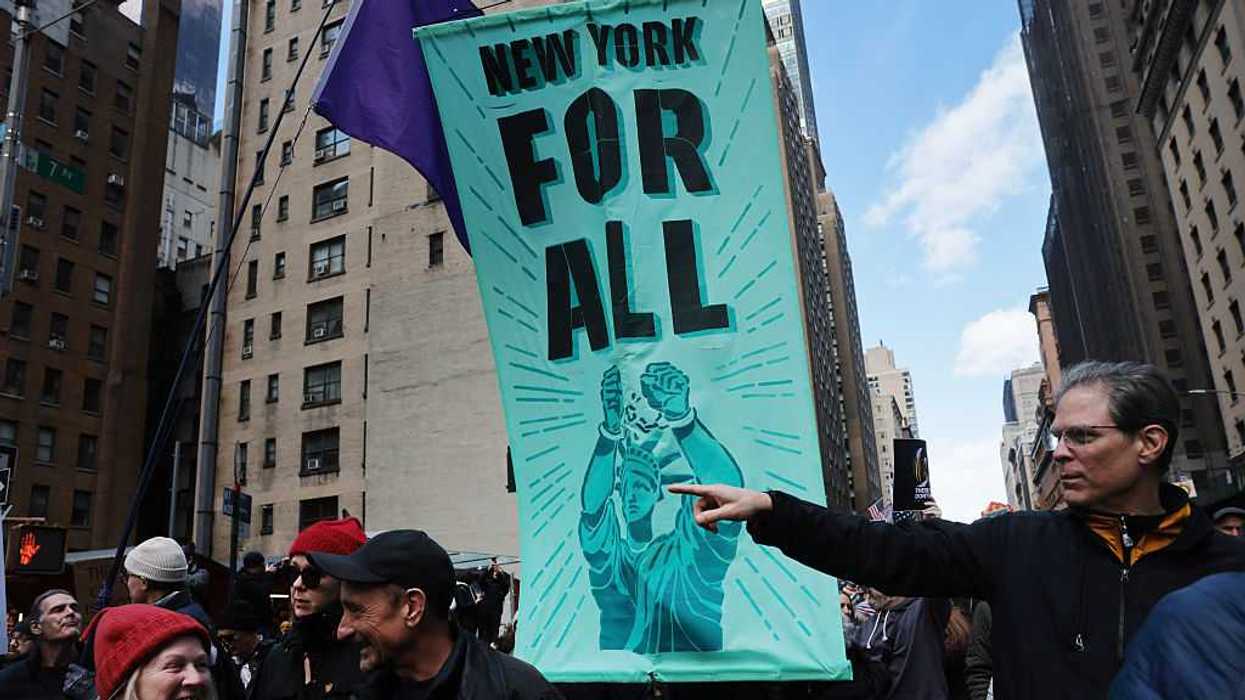

The decisions that shape daily life are almost entirely local. Whether your street gets repaired. Whether your neighborhood gets the housing it needs or the rezoning it doesn't. Whether your school is funded, your park is maintained, and your block is safe. These are not abstract policy questions debated in Washington. They are immediate and tangible, and their consequences fall directly on the people who live with them. And that proximity matters.
Democracy works best when the people deciding a question are the same people who will bear its consequences. When that connection holds, decisions are grounded, trust builds, and governance earns its legitimacy. When it breaks, when authority drifts upward into layers of boards, offices, and bodies disconnected from the communities they nominally serve, something essential is lost; Not just efficiency but also trust, shared meaning, and the felt sense that self-government is real.
What exists in this city instead is the opposite: a structure layered so many times over that no single body has clear authority, no resident has meaningful influence, and the city spends tens of millions of dollars annually on offices and boards that cannot make a single binding decision.
New York City has 59 Community Boards, the bodies theoretically closest to neighborhood-level governance. Their members are not elected nor regularly rotated, but appointed by Borough Presidents, meaning politicians decide who gets to participate in local democracy. Those same five Borough Presidents maintain full offices with communications directors, policy advisors, and community liaisons, at a combined cost of approximately $32.1 million annually. Yet they have no legislative or executive authority. None. This is in addition to the $20.4 million annually allocated to the Community Boards themselves, who also have no legislative or executive authority. The five Borough Boards add another $600,000 on top of that, a redundant oversight layer duplicating functions that were already advisory to begin with. (All figures reflect the NYC fiscal year 2025 adopted budget.) A single housing proposal, for example, can pass through multiple boards and review bodies, none of which have authority to approve it, before it ever reaches the body that does.
Yet, rather than consolidating or restructuring this effort from the bottom up, the city has continued to add to it. The Civic Engagement Commission and its People's Money fund represent a genuine attempt to bring participatory governance to the city, inviting residents to submit and vote on budgeting priorities. The instinct is right. But the program is short-term, advisory-only, without a clear role, does not use lottery or sortition to select participants, and overlaps with the very Community Boards already doing similar work, at an additional $5 million on top of the structures already described. Most recently, Mayor Mamdani established a new Office of Mass Engagement on his second day in office, acknowledging that civic engagement efforts have long been siloed and duplicative across city government. Again, the instinct is right. But without structural consolidation and real authority, a new coordinating office risks becoming yet another layer in a system that already has too many.
New York City needs a different foundation entirely. By consolidating these fragmented, politically appointed bodies into permanent, lottery-selected Citizens' Assemblies at the neighborhood level, these assemblies would serve as the first layer of review before the City Council. Randomly drawn from the population the way juries are, rotating regularly, and charged with deliberating on local issues, including housing, zoning, budgets, schools, and infrastructure, they would reflect the actual demographics of each neighborhood far more accurately than any politician-appointed body.
This is not a radical idea. Sortition, random selection for civic duty, is older than elections. Ancient Athens used it. American courts use it every day. Ordinary people, given structured time and access to information, make serious, evidence-based decisions on questions that impact them directly. Participation would be voluntary, with reasonable accommodations to make service accessible. Unlike most Citizens' Assembly proposals, which have been abstract or overreaching, this framework is deliberately local: assemblies are only as effective as the proximity between the people deliberating and the consequences they live with. Elected government remains essential at every level above it. What has been missing in New York is permanence, clear authority, and genuine standing. That is what this structure would provide.
It would not require new taxes or new spending, only the consolidation of the millions already allocated across these bodies into a single, permanent structure.
New York City has the civic ambition. It has the money. And it knows what its problems are. What it has lacked is the structure. That ends with a City Charter update and the political will to make it happen.
Susan C. dos Reis DiVito is the founder of The Capacity Project, which develops frameworks for the structural redesign of democracy built from the bottom up. Learn more at democraticcapacity.org.