
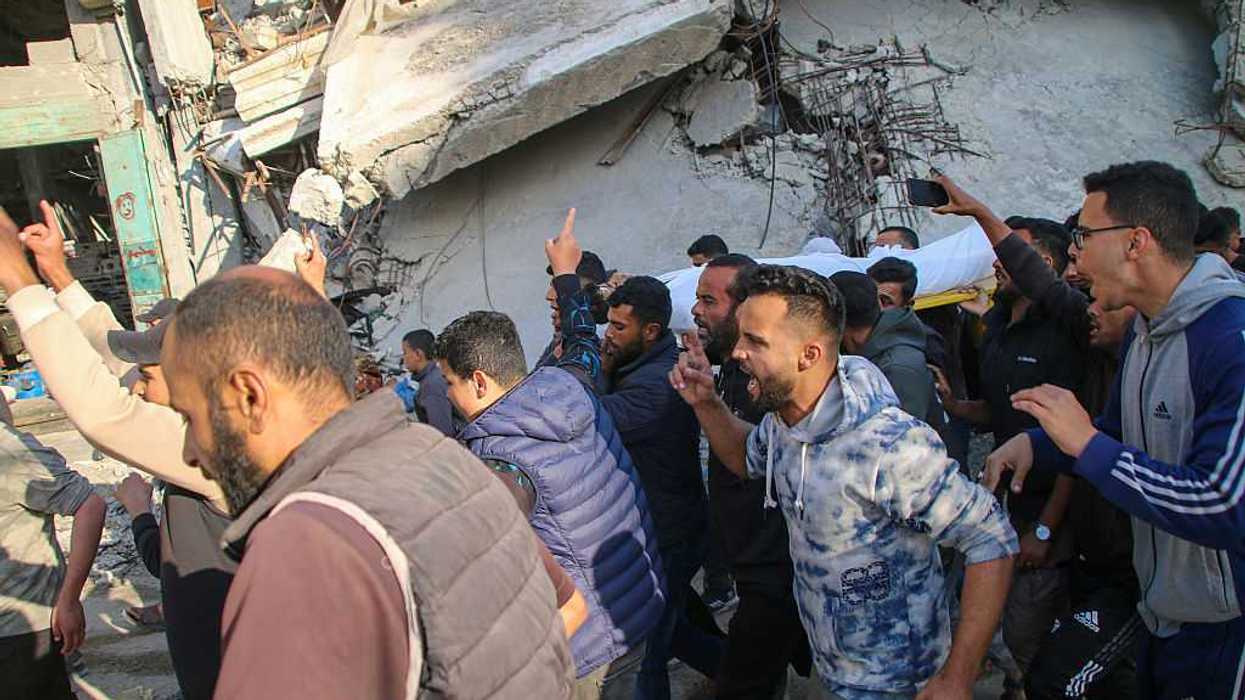
Amid the political and military standoff among the United States, Israel, and Iran, it is civilians — the people with no say in these decisions — who bear the fear, disruption, and uncertainty of every strike and escalation. This week, The Fulcrum’s executive editor, Hugo Balta, reports from Israel with a single aim: to humanize the war by focusing not on the spectacle of Operation Epic Fury, but on the ordinary lives being reshaped by it.
TEL AVIV — As the escalating confrontation with Iran increasingly dominates regional and international attention, the war in Gaza has slipped from the global spotlight. But inside Israel, far from the televised images of missile interceptions and diplomatic brinkmanship, a different struggle is unfolding — one led not by governments or generals, but by grassroots movements insisting that Israelis and Palestinians can still imagine a shared future.
These groups, long dismissed as marginal or naïve, say the current moment has only sharpened their resolve. As Israel expands military operations and deepens its control inside Gaza, they argue that the absence of a political horizon is itself a threat to security — and that coexistence, not separation, is the only path out of perpetual conflict.
A counter‑narrative in the streets
“Security and cooperation are not contradictions.” For Nadav Oren, an organizer with the Arab‑Jewish movement Standing Together, the idea that safety requires walls, checkpoints, and permanent division is a false choice.
“The wish to feel safe from threats does not contradict cooperating with Palestinians,” Oren said in an interview with The Fulcrum. “We are representatives of both peoples fighting side by side against violence and for security from threats.”
Standing Together has become one of the most visible civil society forces in Israel since October, organizing demonstrations, mutual‑aid networks, and public campaigns calling for a ceasefire and a political solution. The group’s rallies have repeatedly faced police repression — a trend documented by Israeli and international media — but Oren says this has only strengthened public support.
“When an officer hits people holding signs, it’s clear who fights for love and who fights for hate and separation,” he said. “More and more people join the movement.”
For Oren, the deeper obstacle is psychological: the enforced separation that prevents Israelis and Palestinians from seeing one another as human.
“Most Israelis have never met Palestinians from Gaza or the West Bank,” he said. “Palestinians only meet Israelis who prevent them from moving around their own land. It’s almost impossible to view people in a humane way when you only see them hurting you.”
A summit that defied despair
That belief — that human contact can still shift political reality — was at the heart of last week’s People’s Peace Summit in Tel Aviv, a rare joint gathering of Israeli and Palestinian peace activists. The event brought together Standing Together, Women Wage Peace, bereaved families, coexistence organizations, and civil society leaders for a day of panels, workshops, and public dialogue.
For Manuela Rotstein of Women Wage Peace, the summit was more than a conference. It was proof that, even in wartime, thousands of people are still willing to show up for a different vision of the future.
“Thursday was a very important day for all of us who want a better future,” Rotstein said. “Despite the extremely difficult reality we are living through, thousands of people came to the Summit to hear panels of academics, activists, and politicians proposing solutions to the conflict.”
Women Wage Peace, founded after the 2014 Gaza war, has grown into one of Israel’s largest grassroots peace movements. Its members — Jewish, Muslim, Christian, secular, religious, left‑wing, right‑wing — are united by a single demand: that political leaders pursue a negotiated agreement to end the conflict.
Rotstein said what struck her most at the summit was the determination she saw in the crowd, especially among younger participants.
“Throughout the day, I spoke with dozens of young people and people of all ages, and I found that most of them are looking for a way out, looking for a better world,” she said. “They refuse to resign themselves to living in a state of war.”
Her message is blunt: wars end, but only agreements create peace.
“Conflicts are ultimately resolved through an agreement between both sides,” she said. “That agreement may come after a long dispute or after a terrible war, as in our case, but it is always the agreement — the one that aims to change internal dynamics — that leads to peace.”
A fragile but persistent hope
The summit’s organizers called for an immediate ceasefire, the release of hostages, and a renewed commitment to a negotiated future. Speakers emphasized that grassroots cooperation remains possible even amid rising regional tensions, arguing that only sustained dialogue and shared security can prevent further escalation.
Their message stands in stark contrast to the political climate in Israel, where public debate is dominated by military strategy, national trauma, and fears of a widening regional war. Yet the activists insist that ignoring the political dimension of the conflict is itself a form of denial.
“People say now is not the time,” Rotstein said. “But if not now — when? When things get even worse?”
For many in these movements, the confrontation with Iran has only underscored the urgency of addressing the unresolved conflict next door. They argue that regional stability is impossible without a political solution for Israelis and Palestinians — and that civil society must lead where governments have failed.
Whether these voices can influence policy remains uncertain. But their presence — in the streets, at summits, in conversations across communities — challenges the narrative that Israelis and Palestinians are destined for endless war.
Oren, Rotstein, and others say they are not naïve. They know the obstacles are immense. But they also know that political change often begins long before it becomes visible.
“We are all humans living in the same place,” Oren said. “Whether it’s the same land or the same globe, we’re all here together.”
For now, their work continues — often unnoticed, often uphill — but grounded in a belief that the future is not yet written, and that ordinary people still have the power to shape it.
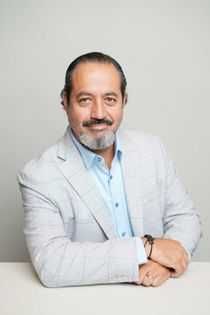
Hugo Balta is the executive editor of The Fulcrum and the publisher of the Latino News Network.
Coverage of this report was made possible in part with support from Fuente Latina.