

As we approach the 250th anniversary of the Declaration of Independence, America is in a pretty foul mood, and I understand why. For starters, Washington is broken, prices are high and rising, and AI is scaring the stuffing out of people.
Understanding, however, is not synonymous with agreement. In other words, some complaints about America in 2026 have more empirical weight than others. Crime may be too high, but it’s been going down for a while.
Actually, let’s start there because crime is a good example of how perceptions don’t necessarily reflect reality.
Since 2000, writes Gallup’s polling guru Frank Newport, “Americans’ views of the seriousness of crime nationwide … have averaged 43 percentage points higher than their views of local crime.” People tend to think crime is much worse wherever they don’t live. Although nearly half of Americans think crime is a very serious issue in America, only about 1 in 10 think it’s a big deal in their cities and towns.
But the “where” is often less of an issue than the “when.” I was a little kid in New York City a half-century ago during the celebration of the bicentennial. Crime there and then, was much worse than today. The homicide rate was five times higher. In 1976, the Big Apple, with a million fewer people, saw 1,622 murders (slightly down from 1,645 in 1975). In 2025, NYC saw 309 murders. So far, in 2026, murders are down about 25% from the same point in 2025.
But it’s not just crime. Surveys routinely find that Americans think the country is in much worse shape than they are personally. Even when large majorities of Americans say the nation is in a bad way, equally large majorities say they’re personally doing OK. Last year, a Federal Reserve survey found that only about a quarter of Americans thought the economy was doing well. But about three-quarters said they were personally doing OK. Education in America routinely gets a failing grade, while the same graders often say education in their community is pretty good.
There are understandable reasons for this disconnect. What we think about the country is often filtered through the media (mainstream, partisan and social — all of which have a bad news bias). Also, our perceptions are shaded by ideological commitments. Meanwhile, what we think about our own life is experienced firsthand.
And then there’s nostalgia, which literally means homesickness, but homesickness for the past.
Fifty years ago, America was in many respects much more of a mess than it is today. Inflation, gas lines, crime, unemployment, political violence, race relations, geopolitical tensions — including the just concluded Vietnam War — were not the stuff of a golden age.
And yet, many Americans tell pollsters we were better off 50 years ago. But here’s the thing, lots of people always think things were better 50 years ago. It has been that way since the dawn of polling. What makes people think the past was better isn’t a careful study of statistics, but a lazy inventory of feelings and a lazier outsourcing to media vibes. This tendency didn’t begin with polling, the polling just made it easier to quantify the pull of nostalgia.
Ironically, the “system” so many people — on the left, right and in the middle — heap scorn on for failing the current generation fuels this malaise. Political demagogues, activists, journalists and big corporations seek to exploit or monetize the natural human tendency to pine for simpler, happier times. The Roman poet Horace had a term for such people nearly 2,000 years ago: laudator temporis acti— “a praiser of times past when he was a boy.”
None of this is to say that Americans don’t have real problems. We obviously do (starting with the fact we have a laudator temporis acti in the White House). The problem comes when we think that the easy solutions to those problems can be found by looking in the rearview mirror.
Pick any era and you can find things worthy of nostalgia. But you can also find plenty of things almost no one wants restored. For instance, the infant mortality rate was three times higher in 1976 and 13 times higher in 1926.
I’m a conservative, so I’m the first to concede that the past is worth remembering and studying. But if all you do is cherry-pick the good — real or alleged — while blinding yourself to the bad, you’re not studying the past. You’re grading the present against a past that never was.
Jonah Goldberg is editor-in-chief of The Dispatch and the host of The Remnant podcast. His Twitter handle is @JonahDispatch.












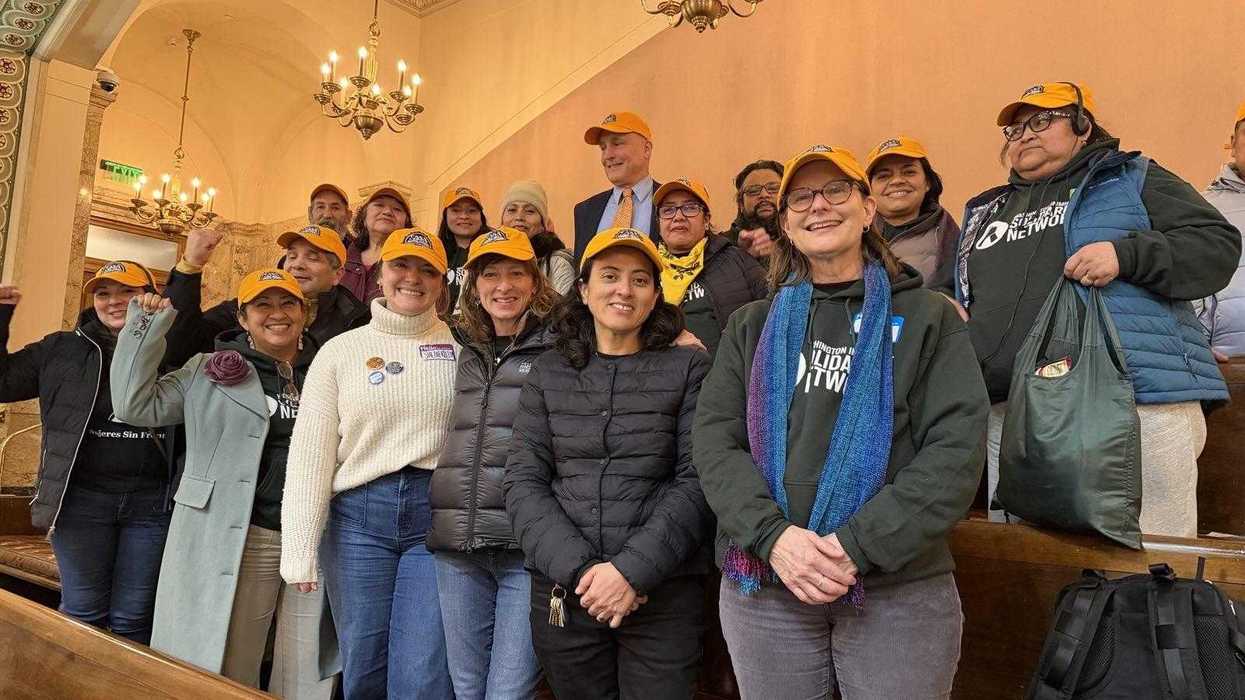
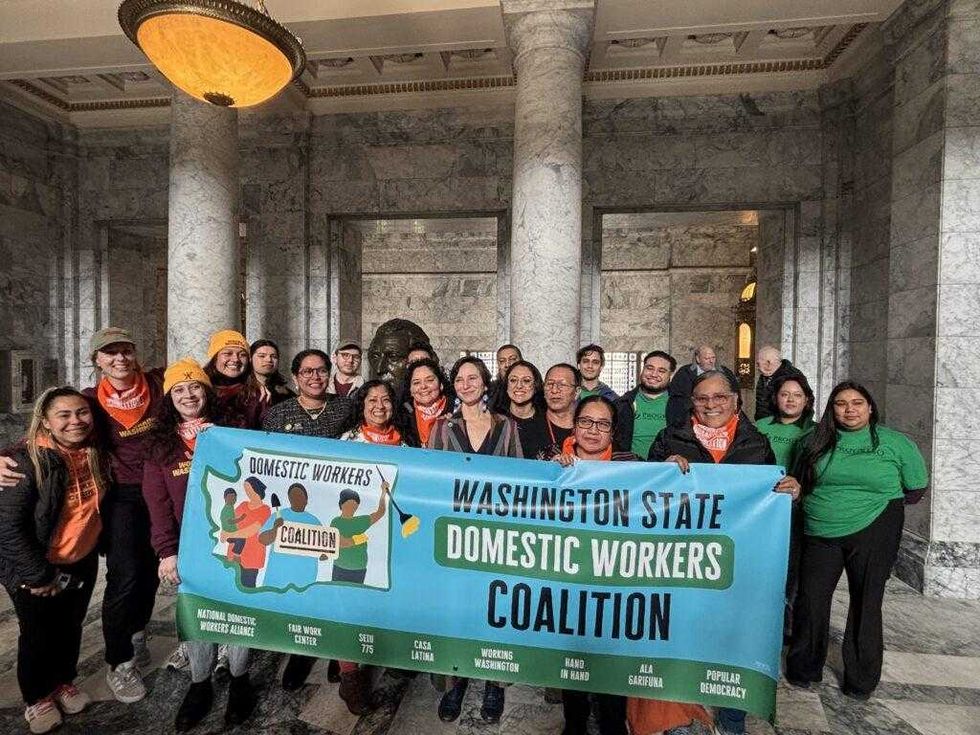 State Sen. Rebecca Saldaña, center, stands with members of the Washington State Domestic Workers Coalition at the state Capitol on Feb. 28, 2026. The Domestic Workers Bill of Rights passed in the House that day, before being signed into law in March. (Photo courtesy of Casa Latina)