






As we approach the holidays, many are concerned about divisive conversations and disruptive moments at family events and neighbourhood gatherings. Joe Palaggi reminds us to seek that place where “no single worldview gets everything it wants, but everybody gets enough stability to keep moving.” At the core of this statement is an acknowledgement that no one perspective holds ultimate expertise. As we close out the year and look ahead to 2026, it may be helpful to consider different approaches to solving our challenges.
Similarly, a recent article from Harvard suggests that it might be time to retire leadership models based on the authority of a single charismatic person or visionary problem solver at the top. “As our world grows increasingly more connected and complex, however, this top-down approach to leadership is becoming increasingly outdated,” suggests the author, noting that many organizations are now shifting towards “new models of collective leadership.”
Collective leadership may be better suited for difficult, entrenched, cross-sectoral issues. It allows groups of people to develop joint solutions, reducing reliance on singular perspectives or authorities. It incorporates diverse expertise by enabling those with specialized skills or knowledge to lead solution development. It can be less conflictual and more consensus-oriented with the right dispute resolution mechanisms.
Collective leadership also allows for deep partnership and collaboration, fostering an ecosystem approach that can make deep inroads on difficult issues such as ending child abuse. In the UK, the contextual safeguarding model developed by Carlene Firmin and Durham University examines the risks that young people face, risks that are beyond their parents’ control. This approach looks at peers, schools, neighbourhoods, and other contexts to understand where children encounter abuse and what could be done to improve protection. Solutions developed focus on reducing a broader range of risks, not just changing the behaviour of the children affected. This may include working with youth groups on safety initiatives, ensuring shop owners or retailers know what to do if they observe a child in an unsafe situation, helping police and legal authorities take action, and increasing awareness among the general public in high-risk locations.
In Kenya, an innovative multisectoral partnership of government, nonprofit, and private sector stakeholders is tackling child abuse holistically through a collective leadership model. The intent is to implement a set of integrated solutions that address prevention, response, and care while also removing systemic barriers that obstruct efforts, such as unfair social norms, ineffective processes, or a lack of rights-based educational and training content. Partners include ZanaAfrica, a child protection and gender equity hybrid nonprofit social enterprise; the Kenya Institute of Curriculum Development as the lead government partner; Education Design Unlimited, researching the barriers that teachers face when delivering puberty education and child safety content in classrooms; Dignitas, experts in teacher training and coaching; and Zeraki, an app used widely across the country by teachers, parents and students for educational and curriculum content. Together, they are adapting a proven child protection school program for delivery across the country, aiming to reach some 24 million children and adolescents at scale eventually. The collaboration is more than a standard partnership: each organization plays a key role in solution development, testing, and implementation, leveraging its own strengths, networks, and expertise. Through this collective leadership and ecosystem-driven approach, the collaboration can have a much bigger impact than each organization working alone: every partner solves a piece of the bigger puzzle.
However, collective leadership isn’t easy. To begin with, the underlying issue has to be well understood in its complexity, pushing past simplistic answers such as “children are responsible for their own safety.” In fact, no minor can consent to their own abuse. Collective leadership models need to consider the factors that contribute to success in the eventual solution and recruit the right partners for the collaboration. Organizations may lack the connections, networks, and relationships they need to pull together cohesive strategies. There may be project implementation challenges or budget constraints that hamper their work; for example solutions at scale rarely receive sufficient grant funding, and evidence generation and sharing are often minimized when resources are scarce.
Despite these barriers, such partnership-based, collaborative approaches give us reason for hope, especially at a time of funding cuts and deep divisions over the future of democracy and civic engagement. By sharing responsibility, collective leadership can provide more effective, impactful pathways towards a better world, with greater cohesion and partnership to come in 2026.
Roopal Thaker is a Public Voices Fellow on Prevention of Child Sexual Abuse with The OpEd Project and works for ZanaAfrica, a Kenyan organization working on child protection and gender equity.










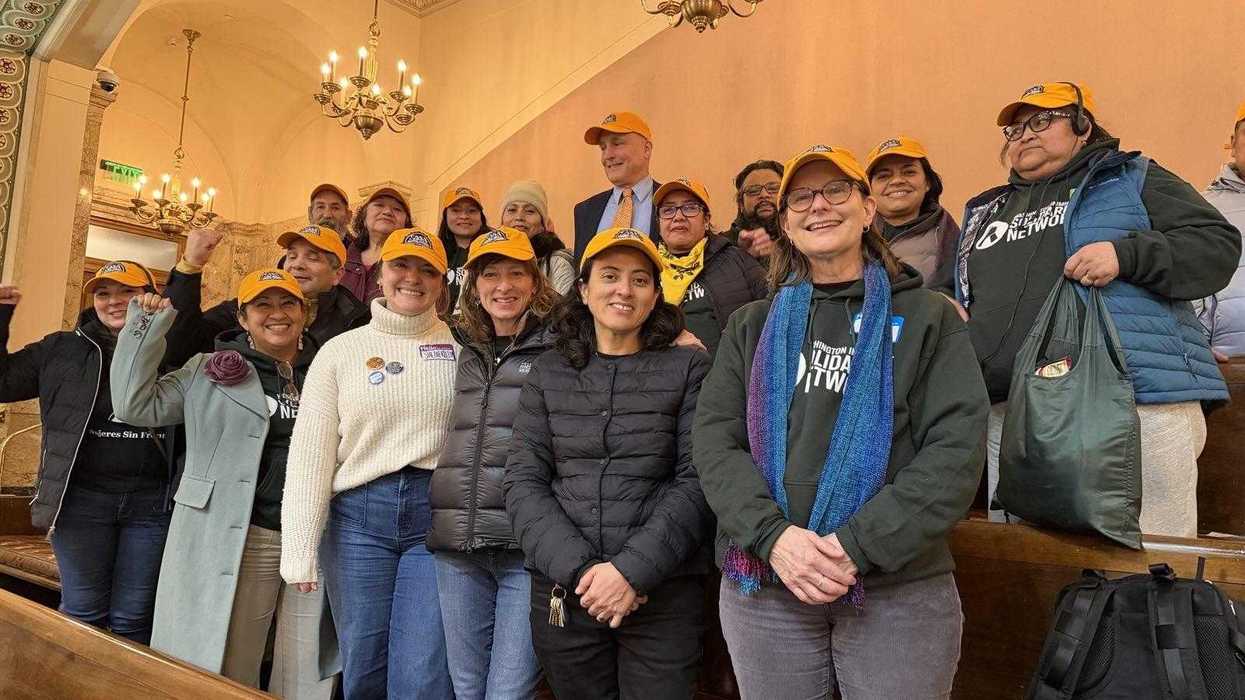
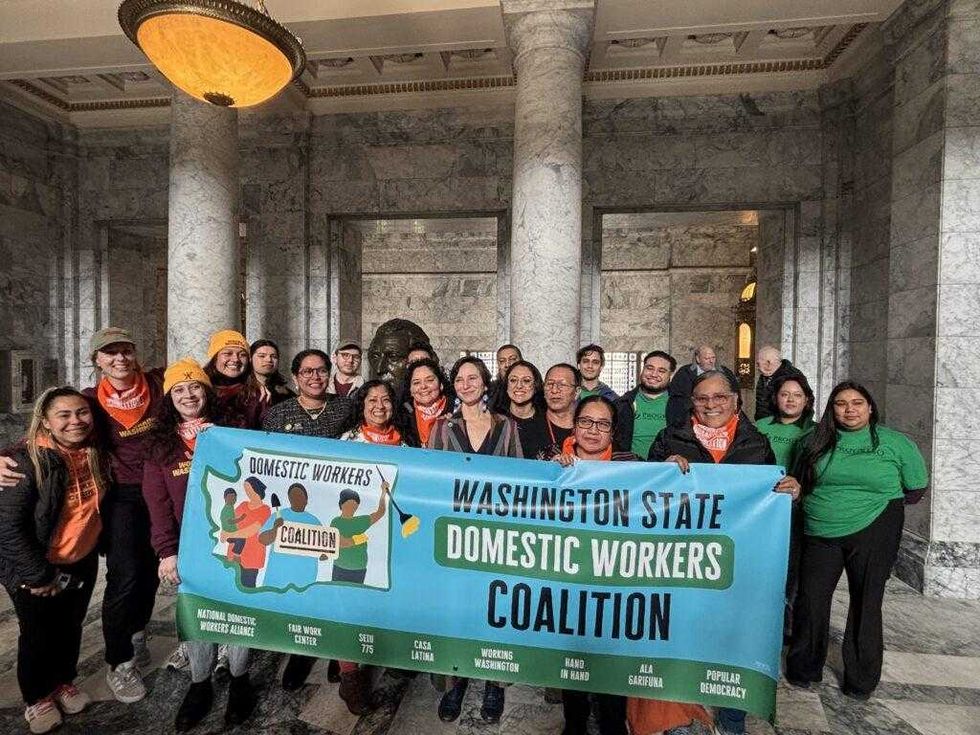 State Sen. Rebecca Saldaña, center, stands with members of the Washington State Domestic Workers Coalition at the state Capitol on Feb. 28, 2026. The Domestic Workers Bill of Rights passed in the House that day, before being signed into law in March. (Photo courtesy of Casa Latina)


The President Invited Iran to Bomb My Home