




Reading, Pennsylvania — the majority‑Latino city that helped shape the outcome of the 2024 presidential election — is once again a bellwether for how Latino voters are responding to President Donald Trump’s first year back in office. Earlier this year, as part of The 50: Voices of a Nation series, The Fulcrum reported that Reading’s residents were motivated by economic anxiety, immigration concerns, and frustration with political rhetoric. Nine months later, those same issues remain at the forefront — but the mood has shifted.
- YouTube youtu.be
New reporting from national outlets shows that Reading continues to draw attention as a microcosm of Latino political realignment. The New Republic noted that Reading “holds the secret to Democrats’ Latino woes,” highlighting how many Latino voters moved toward Trump in 2024 due to economic disillusionment and conservative social values. Another report reinforced that trend, finding that “a growing number of Latinos are turning to Donald Trump” in Reading, driven by concerns about inflation, family priorities, and dissatisfaction with Democratic messaging.
Residents who spoke with The Fulcrum cited the high cost of living as a major factor in their vote. "I know the economy was very difficult under Joe Biden," said Ramon Martinez, co-owner of Mofongo Restaurant. That concern has only intensified. Local business owners say inflation remains a daily challenge, and many families feel squeezed despite national indicators showing modest economic stabilization.
Latino voters in Reading told NBC News that economic uncertainty continues to shape their political engagement, with many describing the current moment as “unexpected” and “unsettling” as they watch national policy shifts unfold.
Trump’s mass‑deportation agenda — a major theme in the 2024 campaign — has become a lived reality for many Reading families. In March, democratic state representative and restaurant owner Johanny Cepeda‑Freyitz told The Fulcrum that fear of deportation was driving customers away and destabilizing the community. That fear has not subsided.
Trump’s immigration crackdown has become a defining issue for Reading’s Latino residents, many of whom support stronger borders but oppose policies that separate families or create a climate of fear.
Reading sits at the heart of what analysts now call Pennsylvania’s “Latino Belt,” a growing corridor of Latino voters whose political preferences are increasingly unpredictable. RealClearPolling reported that this demographic shift is reshaping statewide politics, with more than 600,000 eligible Latino voters now influencing Pennsylvania’s electoral landscape.
While Harris won Reading decisively in 2024, Trump’s gains in Berks County and across the Latino Belt helped him secure the state — a trend that may continue into 2026 unless Democrats re‑engage these communities.
Reading’s political story is far from settled. The city remains a place where economic strain, immigration policy, and shifting cultural identities intersect — and where Latino voters are redefining what political power looks like in Pennsylvania.
As the Trump administration enters its second year and the 2026 midterms approach, Reading will once again be a critical indicator of how Latino voters nationwide are responding to the country’s political direction.
Watch The 50: Voices of a Nation television special:
- YouTube youtu.be
Hugo Balta is the executive editor of the Fulcrum and the publisher of the Latino News Network.











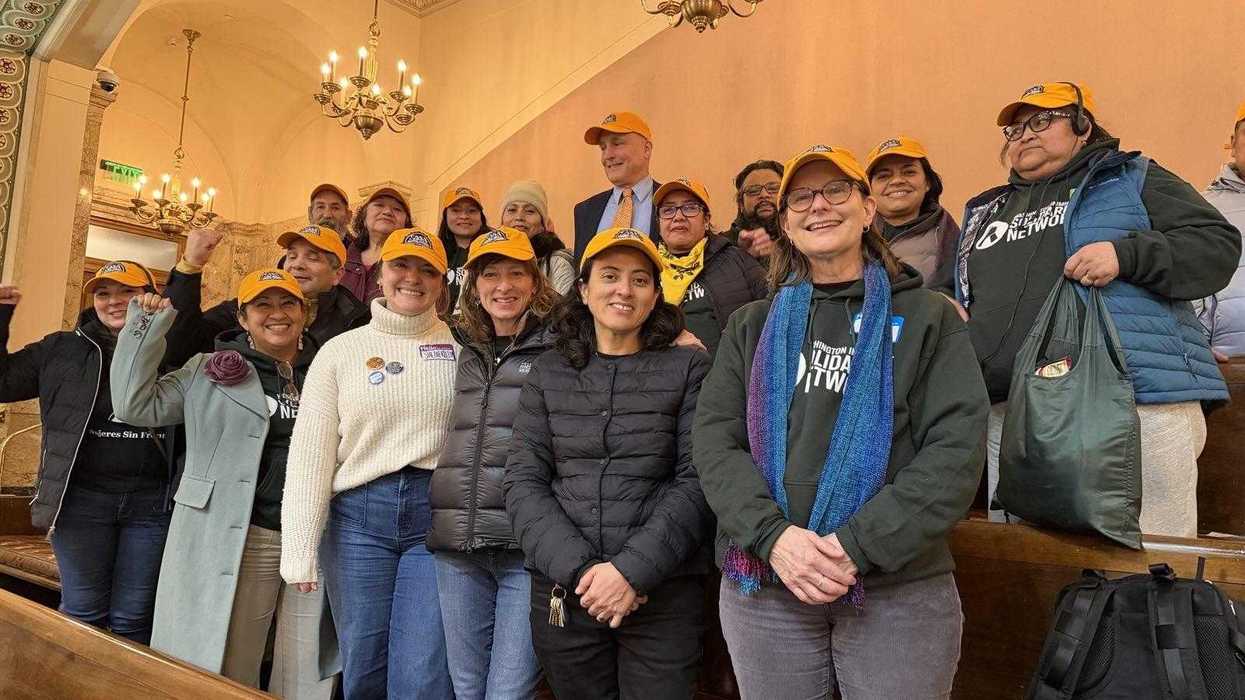
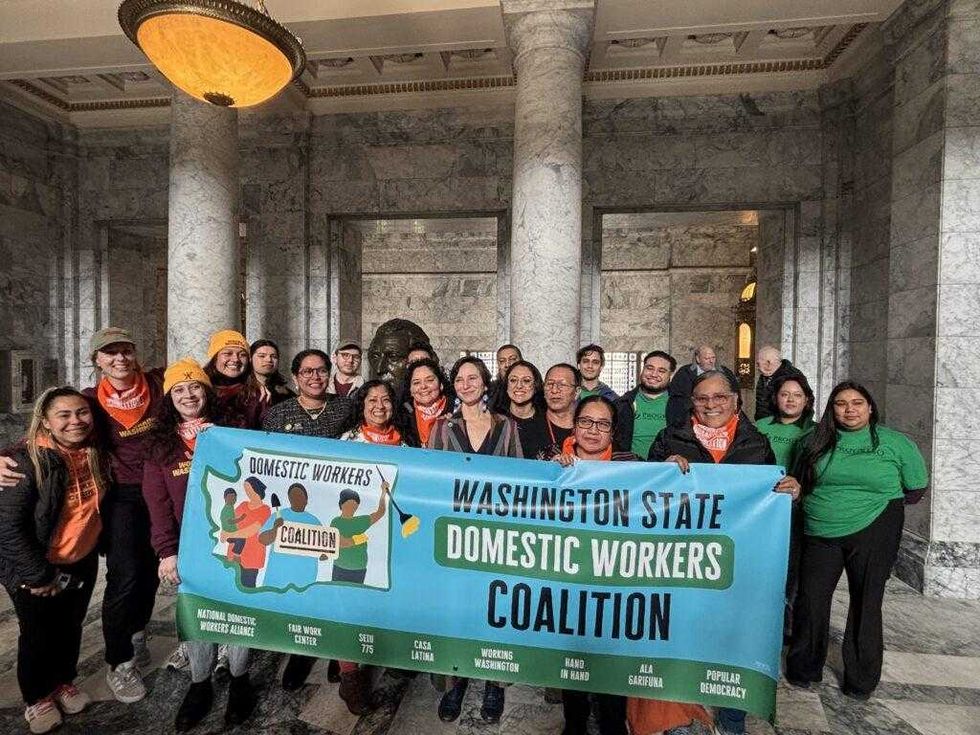 State Sen. Rebecca Saldaña, center, stands with members of the Washington State Domestic Workers Coalition at the state Capitol on Feb. 28, 2026. The Domestic Workers Bill of Rights passed in the House that day, before being signed into law in March. (Photo courtesy of Casa Latina)