
Skip to content
Search

Latest Stories

Follow Us:
Top Stories

America's Heartbreak

Opinion

America's Heartbreak
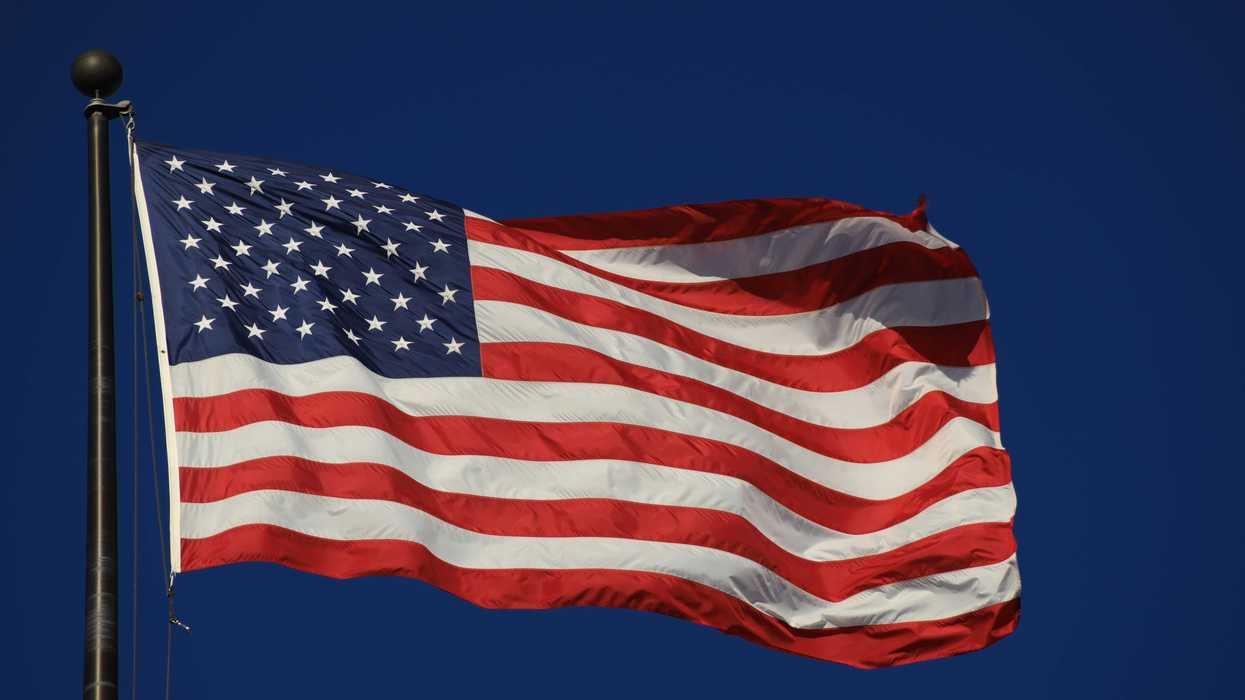
An american flag waving in the wind
Photo by Danny Burke on Unsplash

As part of a collaboration between The Fulcrum's NextGen initiative and Made By Us, The Fulcrum is publishing Letters to America, a series created through the Youth250 project that invites Gen Z to reflect on the nation’s past, present, and future as the United States approaches its 250th anniversary.

America,


I love you, but you’ve broken my heart.

I have watched your promises bend under the weight of power, your ideals stretched thin by policies that forget the people they were meant to serve. I have watched democracy become something people invoke more often than they protect. Too many voices are silenced by systems designed to exhaust them. Too many people are told survival is the same thing as freedom.

And still, I cannot let you go.

Because I know democracy is more than elections and speeches and flags waving in the summer heat. To me, democracy is the belief that every person deserves dignity, safety, and the ability to shape the future they live in. It is the radical idea that no one should be disposable. Democracy is listening. It is accountability. It is protecting each other even when it is inconvenient. It is believed that the country belongs not only to the powerful, but to all of us.

I wish older generations understood that my generation did not inherit stability; we inherited crisis after crisis and were asked to call it normal. We came of age during political division, climate anxiety, school shootings, economic instability, and the constant fear that rights we thought were guaranteed could disappear overnight. We are often called cynical, but the truth is we learned early that institutions can fail. And yet we still organize, still care, still fight for each other. There is hope in that persistence.

I see that hope in communities across this country. I see it in people building mutual aid networks when systems fail them. I see it in young people refusing to stay silent about injustice. I see it in LGBTQ+ people creating joy and safety for one another, even while being debated like abstractions instead of human beings. I see it in neighbors feeding each other, protecting each other, mourning together, and rebuilding together. These are the stories the country should hear, not only stories of division, but stories of ordinary people choosing compassion anyway.

And despite everything, there is still so much I love about you.

I love the passion of your people, the way they continue to dream loudly even in difficult times. I love your mountains and deserts and coastlines, your forests older than memory and skies that seem to stretch forever. I love that somewhere between your crowded cities and quiet rural roads, every kind of person is trying, in their own way, to build a life filled with meaning.

What should America become in the next 250 years?

I hope you become softer where you have been cruel. More honest where you have hidden from your own history. I hope you become a country where democracy is measured not by mythology, but by how well people are actually cared for. A country where freedom is not reserved for the privileged, and where no child grows up believing they are less worthy of safety, dignity, or love.

I hope you become brave enough to change.

Not because you are perfect, but because you are unfinished.

I am still here. Still heartbroken. Still hopeful. Still believing that your greatest strength has never been your power, but your people and their endless ability to imagine something better.

With both grief and love,

Riley Reed, 26, Washington, DC

Read More

The exterior of a home.

While en route to surrender his Army of Northern Virginia to General Ulysses S. Grant on April 9, 1865, General Robert E. Lee rode past Appomattox Courthouse in rural Virginia.

visionsofmaine / Getty Images

The Civil War Never Really Ended, But an American Union Could Finally Help America Truly Heal

In previous essays, I argued that the United States should seriously consider a new governing structure — an “American Union” — in which red and blue America peacefully separate into two sovereign nations while preserving a common military alliance, shared currency, and freedom of movement, with each new nation having its own constitution reflecting its own political consensus.

Simply put, the United States is too politically, culturally, and geographically divided to function effectively under the existing highly centralized, winner-take-all system in which every election determines how more than 330 million people must live.

Keep Reading Show less
 Constitution of the United States

A look at America's growing crisis of trust, rising inequality, technology's impact, and how founding principles can help renew democracy.

Tetra Images / Getty Images

People Are Hurting: The U.S. Needs to Return to Our Founding Principles

There are many ways in which our country is currently struggling, both from a government perspective and from the people's perspective. There is no shortage of articles or studies detailing the ways in which the country and its leaders are failing us.

A recent article by Nicholas Kristof in The New York Times discussed the report of the State of the Nation Project—written by a bipartisan group of experts—that assessed the state of our country on 31 measures. Bottom line, it found that too many people do not feel good about their lives, about other people, or our institutions. This is a nationwide phenomenon; the worst performers may be red states in the South, but liberal states in the North and West have the same problems. And it's not a function of prosperous versus less-prosperous states.

Keep Reading Show less
Democrats Don’t Get Why They’ve Lost Most Working Class Voters

Graham Platner, Democratic candidate for U.S. Senate, speaks at an event hosted by U.S. Sen. Bernie Sanders in Orono, Maine, on May 24, 2026.

Democrats Don’t Get Why They’ve Lost Most Working Class Voters

Since 2016, when Donald Trump shattered the Democrats’ blue wall by winning working-class voters across the Midwest, a cottage industry has sprung up on the left dedicated to answering a single question: How can Democrats win back the working class?

The answers come in different forms. Sometimes it is veteran Vermont Sen. Bernie Sanders – barnstorming red districts, railing against oligarchy and corporate greed.

Keep Reading Show less
​The Edmund Pettus Bridge, in Selma, Alabama, was the scene of violent clashes as Martin Luther King led a march from Selma to Montgomery.

Following the Supreme Court's Louisiana v. Callais ruling, MBA students explore Selma's civil rights history and the urgent lessons of democratic leadership.

Getty Images, Kirkikis

What We Owe Democracy

The day before we flew to Alabama to lead a civil rights and leadership trek with 30 MBA students, the Supreme Court issued its decision in Louisiana v. Callais, a case we were watching closely in light of our upcoming trip. Writing for the majority, Justice Alito substantially narrowed Section 2 of the Voting Rights Act of 1965, ruling that states may draw congressional district lines on partisan grounds even when the practical effect, and many argue the intention, is to dilute Black voting power. Justice Kagan, in dissent, called it the completion of the majority’s “demolition” of the Act.

It was with this backdrop that our students stood with us on the Edmund Pettus Bridge in Selma, Alabama—the very place that birthed the Voting Rights Act, where the courageous actions of a small group of people helped, as Rev. Martin Luther King Jr. so famously put it, “bend the arc of the moral universe towards justice.”

Keep Reading Show less