



The Fulcrum is committed to nurturing the next generation of journalists. To learn about the many NextGen initiatives we are leading, click HERE.
We asked Alexis Tamm, a student at Georgetown University and a Fulcrum Fellowship cohort member, to share her thoughts on what democracy means to her and her perspective on its current health.
I grew up surrounded by symbols of democracy, as if it was something that would simply always exist in the United States.
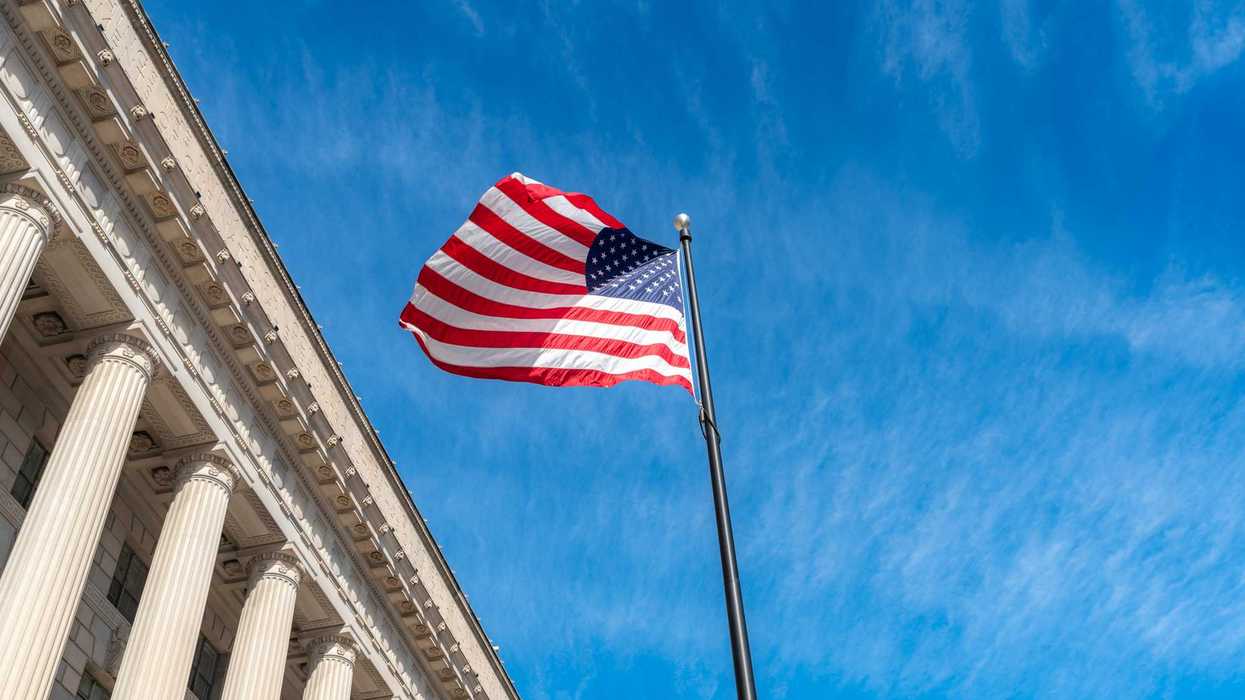
“This is the best country in the world,” my grandfather used to tell me. As an immigrant from Latvia fleeing WWII and the Soviet regime, his family embraced the American Dream narrative and built a life for themselves here from next to nothing. And I never had reason to question his assertion. I stood among my classmates with my right hand over my heart as we recited the Pledge of Allegiance every morning at the instruction of the cackling loudspeaker of my public elementary school classrooms. My family used to count how many American flags we could spot flying from the houses we passed on our way to the local Fourth of July parade. Our democracy is so well-woven into the fabric of our country’s history and the symbolism of American life that I thought I would never need to doubt its health and stability.
Democracy as a form of government literally means power vested in its people. But it’s much more than just elections or government institutions—it’s a relationship among its citizens. And in a country of more than 342 million people of all backgrounds governed by fifty semi-independent states, there will never be a singular consensus about anything. Today, our democracy has grown fragile because it depends on its citizens’ willingness to engage with each other, and growing polarization has been eroding that foundation.
A recent Pew Research Center study found that the health of our democracy notably declined in 2025 following a pattern of weakening over the past decade, according to multiple evaluations that have long tracked the performance of democracies around the world. And this decline is perceived among the public: in a March 2026 survey, 69% of American adults reported dissatisfaction with the way our democracy is working. But the irony of this dissatisfaction is that our democracy and its future don’t lie solely in the hands of those in office. While elected officials may bear the heaviest weight of democracy, it is built on its people—a foundation that has been strengthened by centuries of collaboration, discourse, and debate.
During my time in college, I noticed many people seemed to feel that it was their responsibility to impose their beliefs on others, or actively (and often vocally) isolate themselves from those with different viewpoints. I watched as people unfriended classmates on social media when they discovered such a difference, whether it be a political party they supported or a campus organization to which they belonged. I even had a friend urge me to rethink my relationship with my grandparents—who I have always been very close to—because they held the “wrong” political views. But when did disagreement validate exclusion—and how are we supposed to uphold the same democracy if we refuse to even acknowledge each other?
This is the crux of the issue: we are too focused on exerting our own beliefs and surrounding ourselves with people and media who support our way of thinking. In a world where information has never been so accessible, it is easy to put ourselves in an echo chamber, whether we do so consciously or not. By consuming only information that enforces our own beliefs, we risk isolating ourselves from perspectives and experiences outside our own. The problem is not that many people hold strong convictions—this, in fact, is the very thing that keeps our democracy in check—but rather that they refuse to acknowledge or are quick to dismiss others with different perspectives. By doing so, we remove any possibility of bridging differences to find a common solution that benefits us all or, at the very least, understanding what makes our belief systems so distinct, even if we will never actually agree. A strong democracy requires a balance between conviction and coexistence.
Democracy isn’t self-sustaining; it is practiced daily by every citizen in the smallest of ways. Yes, we must continue to uphold our critical role in maintaining democracy as voters and voices to advocate for ourselves and our beliefs. But more importantly, we must consciously think about the role we play in strengthening our democracy. It can start with a few simple actions: diversify your information sources. Have a conversation with someone you disagree with—and listen to understand, not to respond. Don’t jump to judge others before you take the time to learn what drives their beliefs.
Disagreement is inevitable—in fact, it’s necessary in a nation so large and diverse. But unless we can agree to disagree in ways that allow us to develop empathy and understanding for people different from ourselves, we will never be able to save our democracy’s fragile foundations.
Alexis Tamm is a Fulcrum Fellow and a student at Georgetown University. An avid writer and aspiring journalist, she is passionate about solutions-focused reporting and driving change through storytelling.





The President Invited Iran to Bomb My Home