Earlier this year, the Bridge Alliance and the National Academy of Public Administration launched the Fellows for Democracy and Public Service Initiative to strengthen the country's civic foundations. This fellowship unites the Academy’s distinguished experts with the Bridge Alliance’s cross‑sector ecosystem to elevate distributed leadership throughout the democracy reform landscape. Instead of relying on traditional, top‑down models, the program builds leadership ecosystems—spaces where people share expertise, prioritize collaboration, and use public‑facing storytelling to renew trust in democratic institutions. Each fellow grounds their work in one of six core sectors essential to a thriving democratic republic.
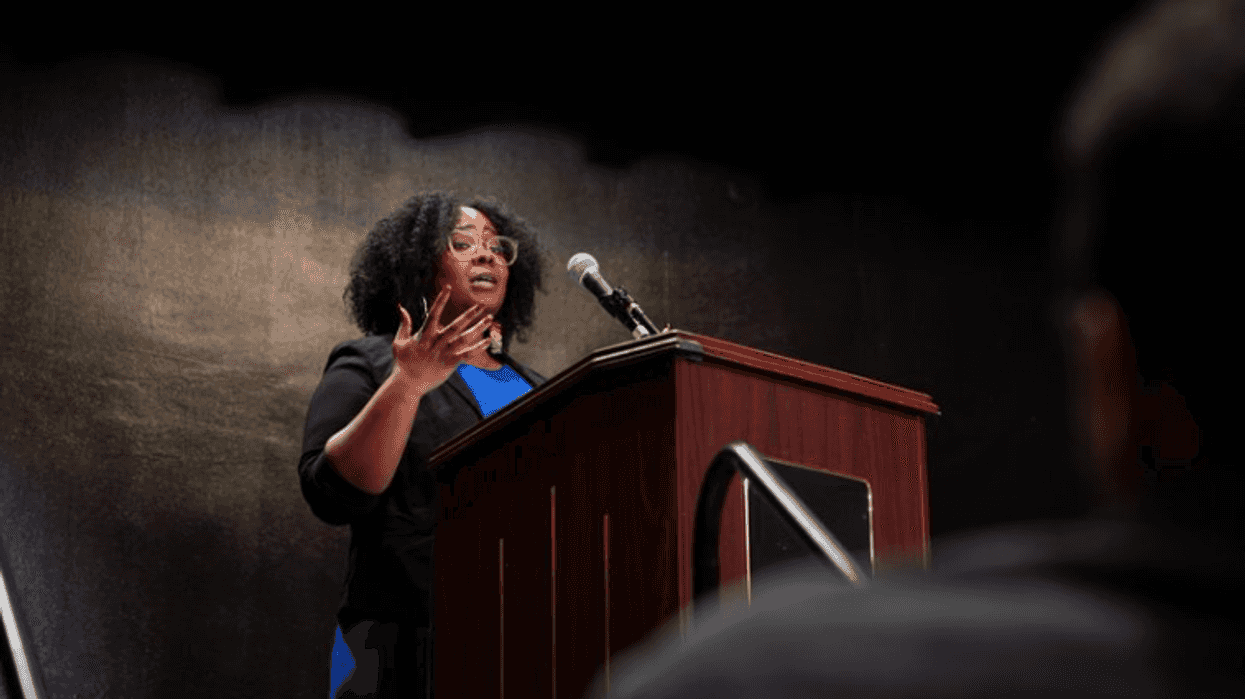
Below is an interview with Dr. Shaniqua Williams, Assistant Professor at West Virginia University. Her research focuses on state politics, race and ethnicity, Black political behavior, Black women’s descriptive and substantive representation, and election administration. She is also a Research Fellow with the Center for Election Innovation and Research, where her work focuses on election administration, workforce development, infrastructure, and policy.
Her Fellows for Democracy and Public Service Initiative will focus on strengthening impartiality, transparency, and trust in U.S. election administration by developing an evidence-based framework to train and professionalize mid-level election staff and expand pathways to diversify the election workforce.
—--------------------------------
Question: Tell us a little bit about your journey to this project. What experiences or feelings led you to believe that the project you’re engaging in is important?
Shaniqua Williams: I've been working with election administrators for years. Through that experience and my fellowship with the Center for Election Innovation and Research, I thought about who the people are working in elections. A lot of the research and attention are on chief election officials who are at the top of the food chain, and then your temporary workers such as poll workers. But the election workforce is huge. We have so many people who are involved in elections 365 days a year and there's not a lot of focus on them. Through my conversations I saw firsthand how much responsibility mid-level staff carry, and how access to training is uneven. I got involved and interested in professionalization and workforce pipelines, seeing how both could strengthen our capacity and expand access to the field.
Question. Could you describe the project, your approach, and your anticipated work with stakeholders?
Shaniqua Williams: I'm focusing on strengthening training standards for mid-level election staff while also expanding pathways into the profession. And through this project I plan to produce two essays. The first will outline scalable professionalization and training frameworks specifically focused on that mid-level staff. And the second essay will propose workforce pipeline partnerships between election offices and minority serving institutions. And so at the end of this project I plan to have quite a few deliverables and frameworks that could be used within academic institutions as well as within election offices for training and for recruiting diverse members into the workforce.
Question: What practical outcomes do you expect?
Shaniqua Williams: I plan to create one page implementation guides as well as partnership models that connect election offices with universities, especially minority serving institutions. Strengthening these professional development systems will help offices retain experienced staff. It will also improve operational consistency and create transparent career ladders.
I also think that expanding entry pathways will also help diversify the workforce and that will strengthen institutional legitimacy and public trust. So, within these pathways we will create a partnership framework, and it will provide a replicable model that jurisdictions can adopt to build recruitment pipelines through these minority serving institutions.
Question: How might citizens or other key stakeholders utilize your work on this project to approve American democracy.
Shaniqua Williams: Citizens benefit when elections are administered professionally, consistently, and transparently, which happens by strengthening training standards and expanding workforce pathways. This project’s goal is to enhance operational quality, institutional legitimacy, and trust in elections.
See a short video of Dr. Williams here:
- YouTube youtube.com
Bradford Fitch is the former CEO of the Congressional Management Foundation, a former congressional staffer, and author of “The Citizen’s Handbook for Influencing Elected Officials."