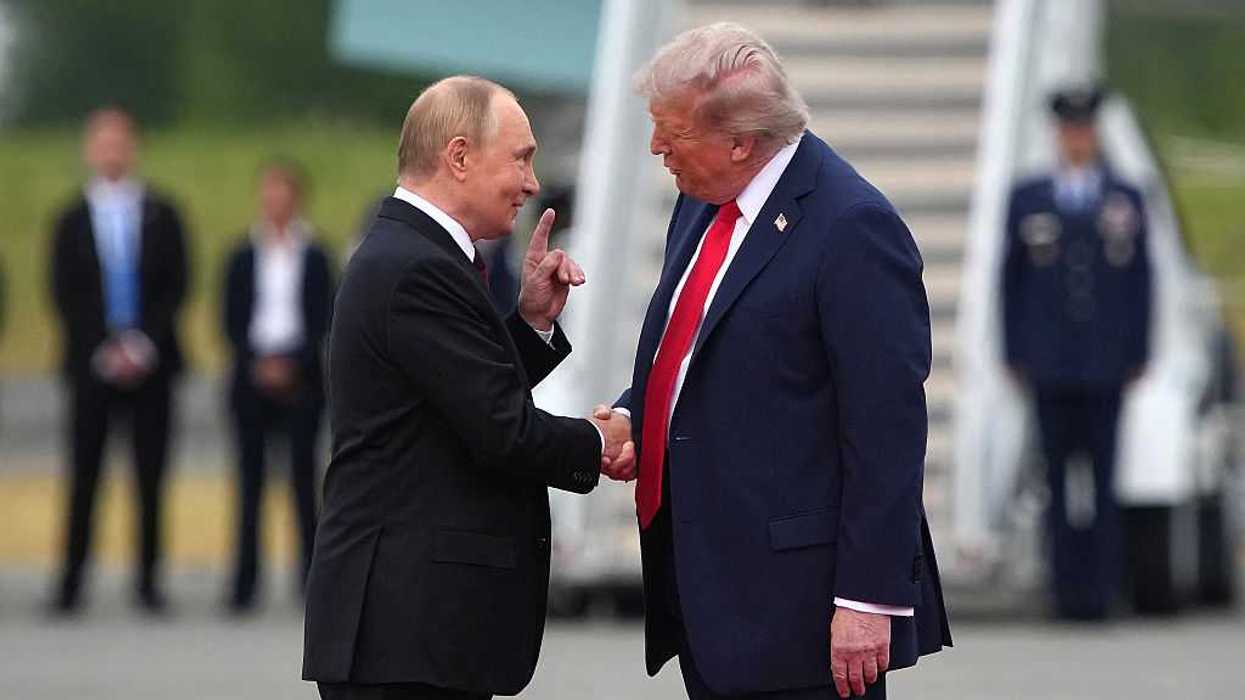


In any so-called banana republic you need enablers. President Donald Trump has Mike Johnson, Speaker of the House, and Supreme Court Justices Clarence Thomas and Samuel Alito leading the charge. Johnson is pulling Congress along with the justices who are the most ferocious defenders of Trump on the Supreme Court. It just takes a handful of enablers to allow a king to assume his crown – or to have a banana republic. And these guys are exceptionally good at what they do.
And as jaywalking is only a crime if enforced, Trump is allowed to continue on doing whatever he wants without guardrails or fear of getting a ticket – just like most Americans feel about jaywalking: It’s against the law, but who really cares?
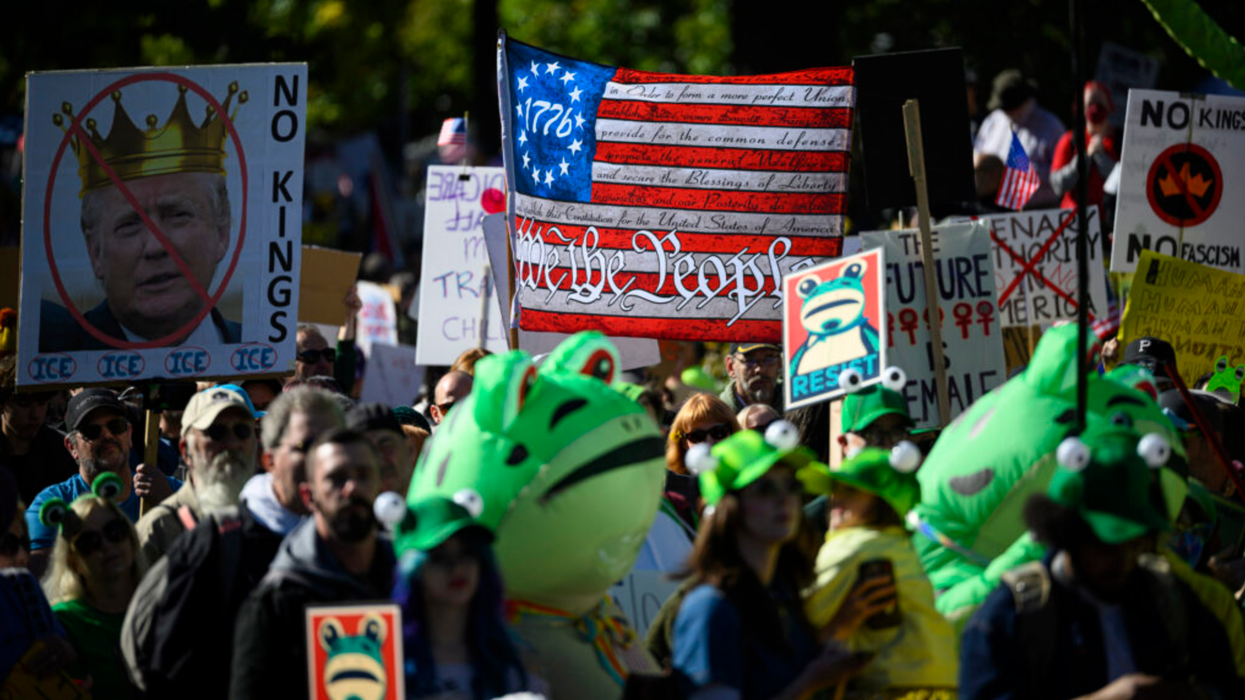
The “No Kings Day” march that took place over the past weekend fell around the same date, as fate would have it, as the anti-Vietnam War march in Washington, D.C. (October 21, 1967). At that time, over 100,000 people marched to show then-President Lyndon Johnson their objection to the war. It eventually contributed to Johnson deciding to not seek re-election in 1968. It became clear to Johnson that he was losing not just the war but the faith of the American people. Last weekend, over seven million Americans marched across the nation in more than 3,000 venues to express their lack of faith in Trump.
Johnson responded to the 1967 march by aggressively engaging in a propaganda campaign to allow him to push his false narrative about the conditions in Vietnam. Trump has countered with a Looney Tune-like AI cartoon posted on his social media page in which he is depicted as a king flying a jet over a crowd of No Kings protesters and dumping load after load of what presumably is human feces on their heads. Not funny. Well, I am sure dictators like Russian leader Vladimir Putin, Chinese President Xi Jinping, Iran’s leader and North Korea’s leader all found it hilarious.
If any other U.S. president did the same, congressional leaders would not be smiling and condoning it with their silence.
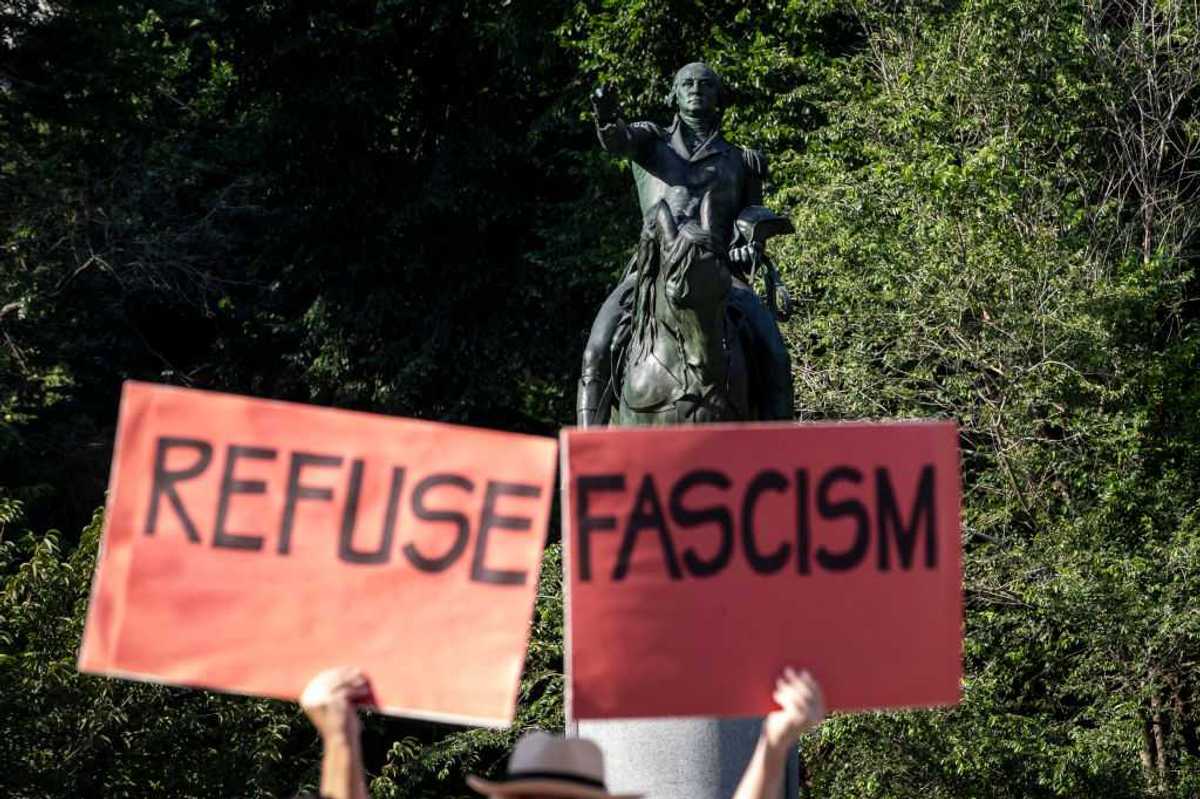
The No Kings march should be followed with a “no confidence” vote by state legislatures (state representatives and state senators). Such a follow-up act to the No Kings march would be a first, and it would be bad for Trump’s legacy, and it could act as strong pushback to his abuse of power. “We the People” do not have to wait until the 2026 mid-term elections to have our voices heard.
So, in order to be a king or an authoritarian you need enablers. Step up to the front, Justice Thomas and Speaker Johnson.
Thomas, the Black justice on the Supreme court, has earned deep disdain among the Black community. Some refer to him as an “Uncle Tom,” a term depicting a Black person who personally benefits from helping white people but hurts his own people. Thomas has boasted about not necessarily feeling bound to existing laws and precedence. According to Thomas, that translates to: “I will change the law (precedence) so others will not be breaking the law into the future.” It must be nice.
We have numerous key questions before the court – American citizenship, voting rights, civil rights, threatening private institutions to conform to Trump’s wishes or risk losing federal funds via the use of very questionable non-traditional tactics, potentially imposing unfunded mandates on states, withholding federal funds for previously approved appropriations, tariffs (the soybean crisis caused by Trump’s tariffs could result in a $20 billion bailout to U.S. farmers), use of the U.S. military on citizens often with little to no proof of emergencies.
So, who would truly want to change the laws so they are not truly breaking the law? My guess is that we should first look at the folks that have “invested” and ingratiated themselves with, or have financially helped, justices like Thomas.
While as a member of the court, Thomas has reportedly accepted $2-4 million in gifts while Alito has accepted nearly $200,000 in gifts from a handful of right-wing activists.
No other members of the court have received such generous monetary “assistance.”
Then we have the other enabler, Speaker Johnson.
The federal government is closed, and Johnson has refused to call Congress back in session to help work towards reopening the government. During the summer he closed Congress abruptly to prevent a vote on the release of the Epstein files. He has done everything in his power to stop the full release of these files in an effort which seems designed to protect Trump.
Johnson has also been silent on Trump using federal funds to buy shares in American companies, much like how China has part ownership of Chinese companies. Johnson does nothing as Trump plans to spend $20 billion to bail out Argentina (even though the power of the purse lies with Congress). Johnson has also refused to swear in a member of Congress who was elected in September. The speaker shows little curiosity when it comes to the U.S. attacks against small Venezuelan boats in the Caribbean, which have killed a number of people.
Trump pushed and Johnson allowed young kids to review the most sensitive areas of our government under Elon Musk’s DOGE initiative, usurping the powers of Congress and its already established oversight committees. DOGE’s results do not match the administration’s hyperbole of savings that it had originally claimed. And now its head, Musk, is gone.
When, in reality there is “no Congress,” that also puts you on the road toward a banana republic. They allow Trump to be a king.
Johnson is not doing his job, and he is proud of his failures. He has allowed Congress to be the most impotent and useless motley group of elected officials ever. Correction: Maybe he is doing “his job” if that job is being the enabler of an authoritarian leader.
And the remaining justices on the court, especially those who feel beholden to Trump because he appointed them, should beware of the twisted logic from the enablers on the bench. America can only truly become a banana republic if the high court allows it to be and if the states refuse to exercise their power – their states’ rights.
The current Congress is hopeless, due to a lack of courage of its Republican members and a lack of good and creative leadership among its Democratic members. It is all a reminder that we need to consider and financially support viable third-party candidates.
In Every Banana Republic You Need Enablers was originally published by The Tribune Content Agency and is republished with permission.
Gary Franks served three terms as a congressman from Connecticut’s 5th District. He was the first Black conservative elected to Congress and first Black Republican elected to the House in nearly 60 years. Host: Podcast "We Speak Frankly" www.garyfranksphilanthropy.org