



Skip to content
Search

Latest Stories

Follow Us:
Top Stories

Why Isn't Your CEO Saying Anything About America's 250th?

American business leaders have stopped talking. Can you blame them?

Opinion

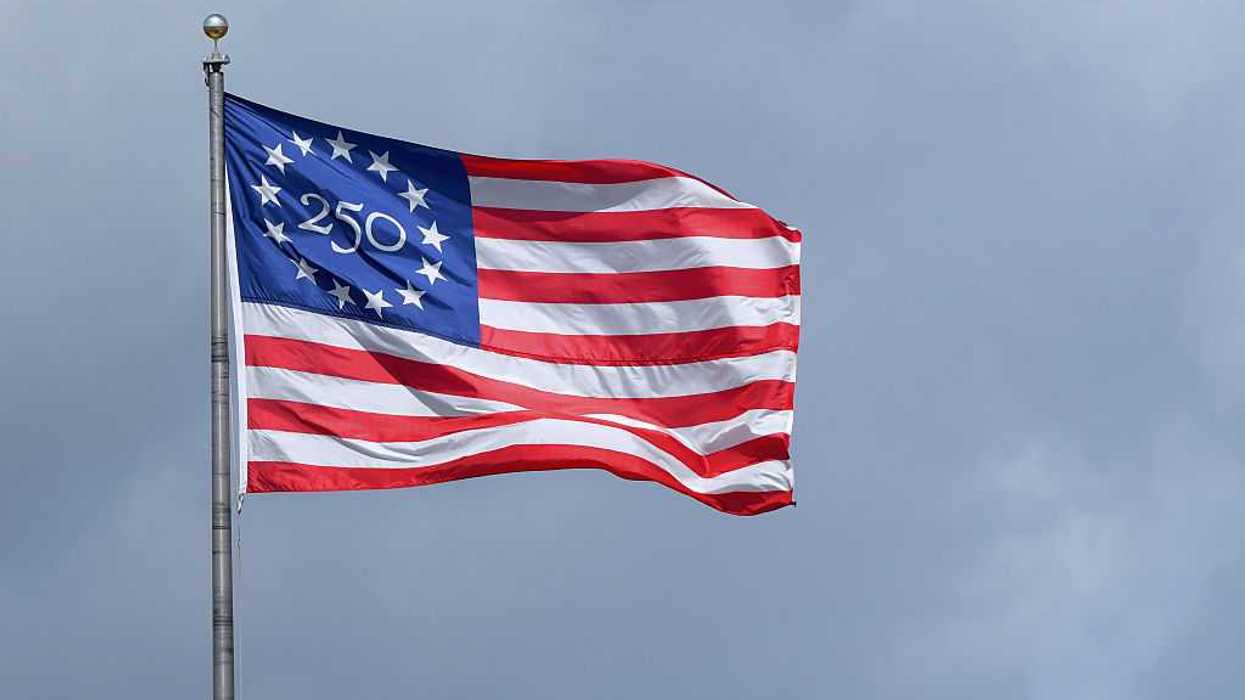
A special commemorative 250th anniversary American Flag flying.

A detailed view of the special commemorative 250th anniversary American Flag flying during the spring training baseball game between the New York Yankees and the Detroit Tigers at Publix Field at Joker Marchant Stadium on March 12, 2026 in Lakeland, Florida.

Mark Cunningham / Getty Images

The past several years have not been easy for corporate voices. Companies that spoke up on social issues found themselves praised by half their employees and customers, and boycotted by the other half. A few high-profile missteps — statements that landed wrong, causes that became culture war flashpoints — sent a clear message: silence is safer.

So business leaders have been quiet, not because they stopped caring about the country but because the old calculus — that a business voice is helpful and welcome — no longer holds.


Now we find ourselves at America's 250th, and there's a trap a lot of companies are about to walk into. This is the least partisan terrain available: a shared milestone that belongs to every American (and every American business). And sitting this one out comes with a cost. The story of what enterprise has meant to this country will be written during this anniversary. The only question is who holds the pen.

The data makes clear that Americans don't want business to sit this one out. According to a 2024 U.S. Chamber of Commerce study, 93% of Americans say they'll think more highly of companies that publicly celebrate the 250th. But it goes deeper than brand perception: 82% believe businesses can play an important role in bringing people together. Americans aren't just open to this; they want it.

The 2026 Edelman Trust Barometer sharpens the picture: your employer is now the most trusted institution in Americans' lives — more trusted than government, more trusted than media. 75% of people say CEOs are obligated to help bridge trust divides. Only 44% believe they are actually doing it. That gap is an invitation to act.

Business has always been part of how America marks its biggest moments. When the country turned 200 in 1976, companies of every size found ways to be involved, whether launching a bicentennial-themed product or sponsoring a float in the local parade. That instinct didn't come from a PR strategy. It came from a genuine civic identity that American enterprise has carried since the beginning.

That moment has come once again. That's why I'm inviting every business leader to write a Birthday Letter to America: a personal letter to their employees, members, communities, and country about what the 250th means to them, what they stand for, and what they believe America can be.

Business leaders across the country are already writing. Together for 250, organized by Business for America in partnership with leading business organizations, is coordinating a national showcase of these letters and a media push in mid-June. When hundreds of leaders write, it becomes something larger than any one of them — a document of what American business chose to say at this point in history.

Think of it as a virtual time capsule. A hundred years from now, anyone can open it and read what American business leaders believed about this country, where they thought it was headed, and what they wished for the future. That record will exist whether you're in it or not.

I'm writing one too. I've spent ten years watching business leaders go quiet — not out of indifference, but because every possible opening seemed to come with a political tripwire attached. This one doesn't. And I believe that when enough leaders choose to speak — honestly, hopefully, in their own voices — it will matter.

America is hungry for something honest and hopeful from people it still trusts. If you’re a business leader who has been waiting for the right moment, this is it. Join us at TF250.US/letter.

Sarah Bonk is a civic entrepreneur and the founder/CEO of Business for America. She spent over 20 years leading strategy, design, and organizational change at Apple and American Electric Power. Today, she works with business leaders to help fix what’s broken in American politics.
Read More

 Grandmother and adult granddaughter sitting on windowsill

America's growing generational divide is straining the social contract as younger Americans face housing, debt, and economic challenges.

Oliver Rossi / Getty Images

Washington’s Failure to Face Generation Imbalance is Divisive

Outside Pittsburgh, a retired couple sitting around their dining-room table worries about whether Social Security will still be there in ten years. Their daughter and son-in-law, living across town, struggle with a different question: whether they will ever be able to buy a home, pay off their student loans, and raise two children without going bankrupt.

Their fears are real. They are normal responses to an economy and political system that increasingly forces generations to compete for financial security instead of building conditions in which they can thrive.

Keep Reading Show less
 Man pays with a card.

Americans are feeling increasingly pessimistic about the economy despite solid employment and growth. Explore consumer sentiment, inflation fears, spending trends, and the economic outlook for summer 2026.

Maria Korneeva / Getty Images

America’s Summertime Blues: Why Consumers Feel Worse Than the Data

It’s almost summertime, and with it comes the bloom of the season. Kids will soon be out of school, and families will be heading off for vacations at the beach, camping in the mountains, or attending major league baseball games.

Or maybe not. If you believe the latest University of Michigan survey of consumer sentiment, Americans are feeling pretty gloomy about their own personal economic situation. Many people might instead stay home this summer, declining to spend their hard-earned cash on high prices for travel, gas, restaurants, and hotels. For those businesses that depend on a summer surge in customers’ spending, this summer could be very disappointing.

Keep Reading Show less
Capitalism Without Competition Is Oligarchy
1 U.S.A dollar banknotes
Photo by Alexander Grey on Unsplash

Capitalism Without Competition Is Oligarchy

For decades, Americans were told that globalization and free markets would deliver broadly shared prosperity. Instead, many saw stagnant wages, hollowed-out communities, and a growing concentration of wealth and power. The backlash was inevitable. But the real failure was not capitalism itself. It was the corruption of competition and the establishment’s generations-long indifference to the working class it left behind. That disregard didn’t just crater trust in institutions; it fueled populist backlash across the political spectrum, with anti-establishment anger now reshaping American politics.

Two truths define the American economic dilemma. First: competitive capitalism remains history’s most powerful engine for wealth creation, driving greater aggregate prosperity over the past two centuries than perhaps any other economic system. But averages are dangerous fictions; a man can easily drown in a lake that is, on average, two feet deep.

Keep Reading Show less
Federal Job Cuts Bring Increase in Virginia’s Black Unemployment Rate

An Economic Policy Institute analysis found overall, labor market conditions for Black workers worsened in the first quarter of 2026 compared with the early months of the Trump administration.

Adobe Stock

Federal Job Cuts Bring Increase in Virginia’s Black Unemployment Rate

Job cuts at federal agencies in 2025 hit Black workers especially hard, contributing to record-high Black unemployment in the Washington, D.C., Virginia and Maryland metro area, according to an Economic Policy Institute analysis.

Researchers found the Black unemployment rate nationwide reached 7.6% in the first three months of 2026. In the D.C.-area region, it was just under 10%.

Keep Reading Show less