




Skip to content
Search

Latest Stories

Follow Us:
Top Stories

Seniors Face Unfair Rents and Homelessness. They Need Rent Control

Opinion

Seniors Face Unfair Rents and Homelessness. They Need Rent Control

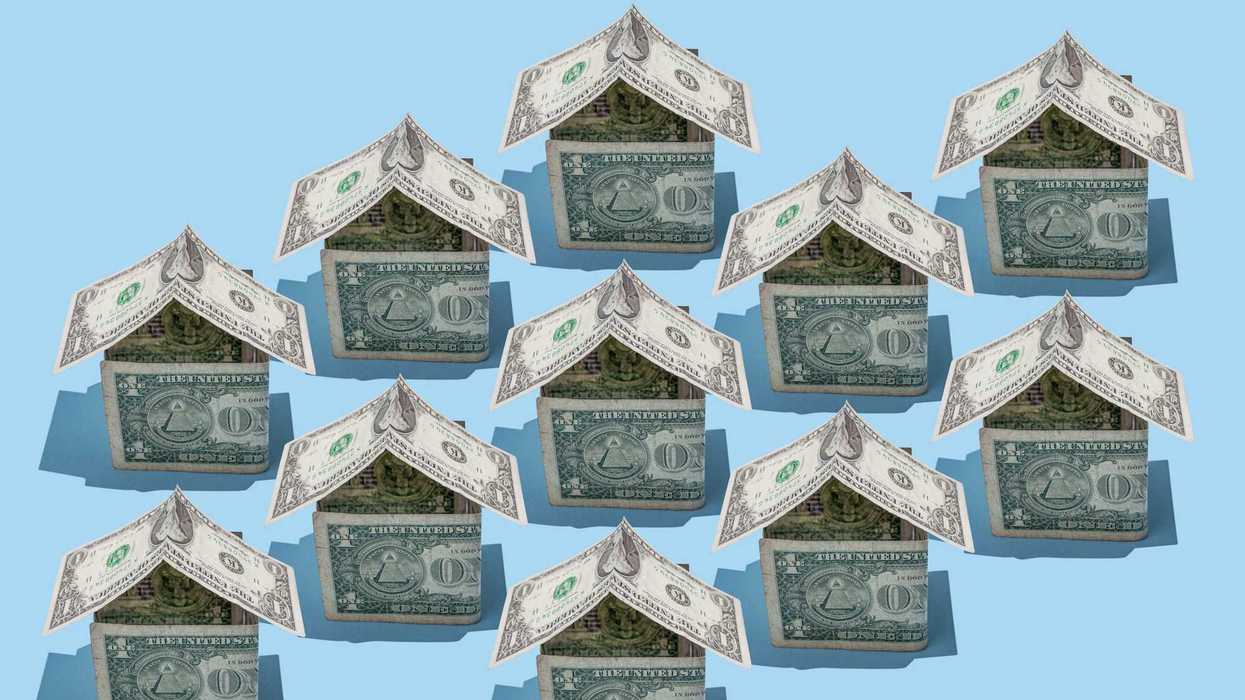
Large group of houses shape made from US currency.

Getty images

From mobile home parks in Maine to modest apartments in California, seniors desperately need rent control to protect themselves against skyrocketing rents charged by predatory landlords. Our grandparents, parents, aunts, and uncles, many of whom live on fixed incomes, face serious, life-altering consequences if politicians don’t protect them. They need rent control now.

One of the most alarming housing stories over the years is that more and more seniors in the United States have been pushed into homelessness due to unfair, excessive rents. In fact, the U.S. Government Accountability Office noted in 2025 that “about 20 percent of those experiencing homelessness (or one in five) were older adults, ages 55 and up.”


In California, CalMatters reported that seniors had become the fastest-growing population of the homeless. Not only that, the number of seniors who sought homelessness services increased by a whopping 84 percent – more than any other age group. In 2024, Capitol Weekly described that trend as a “silent crisis,” noting that 25 percent of California’s homeless population is aged 55 or older.

It’s totally unacceptable, especially if our politicians don’t help our seniors.

In 2025, LAist reported that Los Angeles, the largest city in California, saw a shocking spike in homelessness among seniors of 36 percent between 2022 and 2024. And The Guardian found that more than 3,000 of the 11,500 people who died while unhoused in L.A. County between 2014 and 2023 were 60 and older.

It’s outrageous, but not surprising: Eviction Lab, the prestigious think tank at Princeton University, found that unaffordable rents are linked to higher mortality rates. Seniors on fixed incomes are especially vulnerable.

There have also been numerous reports over the years about the plight of seniors who live in mobile home parks in Maine and other states. Once an affordable way to live for fixed-income seniors, corporate landlords have bought up mobile home parks and suddenly charged outrageous rent hikes – or what Manufactured Housing Action, a nationwide advocacy group, termed as “rent-gouging grandma.”

Over and over again, the real estate industry sees our grandparents and parents not as human beings, but merely as vehicles for their outsized profits.

But, with all this bad news, there is an urgent solution: rent control. It is the only tool that will quickly rein in predatory landlords and stabilize rents for our older loved ones.

In fact, rent control, going back to World War I, has been widely used in America to protect our most vulnerable residents. With seniors facing life-threatening homelessness, politicians should quickly establish rent regulations again.

At the same time, elected leaders must go further and implement a sensible, multi-pronged strategy for the housing affordability and homelessness crises called the “3 Ps”: protect tenants through rent control and other protections; preserve existing affordable housing, not demolish it to make way for expensive luxury housing; and produce new affordable and homeless housing using such concepts as adaptive reuse and prefabricated housing.

It’s an approach that emphasizes helping the people who need it most: the poor, middle, and working-class, which includes millions of seniors.

Seniors need help now, not later. Their lives are literally on the line. They can’t wait any longer for politicians to do the right thing. And if the politicians don’t act, that will speak volumes about their lack of concern for older Americans. Our grandparents and parents deserve much more respect.

Patrick Range McDonald is the award-winning advocacy journalist for Housing Is A Human Right, the housing advocacy division of AIDS Healthcare Foundation.


Read More

Paper currency from several countries.

As U.S. market dominance fades, capital is shifting toward emerging economies in Asia and Latin America.

Getty Images, Priscila Zambotto

Capital Shifts Toward Tangible Assets and Emerging Economies

The global economy is experiencing a fundamental reallocation of capital. For more than a decade, the story of world markets centered on American technology companies and the strength of the dollar. In 2026, that dominance is fading. Investors are directing funds toward Asia and Latin America, where growth prospects appear more robust and risks more contained.

Market data this year makes the pattern clear. The S&P 500 has posted small losses year to date, while the Nasdaq has struggled. By contrast, emerging-market indices have gained ground. Asian equities have outperformed, and Brazil’s B3 index has risen sharply. An FT report in January noted emerging-market stocks, bonds, and currencies enjoying a strong start precisely as the dollar weakened.

Keep Reading Show less
Team Trump had to start a war to learn how the global economy works

U.S. President Donald Trump speaks to reporters before boarding Air Force One at Palm Beach International Airport on Monday, March 23, 2026, in West Palm Beach, Fla.

(Roberto Schmidt/Getty Images/TNS)

Team Trump had to start a war to learn how the global economy works

Early Monday morning of March 23, financial markets surged when President Donald Trump claimed there had been productive talks with Iran about ending the war. Therefore he backed off a vow to bomb Iranian power plants if the Strait of Hormuz wasn’t reopened by Monday evening. Iran denies any such talks actually took place.

This is a rare moment in which reasonable people can be torn about which government is more believable.

Keep Reading Show less
The Tax-Season Trap: When Refunds Become a Child Care Safety Net

Man receives a tax refund check from the government; Indoor background

Getty Images

The Tax-Season Trap: When Refunds Become a Child Care Safety Net

Most parents are more than happy to receive a tax refund. That money can help pay bills, fund a long-overdue vacation, or simply offer breathing room. But for too many families, especially Black families, that refund is not extra. It too often becomes a temporary relief from a child care gap created by school systems that are no longer designed around the realities of working families.

Schools are supposed to be structured in a child’s best interest. In practice, hardships are built into an antiquated design. Seventy percent of Black parents work service-essential nine-to-five roles, yet schools dismiss in the early afternoon. Parents are left scrambling to find and pay for before- and after-school care, babysitters for holidays, teacher workdays, and full-time summer camps. Those gap hours and summer care costs average to about $400 to $500 per week. For many households, that equals an entire paycheck.

Keep Reading Show less
Person holding a phone and bills.

Economic anxiety among millennials and younger Americans is reshaping the American Dream. Explore how rising housing costs, wage stagnation, and inequality are driving political change and weakening trust in institutions.

Getty Images, Natalia Lebedinskaia

The Economic Squeeze on Young Americans: Why It Matters for Democracy

As a parent of millennials, I can see firsthand the reality described in a recent Barron’s commentary by Randall W. Forsyth: the financial anxiety many younger Americans feel is not misplaced pessimism. It is a rational response to an economy that increasingly feels stacked against them. The traditional markers of stability, especially homeownership, have moved further out of reach. What was once the cornerstone of the American Dream, an affordable house, now feels almost unattainable for many young Americans. The consequences are not only economic. They are political too.

For much of the postwar era, American democracy relied on a powerful assumption: each generation would do better than the last. Economic growth did not eliminate inequality, but it reinforced a broader belief that the system ultimately rewarded effort. Work, education, and saving were expected to lead gradually toward stability and the attainment of the American Dream. Homeownership. Family formation. Modest wealth built over time.

Keep Reading Show less