

TALLAHASSEE, FLA — As high school graduation rates are projected to decline, Florida’s capital has found a unique way to give former students a path to higher education.
The Tallahassee Engaged in Meaningful Productivity for Opportunities (TEMPO) program, founded in 2017, is aimed at providing individuals aged 16-24 who may not have graduated from high school with the means to earn a GED and a connection to work opportunities around the Tallahassee area with the aid of partnered organizations and agencies.
Kimball Thomas, former principal of Rickards High School, realized that instead of pushing these students towards traditional educational pathways, there needed to be a way to re-engage them within their community.
After leaving his work as a principal, he realized how he could connect these students with new opportunities.
“When I became involved with the city, I realized there's a population of kids out there on our streets who are high school dropouts who are subject to crime, drugs, and living in poverty. We need some type of initiative to re-engage these kids,” said Thomas.
Graduation rates are a priority for a school district. The more students who graduate successfully from a high school program, the more likely they are to succeed outside of the K-12 system in place.
The Leon County School District, which houses Tallahassee schools, has a graduation rate of 87.9%, only about 4% below the Florida average. However, what happens to the other 12% who don’t graduate from Tallahassee high schools annually?
Seeing students disappear from the community without graduating from high school is what prompted Thomas to create a program for students who may not have graduated from traditional high schools.
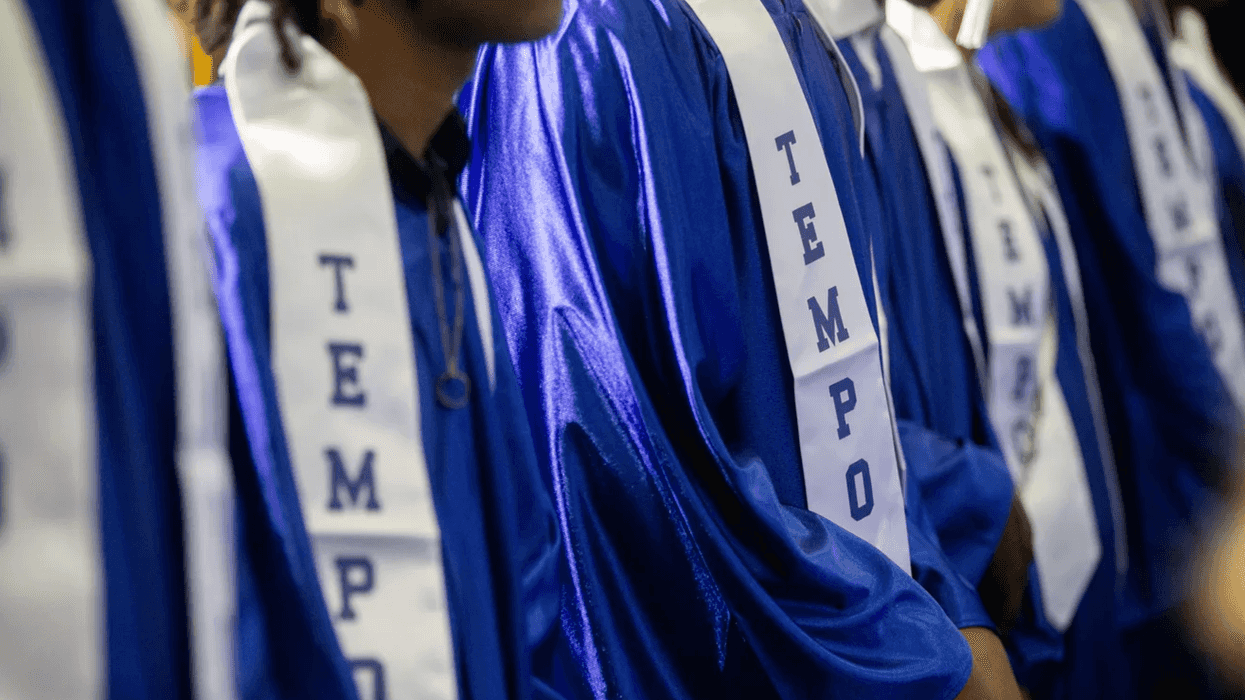
Thomas shared that the program began with a graduating class of 12 GED recipients in June of 2018 and has since created opportunities for students to earn technical degrees and work with local fire and police departments.
Through collaborations with employers in Tallahassee’s local community, the program has provided students and alumni with work opportunities.
“We got kids in underground utilities and public infrastructure; we've had kids in electric and gas. Almost every department has had a TEMPO kid that they've given an opportunity to,” said Thomas.
TEMPO doesn’t just wait for students to join its cohorts. Thomas shares that the majority of students who join each year come from on-the-ground recruiting, even sharing that sometimes it comes down to finding them “in their backyards.”
After recruiting students, the program works to connect each participant to a team of city employees that guides them throughout the next steps of the program.
“We have our case managers who help these kids through action planning and having a goal. Case managers are really putting in the day-to-day work to make this happen with the program,” said Thomas.
Thomas believes that the goal of the program isn’t just to connect students with these opportunities years after dropping out, but to scout them out before they make the next step.
“We have worked with the school district more on these kids who are on the cusp of dropping out of school, and they don't go one to two or three years before we find them to have that kind of partnership and expand that narrative, so that kids who are really struggling and look like they're not going to graduate on time can make an even smoother transition into the City of Tallahassee’s TEMPO program,” said Thomas.
This year, the program reached its largest milestone, with over 160 graduates, including over 40 who earned technical certificates from Lively Technical College, Tallahassee State College, and Florida Health Science Consulting.
But the program goes far beyond just giving these students degrees, according to Thomas. 4,200 students have since engaged with the program, and the city reports that none of its participants have been convicted of a crime since their participation. For Thomas, the program is defined through support from the local community.
“We've had unanimous city commission reports and support since it started. So you know, with that phenomenon going on, and that kind of engagement happening for people to keep them away from crime and to give them hope and opportunity, how could the community not support it?” said Thomas.
Through the program’s success, a STOP-GAP poverty initiative was launched in 2020 to allow the relatives of students or alumni from the program who also did not graduate with their high school diplomas.
This expansion has given untraditional students outside of the 16-24 age bracket the opportunity to receive their GED. Thomas shares that watching the STOP-GAP initiative start and seeing families receive their diplomas together has been an incomparable experience as a former principal.
“In last year's group was one of my former students. I was their principal in a high school year 30 years ago, [they] came back into this program, and I ended up finally giving that kid his high school diploma,” said Thomas. “Can you imagine that this kid dropped out when I was his principal 30 years ago?”
According to U.S. Census data, about 93.7% of adults aged 25 and above are high school graduates, only around three percent above the state average of 89.9%
As the program continues to expand, Thomas hopes it won't stop at creating the STOP-GAP initiative. His next goal is to open a community re-engagement center for students and alumni, and with the program’s growth thus far, this goal doesn’t seem too distant.
“I would say right now the next step is to look at a re-engagement center one day to look at having a place that these kids can call their own, and a place where they can meet and talk, and people can come by and rally behind them, and have events,” said Thomas.
Gabriela Quintero is an incoming freshman at Barnard College of Columbia University, pursuing her B.A. in Political Science and English. Interested in politics, migration, policy, and culture, she hopes to pursue a career in political and cultural journalism.