


WASHINGTON — Cris Gulacy-Worrell used to call herself a “public school purist,” openly advocating against school voucher programs in the early 2010s. Then she founded Oakmont Education, a network of charter schools in Ohio, Iowa and Michigan, designed to help students who have dropped out of high school earn their diplomas and secure jobs.
Now she describes herself as “pro-school choice” and wants to see change in the K-12 education system.
“I think, for far too long, we've treated students and families like they are not in the driver's seat and we've told them to wait,” Gulacy-Worrell said. “A lot of our students have been given the ugly side of what education's supposed to be about, the intolerance side, the side that was designed to fail them. The system is really broken, and we can’t band-aid it.”
Under the One Big Beautiful Bill Act, the Trump administration made sweeping changes to K-12 education, which is now playing out across the nation as governors in 27 states have opted into the first national school voucher policy, the Educational Choice for Children Act (ECCA).
Beginning in 2027, the policy, structured as a federal tax-credit program, will allow private donors to write off up to $1,700 in donations to scholarship-granting organizations per year, funding private school tuition for qualifying families.
The scholarships will be available to families earning up to 300% of their area’s gross median income, a threshold that can reach $300,000 in higher income regions. Families who already send their children to private schools are also eligible for the voucher.
Sasha Pudelski, the director of advocacy for AASA, the school superintendents association, which represents public school district leaders, said the school voucher program would have a tremendous impact on public schools across the nation, leaving them underfunded and with the most disadvantaged students.
“We’re funding two different systems,” Pudelski said. “We’re simply subsidizing the kids that are already, for the most part, attending private school, and now just paying a tuition discount essentially for them.”
Of the states that have opted into the ECCA program thus far, they are primarily run by Republican governors, Pudelski said. She said that AASA is fighting to defend public schools from the effects of routing public dollars to private schools, which causes public schools to lose funding and students.
“Our advocacy has to be focused particularly for states that have never had any kind of funding going towards private schools before, keeping the funding out of those places because opening the door can lead to a lot of serious financial impacts for public education,” she said.
Several of the states that have accepted ECCA already have school voucher programs in place. Education Savings Accounts (ESAs) operate in over 15 states, giving state education dollars directly to families to pay tuition to a school of their choice.
Pudelski said that the two states with the largest ESA programs, Arizona and Florida, have shown that voucher programs divert funding from public schools. She said that roughly 80% of the students receiving ESA vouchers were already paying for private school tuition.
Geneva Fuentes, of the Arizona Education Association, the state's largest public school educators' union, said the ESA program has caused Arizona to sink to 48th in the nation in per-pupil spending on public schools. She said the program has led to schools across the state closing and students going without the resources they need.
“We've seen that outreach from the proponents of the ESA program has been primarily targeted at wealthier and whiter families, and that's primarily because you have schools here in the Phoenix area that cost $20,000 a year, and the average voucher is a little bit more than $7,000 and so they're targeting families that have enough wealth to fill that $13,000 gap,” Fuentes said.
Bill Mattox, senior director for the Marshall Center for Education Freedom at The James Madison Institute in Tallahassee, Fla., is a proponent of ESA and said the program’s success inspired the creation of ECCA.
“Our experiment in this, along with that of a number of other states, has caught the attention of national leaders, and they're saying, ‘Hey, we really ought to try to do something like this nationwide,” said Mattox. “With ESA, families can take the pot of money that would have otherwise been spent on their student in the public schools and break it up and use it however they see fit for educational purposes. That gives them a lot more flexibility.”
Mattox said that for states with existing ESA programs, the ECCA would “stack on top of them.”
Both advocates for and against voucher programs tout representing voters' interests. Approximately 65% of voters repealed Arizona’s legislature’s first attempt to enact a universal voucher in 2018.
“Four years later, Arizona lawmakers then went ahead and overrode the will of the voters and established a universal voucher program, which is now costing the state more than a billion dollars a year in taxpayer funds,” Fuentes said.
Gulacy-Worrell said polls show that 84% of parents are “pro-school choice.”
Educators and school administrators not only disagree on whether American families support school vouchers, but also clash over competition in the education sector and whether public tax dollars should be used to fund private and parochial schools that are not subject to the same federal regulations as public schools.
Kyle Smitley is the founder and executive director of the Detroit Achievement Academy and Detroit Prep, both small non-profit public charter schools. She said that, generally speaking, public charters oppose the ECCA because they fear their students would receive scholarship dollars to attend a private school and leave their public charter model.
Smitley said she hasn’t seen the quality of K-12 education improve with increased competition.
“I'm not sure that I've seen that, a random third-grade teacher at DPSCD (Detroit Public Schools Community District) teaching harder because she heard that there was a good school opening up a couple of blocks away. Like, that teacher was still teaching hard. And there are other systemic things, maybe in that teacher's way and in the family's way of the people who go there,” Smitley said. “Getting it right for kids is definitely deeper than the concept of a McDonald's versus Burger King competition economic study.”
Pudelski said that she didn’t think the goal of ECCA was to create competition.
“I think it's coming from billionaires who want to fund primarily religious education,” she said.
The only way to stop “publicly funding discrimination in private schools,” she said, would be to prohibit discrimination on the basis of religion, disability, sexual orientation, and more, in all schools receiving taxpayers' money.
Gulacy-Worrell said concerns with voucher programs allowing discrimination are distractions from the real issue of students not receiving an adequate education to begin with.
“These districts that are failing kids were drawn to fail them,” she said. “We know it, we admit it, and school choice, particularly public charter schools, is the antidote to those red lines.”
She said that the new school voucher programs get “something moving for outcomes” for students and families, particularly those who’ve been historically excluded or marginalized.
However, Pudelski said that ECCA could be particularly harmful for rural students who rely on their area’s public school.
“It would lead to rural school closures in some cases, if suddenly they went from a school with 200 kids in it, K through 8, to 170,” she said. “That could be enough to make it financially nonviable for them to keep their school open.”
An alternative to school voucher programs is allocating more money to publicly accountable public schools, Pudelski said. She emphasized the need to fund public schools' special education programs, especially because private schools can turn away students with disabilities.
The effects of the ECCA on K-12 education in America, including academic outcomes, admission discrimination, public school closures and more, remain to be seen. Both Republican and Democratic governors will continue to announce their states' decisions to adopt or reject the program until it begins to take effect on Jan. 1, 2027.
“There has been a nationwide school choice movement that has a lot of money behind it, that has pressured lawmakers to override the will of voters, not just in Arizona, but in other states,” Fuentes said. ”We should have concerns anytime money that could go to support the majority of children who attend public schools is instead diverted to private hands.”
Cate Bouvet covers education for Medill on the Hill.




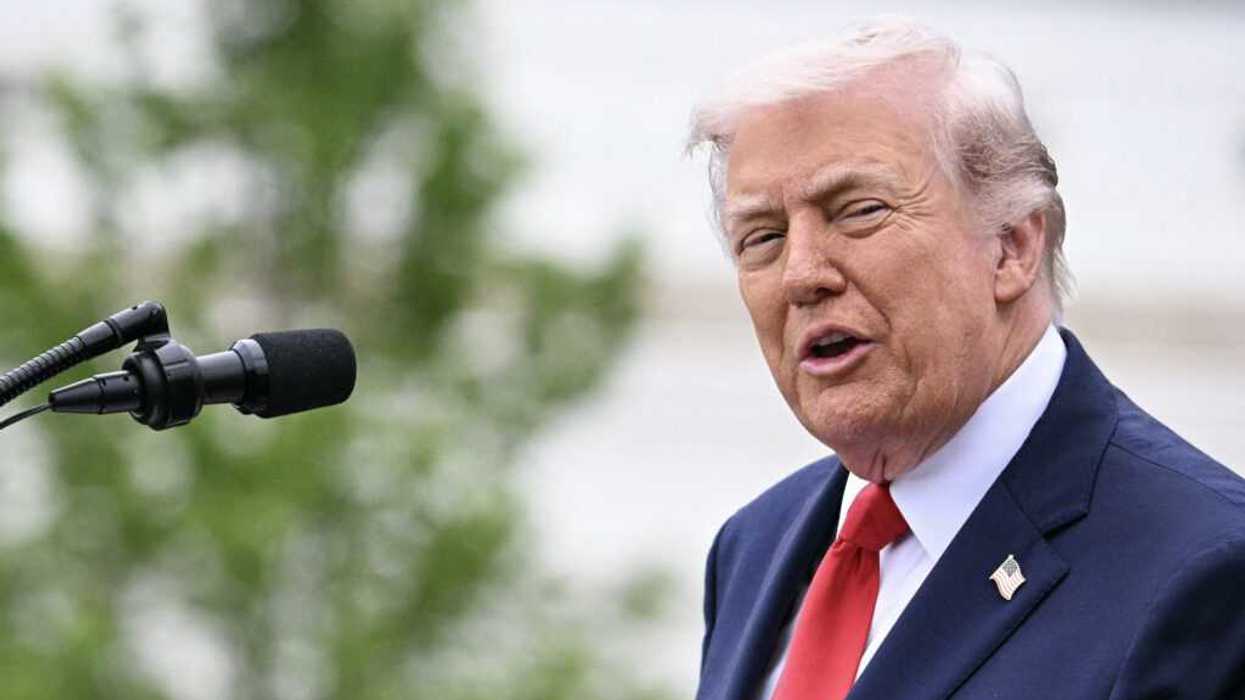



U.S. President Donald Trump boards Air Force One on August 14, 2026 at Joint Base Andrews, Maryland. Trump is traveling to Long Island to tour law enforcement facilities in Nassau County and rally support for local Republican candidates ahead of the upcoming midterm elections
Travel Far Enough, You Meet Yourself
Is it possible that our President has simply not traveled enough?
Born and raised in Queens and attending Fordham University in the Bronx, Donald Trump has no record of traveling outside New York until he was over 20, when he transferred to a college in the neighboring state of Pennsylvania. Were his formative years amiss, then, in his learning about other places and other people?
Is his view akin to the famous New Yorker cover by Saul Steinberg, an illustration of the United States with New York City as the epicenter of the country and the Hudson River the border of the known world? We can now at least add Washington, D.C., and Mar-a-Lago to the map of “the realm.”
Our President has now traveled some, but what we recommend is another kind of travel. Not a state-sponsored trip or a venture to scout locations for future Trump Towers. This would be a genuine travel experience, enriching and eye-opening, showcasing other cultures and ways of living.
It will extend far beyond viewing military parades, hobnobbing with such “understanding” world leaders as Kim Jong Un, or taking tea with the King.
WHERE, then, should the President go? As Elon Musk’s Starship spacecraft is not yet ready to take passengers to Mars, perhaps he could explore our own vast country?
Maybe he could travel to “flyover country,” the farming states, where his ying-yanging tariffs and trade restrictions have played havoc with rural economies. Or possibly to California, number one in homeless U. S. citizens, and while there, regale homeless veterans (approximately 32,500 nationwide) with tales of his brave exploits invading and bombing foreign countries.
Or he might tour the Great Lakes, and rename the other four?
WHEN should he go? This will be tough, as he is very busy building his ballroom and renaming bodies of water.
How about a trip in early November, around the midterm elections? Despite the long-discredited accusation of widespread voter fraud, it would be reassuring to know he might be so caught up divvying out ladles of soup in a soup kitchen somewhere that he wouldn’t remember to deploy the military for “election security.”
HOW will he travel? He should definitely not take his Qatari-donated, newly renovated 747, especially after last time, when he had to be smuggled off clandestinely in a catering truck. It’s unlikely any traveling companions, like the Secretary of State or of the Treasury, are going to fall for the ruse a second time. Besides, we may need those people. No more decoys!
Perhaps the President could fly commercially, although this likely would expose him to undue suffering. Without gold bathroom fixtures and maple wood floors, the trip will be no “Luxury Experience.” If only he still had his “Trump Shuttle,” bought with a massive loan he later defaulted on, saying then, “I’m smart. I got out at a good time.”
Considering the potential pitfalls, maybe it’s best the President travel incognito, disguised perhaps as an elderly woman wearing a lot of bronzer.
Wherever, whenever, however: our President needs a vacation.
Moreover, we need a vacation from him.
If the President refuses our travel suggestions, here’s another idea:
Let’s get him a pet! He has never owned a pet. As we know with our children, pets teach essential life lessons: compassion and empathy; they instill a sense of responsibility. There is a well-established connection between those who can care for a pet and those who can care for people.
So, which pet should we choose? A puppy? A kitten? A boa constrictor?
Imagine, the President may even decide he likes having a pet. After all, what is more obedient than a well-trained dog, besides possibly the Cabinet? And what is more docile than a sweet kitten, other than plausibly the Supreme Court?
The President may even become more mellow with a pet afoot and less likely to slap tariffs on our allies, or attempt to annex our neighbors, or bully our Congress. (Realizing, of course, a bully requires active participation from the bullied to maintain his status.)
Maybe we should do both: get the President a pet and devise a travel plan for him. (Do you think we could possibly convince him to leave his phone at home?)
Let’s go for it! After all:
Travel far enough, you meet yourself. (David Mitchell)
And for our President, that would likely be the most profound discovery of all.
Amy Lockard is an Iowa resident who regularly contributes to regional newspapers and periodicals. She is working on the second of a four-book fictional series based on Jane Austen’s “Pride and Prejudice."