Since organizing the Voters Not Politicians 2018 ballot initiative that put citizens in charge of drawing Michigan's legislative maps, Katie Fahey has been the founding executive director of The People, which is forming statewide networks to promote government accountability. She regularly interviews colleagues in the democracy reform world for our Opinion section.
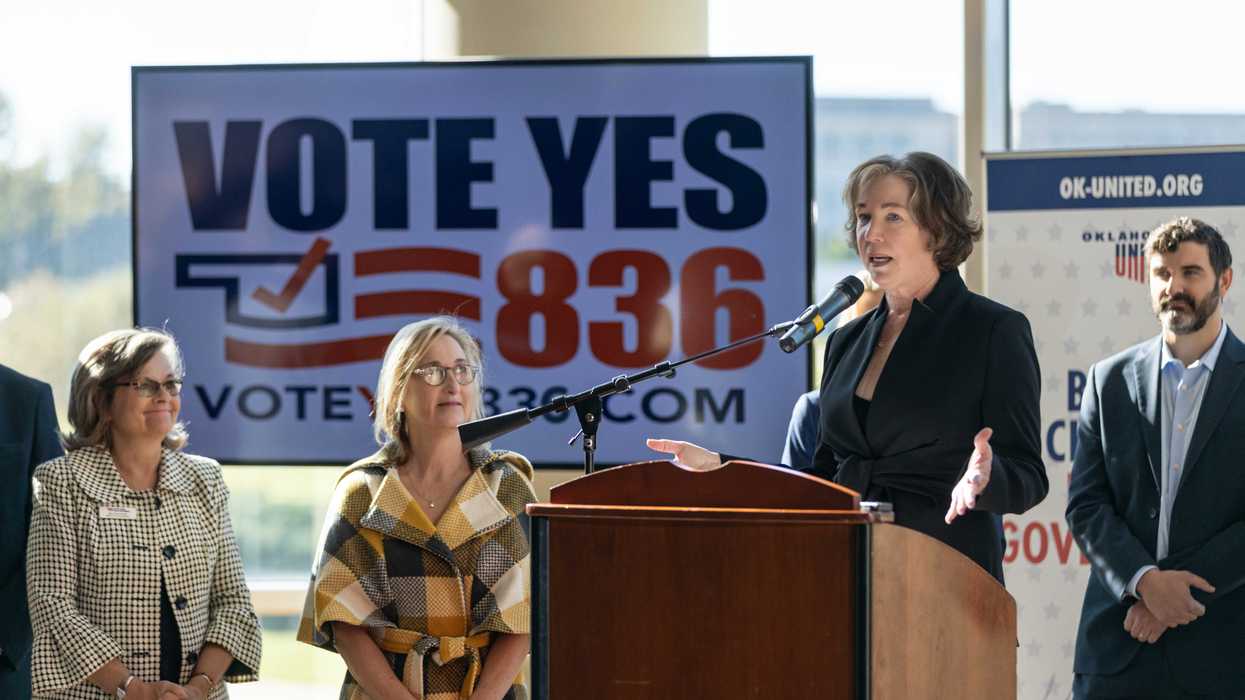
Margaret Kobos is CEO and founder of Oklahoma United, a grassroots political nonprofit with the mission to empower moderate and centrist voters in Oklahoma. OKUnited seeks to enact balance, common-sense solutions, and full representation of all voters through advocacy and systemic improvements. Currently, Margaret leads the Vote Yes 836 campaign to open the state’s closed primary system.
Our conversation has been edited for clarity and brevity.
Fahey: We have heard you are approaching a big deadline. What needs to happen to put Oklahoma’s State Question 836 on the November ballot?
Kobos:
We have until January 26 to collect over 173,000 signatures, and we are working hard to reach that goal. Hundreds of signature gatherers are fanning out across the state daily, seeking out registered voters at high-volume locations like sporting events and shopping centers. We also have dozens of pre-set locations statewide posted regularly to VoteYes836.com. If you are an Oklahoman who feels that voting is an essential basis for sound government, we need your signature! Anyone interested in signing the petition, please check the website for a time and location that works for you.
Fahey: How did you get involved with OKUnited?
Kobos:
I am a fourth-generation Oklahoman with a long career in law and banking. I have worked with private donors and public institutions to build community facilities and maintain parks and cultural assets. It became clear to me that the persistent challenges that hold Oklahoma back are rooted in a political system that excludes too many voters and rewards division. I founded OKUnited in 2021 to build a broad, nonpartisan coalition focused on voter education, civic engagement, and reform, which ultimately led to the filing of State Question 836.
Fahey: What is State Question 836 advocating for?
Kobos:
State Question 836 would replace Oklahoma’s closed primary system with a single, open primary ballot for state and county offices. All candidates, regardless of party, would appear on one primary ballot with their party affiliation listed, and every registered voter could vote in that “open” primary. The two candidates who receive the most votes would advance to the general election.
The goal is to ensure every Oklahoma voter has a voice in every taxpayer-funded election, and to encourage broader participation and accountability.
Fahey: Tell us about the current system of closed primaries in your state and how it impacts independent voters.
Kobos:
Oklahoma is one of a few states with a fully closed primary system, meaning only voters registered with a political party can participate in that party’s primary elections. All independent voters are sidelined completely in primaries, which is important as those primaries are the elections that matter. Only about 2 percent of elected officials are chosen in a competitive general election; the rest essentially win office when they win a primary.
What this means is that a huge number of taxpayers are shut out of the most important elections, including 500,000 independent voters (about 20% of the electorate) who are completely excluded from June primaries and August primary run-offs. Democrats in heavily Republican districts and Republicans in heavily Democratic districts also cannot vote in those vital local elections.
Fahey: Who are the main opponents of your effort, and what are their arguments against it?
Kobos:
Our opponents are mostly party insiders who benefit, politically and/or financially, from the closed primary system. They fear disruption and invest considerable sums into sowing fear and distractions to maintain the status quo.
Our pitch to Oklahomans in both parties is: aren’t we tired of a system where a small number of insiders make the rules, set the agenda, and choose our candidates? Let’s put power back in the hands of the people, where it belongs.
Fahey: What do you think your campaign needs to do to be successful this November?
Kobos: Step one is to get on the ballot by hitting our signature goal. We are making good progress, but every signature counts. If you are reading this and are an Oklahoma voter, please go to VoteYes836.com and find a location to sign this petition.
Step two is continue to communicate the deficiencies of our current system and how open primaries will address those deficiencies. Oklahoma has the lowest voter turnout in this country; we are last in education, and rank poorly in health and economic indicators. We rank last in voter turnout as we actively discourage and disqualify people from voting. Closed primaries punish candidates seeking solutions and collaboration rather than serving up controversy on social media, and it is impossible to solve problems in that environment.
We are moving to a system that is more inclusive and accountable, so we can move this state forward. If we get that message out, it will resonate with many voters.
Fahey: What are some of the best practices and lessons you have learned from past successes in ballot initiatives?
Kobos: This is my first ballot initiative, but we have drawn some lessons from other successful petitions. Our bipartisan team is the reason we were successful initially and have sustained that success. Our team and supporters originate from all political sides. They share an intense commitment to basic ideals of voting and public service, and complementary expertise. The next component for success in any movement is persistence. Currently, that means hitting the streets and gathering signatures daily, and we are sprinting to the finish line of January 26th.
In Oklahoma, we had to approach our issue via ballot initiative, and not via the legislative process. Political elites benefiting from the status quo will throw up every obstacle they can to keep the people of Oklahoma from voting on this. It is essential to balance your perspective in this process: surround yourself with smart people with constructive attitudes, yet listen when you hear criticism. I believe that is the secret to sustaining momentum while pivoting when necessary in a movement.
Fahey: What do you currently need the most help with?
Until January 26th, we need registered voters to sign the petition, spread the word that they’ve signed, and direct friends and colleagues to do the same. Additionally we need donations to fund our signature gathering operation, including printing ballots, training, transportation, and other essentials that power this effort.
You can check signature-gathering locations and also make donations at VoteYes836.com.
Fahey: If you were speaking with a high school student or a new immigrant to our country, how would you describe what being an American means to you?
Kobos: My friend and I were recently musing about how we wanted to be remembered, at the end of the day. Without hesitation, I stated that I just want my son to be proud of me. That’s a high bar for a parent, as our children look up to us. That is why I became involved in this election reform work; I felt a need to “walk the walk”.
Our young people are bright, talented, and full of creative and positive energy. We must set them up with every tool they will need to take this country and our state of Oklahoma into the future. The right to vote is the most powerful tool.
Being an American to me means looking forward with positive energy. As a nation we often reinvent or forget much of our history, yet the ability to shake off the past, move forward, and problem-solve through daunting odds is also a strength, and something America does exceptionally well. It frees us to create.
We are a nation built on progress, determination, grit, and common sense. I get excited when I imagine the new ideas our youth and immigrants will certainly bring to action in the future. America was created in collaboration, using the best available tools and systems known to civilization. That is where we will shine in the future.
Katie Fahey is Executive Director of The People.