
Skip to content
Search

Latest Stories

Follow Us:
Top Stories

Empty Bravado: Trump’s Hollow Swagger Behind Iran War

Opinion

Empty Bravado: Trump’s Hollow Swagger Behind  Iran War

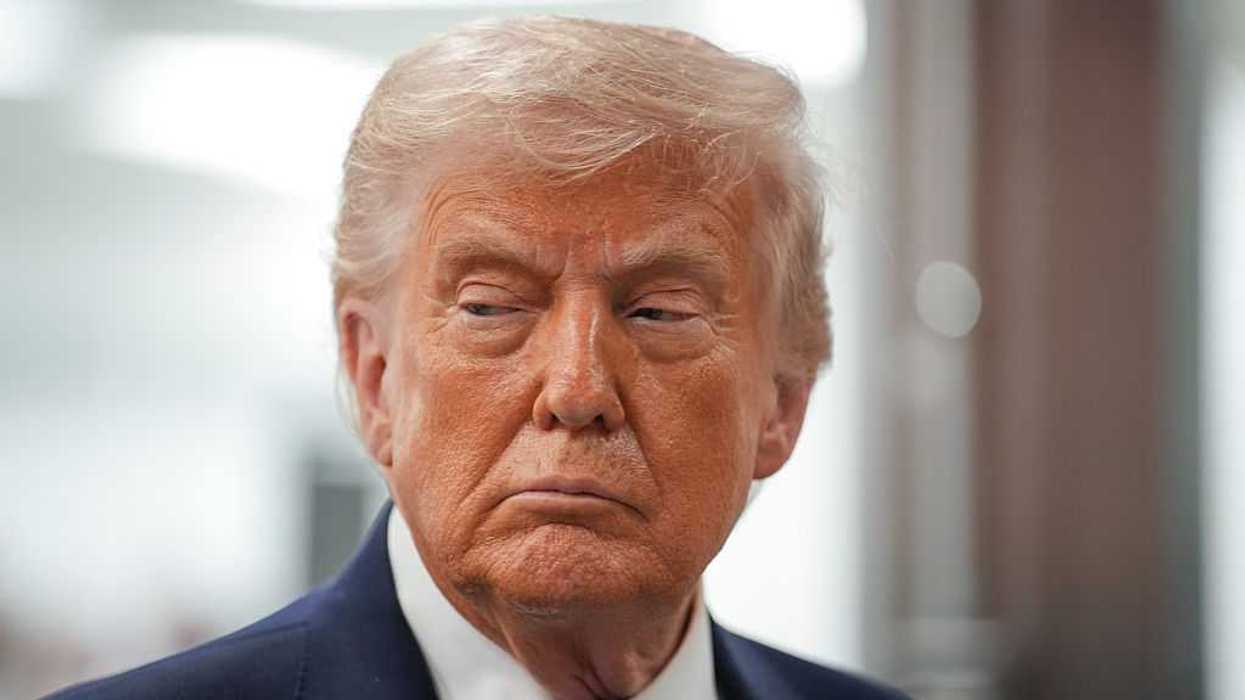
U.S. President Donald Trump on March 11, 2026.

(Photo by Andrew Harnik/Getty Images)

In moments of war, a president’s words carry enormous weight. They can steady markets, reassure allies, and signal strategic clarity — or they can do the opposite. President Donald Trump’s handling of the 2026 conflict with Iran has been a case study in the latter: a torrent of contradictions, self‑justifications, and evasions that leave the public less informed and the world less stable.

Across the political spectrum, reporting paints a consistent picture. Even as U.S. and Iranian negotiators scrambled to establish a cease-fire framework, Trump continued to insist the conflict was “limited,” “short,” or “nearly wrapped up,” despite ongoing strikes and regional spillover. Diplomats described the situation as “fragile” and “volatile,” yet the president publicly framed it as a minor dust‑up rather than a major regional crisis. Minimizing a war’s scope doesn’t make it smaller — it simply obscures its costs.


Members of Congress, including Republicans, raised serious concerns about whether Trump’s authorization for the initial strikes complied with U.S. and international law. Rather than address those questions directly, Trump dismissed them as “nonsense” and “political attacks,” sidestepping the core issue: whether the United States entered a major conflict without a lawful basis. A president who cannot articulate the legal foundation for war invites both domestic backlash and international instability.

The absurdity of Trump’s wartime messaging has not gone unnoticed. The Guardian highlighted Jon Stewart’s blistering critique, in which he skewered Trump for treating the Iran conflict like a branding exercise — alternating between bravado and victimhood, claiming total control one moment and blaming unnamed advisers the next. Comedy often reveals what official statements try to obscure, and here it exposes a commander‑in‑chief whose public posture resembles improvisation more than strategy.

Trump’s public comments about the war have been riddled with contradictions. He has alternated between threatening overwhelming force and insisting he seeks peace; between claiming Iran is “on its knees” and warning that they remain a “grave threat”; between promising swift victory and suggesting the conflict could last indefinitely. It’s inconsistency — and inconsistency in wartime is dangerous.

Wars are not branding opportunities. They are not campaign rallies. They are not opportunities for improvisational rhetoric. They demand clarity, honesty, and seriousness — qualities that have been conspicuously absent from Trump’s public handling of the Iran conflict. The president cannot or will not communicate coherently about a war he initiated. That should alarm anyone who believes that military power must be paired with responsible leadership.

We deserve a president who treats war as a solemn responsibility, not a stage for contradictory sound bites.

Hugo Balta is the executive editor of The Fulcrum and the publisher of the Latino News Network.

Read More

U.S. President Donald Trump speaks during a meeting of the Cabinet in the Cabinet Room of the White House

U.S. President Donald Trump speaks during a meeting of the Cabinet in the Cabinet Room of the White House on January 29, 2026 in Washington, DC.

Getty Images, Win McNamee

Trump’s Troubled Appointees Face Scandals, Backlash, and Low Support

Besides the ill-defined Iranian war, DOJ-FBI created the Epstein file debacle, tariff fiasco, Venezuela, Ecuador, Greenland, and Cuba interventions, special elections turning in Democrats’ favor, and the ever-increasing cost for gasoline, health care, mortgages, rent, prescription drugs, food, clothing, natural gas, electricity, and Agri-fertilizer, President Trump has other problems.

YouGov polling reveals that nearly all of Trump’s second-term political appointees are net-unpopular. Let’s examine six of Trump’s most troubling appointees.

Keep Reading Show less
Cancel Cesar Chavez: Continue The Fight For Justice
man in gray hoodie and blue denim jeans kneeling on green grass field during daytime
Photo by Tim Mossholder on Unsplash

Cancel Cesar Chavez: Continue The Fight For Justice

As a young journalist, I covered the funeral of Cesar Chavez in 1993 and have interviewed Dolores Huerta several times over the past 30 years.

They were heroes to me and my family, icons of the Chicano civil rights movement.

Keep Reading Show less
President Trump Demonstrates Why Euphemisms Damage Democracy

U.S. President Donald Trump speaks to reporters as he and Secretary of State Marco Rubio (L) depart the White House on their way to Florida on March 20, 2026 in Washington, DC.

(Photo by Chip Somodevilla/Getty Images)

President Trump Demonstrates Why Euphemisms Damage Democracy

In politics, words matter. In democratic politics, they matter even more.

Great political leaders have long recognized that fact.

Keep Reading Show less
A President in Sheep’s Clothing and a Democracy in Decline

President Donald Trump speaks to members of the media traveling on Air Force One while heading to Miami on March 7, 2026.

(Photo by Roberto Schmidt/Getty Images)

A President in Sheep’s Clothing and a Democracy in Decline

Like a wolf in sheep’s clothing, America’s president is undermining the Republic by evading checks, consolidating power, and attacking democratic norms. He disguises his malicious intentions as innocence while dismantling policies and programs that would help citizens.

In earlier opinions, I wrote about three forces that corrode democracy: hypocrisy, corruption, and confusion. Hypocrisy creates a false image of leadership; corruption erodes public trust and suppresses voter participation; confusion keeps the public from seeing the truth. Together, they weaken the Republic.

Keep Reading Show less