Skip to content
Search

Latest Stories

Follow Us:
Top Stories

Marco Rubio: 2028 Presidential Contender?

The U.S. Secretary of State's Senate testimony showcased a disciplined, media‑savvy operator

News

Marco Rubio: 2028 Presidential Contender?

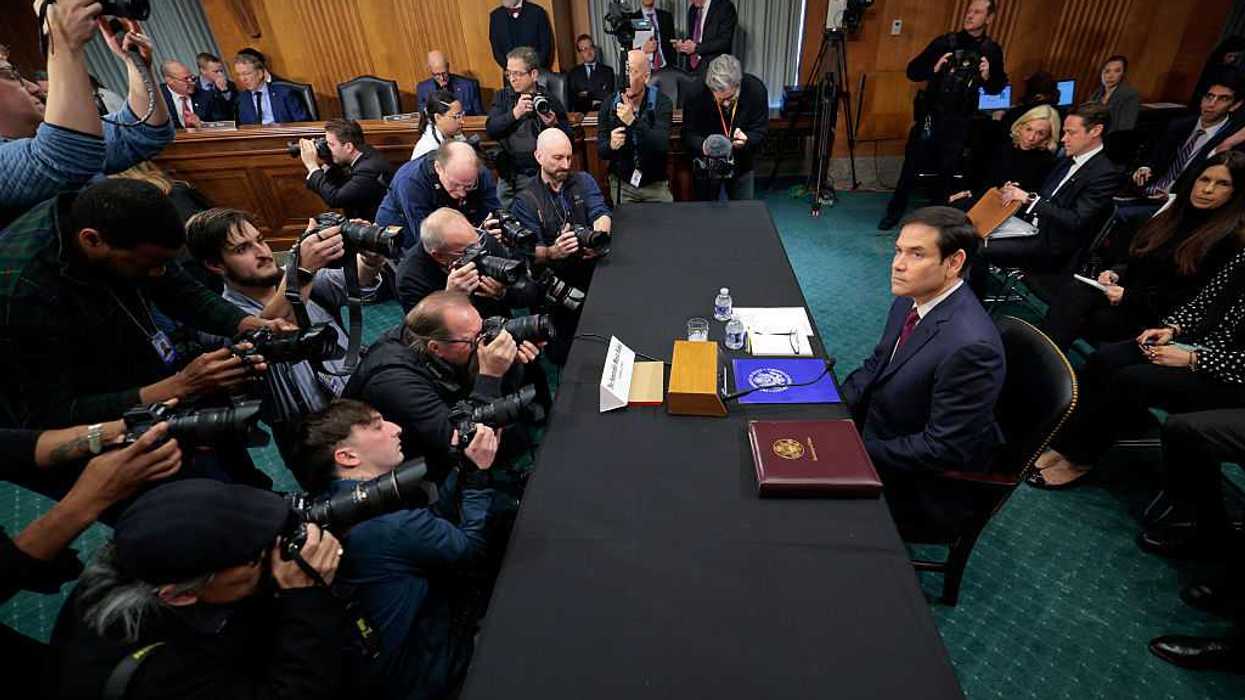
U.S. Secretary of State Marco Rubio arrives to testify during a Senate Foreign Relations Committee hearing in the Dirksen Senate Office Building on Capitol Hill on January 28, 2026 in Washington, DC. This is the first time Rubio has testified before Congress since the Trump administration attacked Venezuela and seized President Nicolas Maduro, bringing him to the United States to stand trial.

(Photo by Chip Somodevilla/Getty Images)

Marco Rubio’s Senate testimony this week showcased a disciplined, media‑savvy operator — but does that make him a viable 2028 presidential contender? The short answer: maybe, if Republicans prioritize steadiness and foreign‑policy credibility; unlikely, if the party seeks a fresh face untainted by the Trump administration’s controversies.

"There is no war against Venezuela, and we did not occupy a country. There are no U.S. troops on the ground," Rubio said, portraying the mission as a narrowly focused law‑enforcement operation, not a military intervention.


Ranking Member Sen. Jeanne Shaheen (D‑N.H.) sharply questioned whether ousting Nicolas Maduro justified the political and financial costs, citing estimates that the raid and U.S. naval blockade could total as much as $1 billion. Shaheen and other Democrats also raised alarms about Venezuela’s interim leader, former Vice President Delcy Rodríguez; as Shaheen noted, “the Drug Enforcement Administration has reportedly identified Delcy Rodríguez as a significant actor in the drug trade.”

Rubio responded that Rodríguez remains unindicted compared with Maduro and insisted the administration’s short‑term goal is stability, even at the cost of dealing with leaders the U.S. finds untrustworthy. "We are dealing with individuals that in our system would not be acceptable in the long term," Rubio acknowledged. "But we are in a transition to stabilization phase. You have to work with the people currently in charge of the elements of government."

Rubio’s appearance before the Senate Foreign Relations Committee offered a compact primer on his political instincts: calibrate messaging to reassure skeptical Republicans, defend administration actions as lawful and limited, and pivot to competence. In testimony about U.S. policy toward Venezuela, Rubio repeatedly sought to tamp down fears of broader military entanglement. That posture — insistence on control, reassurance to wary colleagues, and a steady stream of talking points — is precisely the leadership style he would bring to a presidential campaign.

That style has upside. For Republican primary voters who prize experience and foreign‑policy gravitas, Rubio’s record and his command of the hearing room are assets. He can credibly argue he knows how to manage crises, brief allies, and sell difficult decisions to a fractious Congress. Rubio’s ability to convert a contentious episode into a disciplined narrative is a skill many candidates lack.

But there are clear liabilities. Rubio is now visibly associated with an administration whose actions in Venezuela and elsewhere have provoked bipartisan concern. His defense of those actions — even when carefully worded — ties him to controversies that could be weaponized in both the primary and the general election. Moreover, the GOP electorate remains divided between establishment figures and insurgent outsiders; Rubio’s resume may read as establishment to voters craving disruption.

Strategically, Rubio’s path depends on the Republican mood in 2027–28. If the party prioritizes stability, foreign‑policy competence, and a candidate who can reassure international partners, Rubio could be a consensus choice. If the party continues to reward insurgent energy and anti‑establishment branding, Rubio’s association with the administration and his measured demeanor could be liabilities.

If Rubio does decide to run for the White House, it wouldn’t be his first bid: he launched a high‑profile 2016 campaign, gained early momentum, but suspended it after losing the GOP primary to Donald Trump—an outcome that underscored both his appeal to establishment conservatives and the limits of that appeal in an insurgent primary environment.

A familiar figure on the national stage, the Cuban‑American politician rose through the Florida Legislature (serving in the state House from 2000 to 2008 and advancing into leadership roles) before winning a U.S. Senate seat in 2010 and building a reputation as a fluent communicator on domestic and foreign policy issues.

Rubio is a manager of narratives: he defends policy by narrowing the frame, emphasizing limits, and offering procedural assurances. That temperament, showcased in the Senate Foreign Relations Committee, can be a virtue in a president — or it can read as defensive and overly cautious when voters want boldness.

Should Rubio run in 2028? Yes, if the GOP wants a steady hand and foreign‑policy credibility; no, if the party prizes novelty and distance from the Trump administration’s flashpoints. His Senate testimony this week made both the promise and the peril of his candidacy plain.

Hugo Balta is the executive editor of The Fulcrum and the publisher of the Latino News Network, and twice president of the National Association of Hispanic Journalists.

Read More

The map of the U.S. broken into pieces.

In Donald Trump's interview with Reuters on Jan. 24, he portrayed himself as an "I don't care" president, an attitude that is not compatible with leadership in a constitutional democracy.

Getty Images

Donald Trump’s “I Don’t Care” Philosophy Undermines Democracy

On January 14, President Trump sat down for a thirty-minute interview with Reuters, the latest in a series of interviews with major news outlets. The interview covered a wide range of subjects, from Ukraine and Iran to inflation at home and dissent within his own party.

As is often the case with the president, he didn’t hold back. He offered many opinions without substantiating any of them and, talking about the 2026 congressional elections, said, “When you think of it, we shouldn’t even have an election.”

Keep Reading Show less
Facts about Alex Pretti’s death are undeniable. The White House is denying them anyway

A rosary adorns a framed photo Alex Pretti that was left at a makeshift memorial in the area where Pretti was shot dead a day earlier by federal immigration agents in Minneapolis, on Jan. 25, 2026.

(Tribune Content Agency)

Facts about Alex Pretti’s death are undeniable. The White House is denying them anyway

The killing of Alex Pretti was unjust and unjustified. While protesting — aka “observing” or “interfering with” — deportation operations, the VA hospital ICU nurse came to the aid of two protesters, one of whom had been slammed to the ground by a U.S. Customs and Border Protection agent. With a phone in one hand, Pretti used the other hand, in vain, to protect his eyes while being pepper sprayed. Knocked to the ground, Pretti was repeatedly smashed in the face with the spray can, pummeled by multiple agents, disarmed of his holstered legal firearm and then shot nine or 10 times.

Note the sequence. He was disarmed and then he was shot.

Keep Reading Show less
The Deadly Shooting in Minneapolis and How It Impacts the Rights of All Americans

A portrait of Renee Good is placed at a memorial near the site where she was killed a week ago, on January 14, 2026 in Minneapolis, Minnesota. Good was fatally shot by an immigration enforcement agent during an incident in south Minneapolis on January 7.

(Photo by Stephen Maturen/Getty Images)

The Deadly Shooting in Minneapolis and How It Impacts the Rights of All Americans

Thomas Paine famously wrote, "These are the times that try men's souls," when writing about the American Revolution. One could say that every week of Donald Trump's second administration has been such a time for much of the country.

One of the most important questions of the moment is: Was the ICE agent who shot Renee Good guilty of excessive use of force or murder, or was he acting in self-defense because Good was attempting to run him over, as claimed by the Trump administration? Local police and other Minneapolis authorities dispute the government's version of the events.

Keep Reading Show less
Someone tipping the scales of justice.

Retaliatory prosecutions and political score-settling mark a grave threat to the rule of law, constitutional rights, and democratic accountability.

Getty Images, sommart

White House ‘Score‑Settling’ Raises Fears of a Weaponized Government

The recent casual acknowledgement by the White House Chief of Staff that the President is engaged in prosecutorial “score settling” marks a dangerous departure from the rule-of-law norms that restrain executive power in a constitutional democracy. This admission that the State is using its legal authority to punish perceived enemies is antithetical to core Constitutional principles and the rule of law.

The American experiment was built on the rejection of personal rule and political revenge, replacing it with laws that bind even those who hold the highest offices. In 1776, Thomas Paine wrote, “For as in absolute governments the King is law, so in free countries the law ought to be King; and there ought to be no other.” The essence of these words can be found in our Constitution that deliberately placed power in the hands of three co-equal branches of government–Legislative, Executive, and Judicial.

Keep Reading Show less