



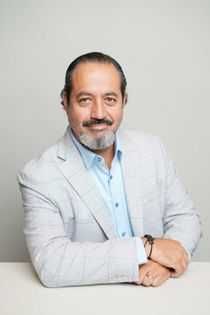
Sylvia Puente is a civic and Latino community leader who, as president and CEO of the Latino Policy Forum works for equity, justice and economic prosperity in Chicago and across Illinois. Her nonprofit conducts public-policy advocacy and analysis on issues including education, housing and immigration.
During her early 15 years at the forum, Puente has grown the organization into a central voice on Latino issues and has established herself as a thought leader in the arena.
Puente was selected by Illinois Gov. J.B. Pritzker to serve on his transition team as part of the Educational Success Committee. She has been appointed to the Restore, Reinvest, Renew Board and the State Housing Task Force. She was appointed by previous governors to the Illinois Early Learning Council, on which she still serves, and the Illinois Education Funding Advisory Board. She is also a board director of Advance Illinois, a public policy agency working to improve education in the state.
Puente is frequently cited as an expert on Latino issues and has published numerous reports and articles that articulate their vital role in society. She is a recipient of the Ohtli Award, Mexico’s highest recognition of those serving the Mexican community outside of Mexico. She received honorary doctorates from Governor State University in 2023 and Roosevelt University in 2021 for her social justice work. Puehte also received the 2023 Career Achievement Award from the University of Chicago Harris School of Public Policy, highlighting alumni who have served as significant leaders in the public, private or nonprofit sectors. She has also been recognized by Hispanic Business Magazine as one of the “100 Most Influential Hispanics in the U.S.”
I had the wonderful opportunity to interview Sylvia for the CityBiz “Meet the Change Leaders” series. Watch to learn the full extent of her democracy reform work:
- YouTubewww.youtube.com
Balta is director of solutions journalism and DEI initiatives for The Fulcrum and a board member of the Bridge Alliance Education Fund, the parent organization of The Fulcrum. He is publisher of the Latino News Network and a trainer with the Solutions Journalism Network.



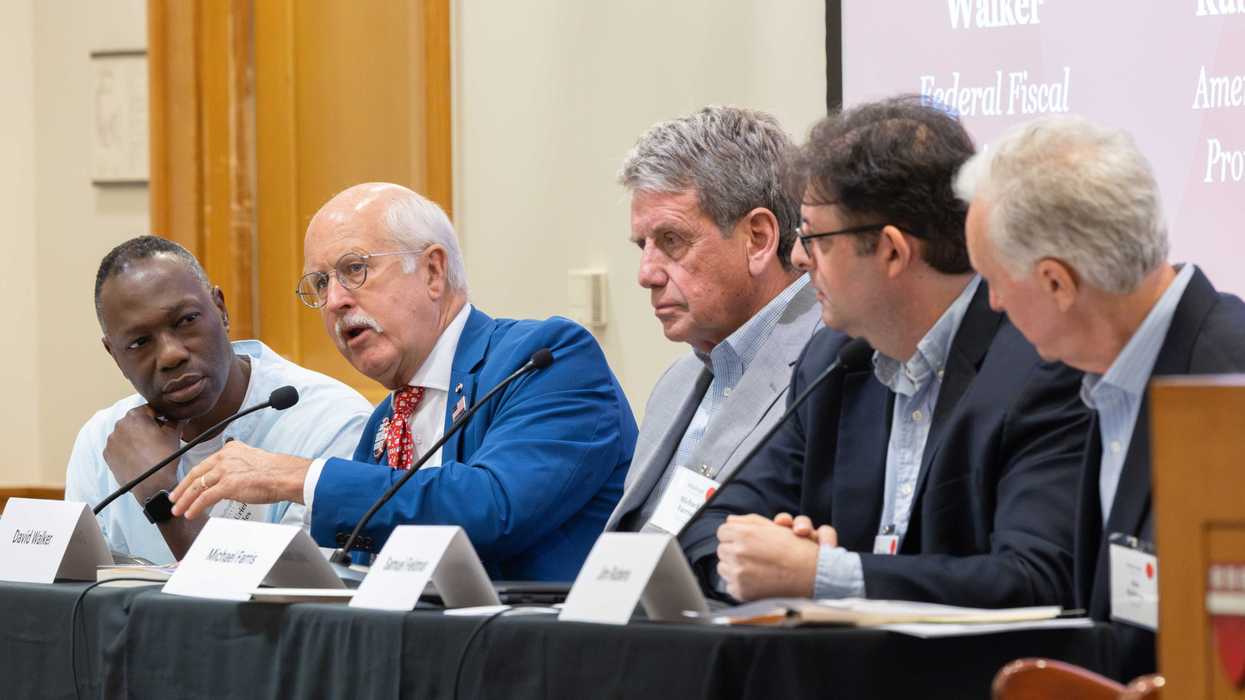







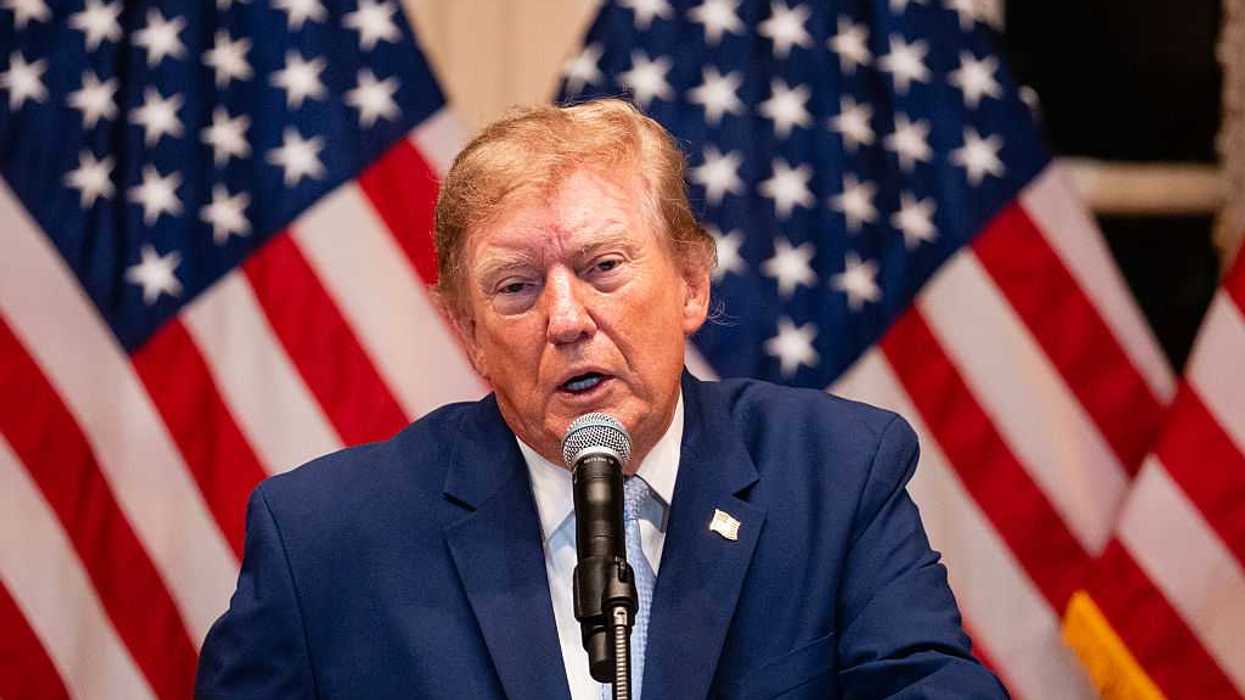



U.S. Secretary of State Marco Rubio delivers a keynote speech at the 62nd Munich Security Conference on Saturday, Feb. 14, 2026, in Munich, Germany.
Marco Rubio is the only adult left in the room
Finally free from the demands of being chief archivist of the United States, secretary of state, national security adviser and unofficial viceroy of Venezuela, Marco Rubio made his way to the Munich Security Conference last weekend to deliver a major address.
I shouldn’t make fun. Rubio, unlike so many major figures in this administration, is a bona fide serious person. Indeed, that’s why President Trump keeps piling responsibilities on him. Rubio knows what he’s talking about and cares about policy. He is hardly a free agent; Trump is still president after all. But in an administration full of people willing to act like social media trolls, Rubio stands out for being serious. And I welcome that.
But just because Rubio made a serious argument, that doesn’t mean it was wholly persuasive. Part of his goal was to repair some of the damage done by his boss, who not long ago threatened to blow up the North Atlantic alliance by snatching Greenland away from Denmark. Rubio’s conciliatory language was welcome, but it hardly set things right.
Whether it was his intent or not, Rubio had more success in offering a contrast with Vice President JD Vance, who used the Munich conference last year as a platform to insult allies and provide fan service to his followers on X. Rubio’s speech was the one Vance should have given, if the goal was to offer a serious argument about Trump’s “vision” for the Western alliance. I put “vision” in scare quotes because it’s unclear to me that Trump actually has one, but the broader MAGA crowd is desperate to construct a coherent theory of their case.
So what’s that case? That Western Civilization is a real thing, America is not only part of it but also its leader, and it will do the hard things required to fix it.
In Rubio’s story, America and Europe embraced policies in the 1990s that amounted to the “managed decline” of the West. European governments were free riders on America’s military might and allowed their defense capabilities to atrophy as they funded bloated welfare states and inefficient regulatory regimes. Free trade, mass migration and an infatuation with “the rules-based global order” eroded national sovereignty, undermined the “cohesion of our societies” and fueled the “de-industrialization” of our economies. The remedy for these things? Reversing course on those policies and embracing the hard reality that strength and power drive events on the global stage.
“The fundamental question we must answer at the outset is what exactly are we defending,” Rubio said, “because armies do not fight for abstractions. Armies fight for a people; armies fight for a nation. Armies fight for a way of life.”
I agree with some of this — to a point. And, honestly, given how refreshing it is to hear a grown-up argument from this administration, it feels churlish to quibble.
But, for starters, the simple fact is that Western Civilization is an abstraction, and so are nations and peoples. And that’s fine. Abstractions — like love, patriotism, moral principles, justice — are really important. Our “way of life” is largely defined and understood through abstractions: freedom, the American dream, democracy, etc. What is the “Great” in Make America Great Again, if not an abstraction?
This is important because the administration’s defenders ridicule or dismiss any principled objection critics raise as fastidious gitchy-goo eggheadery. Trump tramples the rule of law, pardons cronies, tries to steal an election and violates free market principles willy-nilly. And if you complain, it’s because you’re a goody-goody fool.
As White House Deputy Chief of Staff Stephen Miller said not long ago, “we live in a world … that is governed by strength, that is governed by force, that is governed by power. These are the iron laws of the world that have existed since the beginning of time.” Rubio said it better, but it’s the same idea.
There are other problems with Rubio’s story. At the start of the 1990s, the EU’s economy was 9% bigger than ours. In 2025 we were nearly twice as rich as Europe. If Europe was “ripping us off,” they have a funny way of showing it. America hasn’t “deindustrialized.” The manufacturing sector has grown during all of this decline, though not as much as the service sector, where we are a behemoth. We have shed manufacturing jobs, but that has more to do with automation than immigration. Moreover, the trends Rubio describes are not unique to America. Manufacturing tends to shrink as countries get richer.
That’s an important point because Rubio, like his boss, blames all of our economic problems on bad politicians and pretends that good politicians can fix them through sheer force of will.
I think Rubio is wrong, but I salute him for making his case seriously.
Jonah Goldberg is editor-in-chief of The Dispatch and the host of The Remnant podcast. His Twitter handle is @JonahDispatch.