




Skip to content
Search

Latest Stories

Follow Us:
Top Stories

Nope. Nevermind. Some DHS agencies still shut down.

News

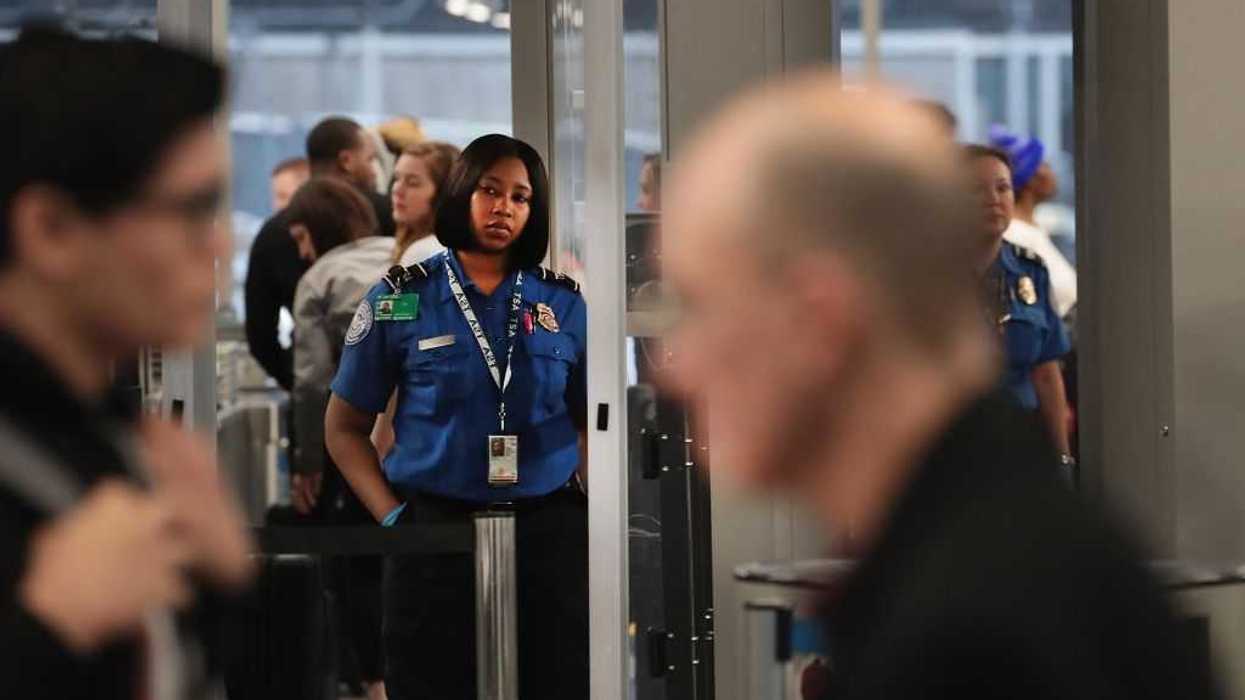
A TSA employee standing in the airport, with two travelers in the foreground.

A Transportation Security Administration (TSA) worker screens passengers and airport employees at O'Hare International Airport on January 07, 2019 in Chicago, Illinois. TSA employees are currently working under the threat of not receiving their next paychecks, scheduled for January 11, because of the partial government shutdown now in its third week.

Getty Images, Scott Olson

House Republicans reject clean bill to open shut-down DHS agencies (March 28 update)

House Republicans (and three Democrats) rejected the Senate's clean bill to end the shutdown late Friday night. Instead, the House passed a different bill that fully funds every agency in the Department of Homeland Security (DHS) but for only 60 days with the knowledge that this short-term continuing resolution will not pass in the Senate.

Both chambers are out until April 13 so the shutdown is expected to last until then at least. Hope that no major weather disasters occur before then because FEMA is one of the DHS agencies out of commission (though some of its employees may be working without pay). It's possible that air travel security lines won't get worse since the President signed an Executive Order authorizing DHS to pay TSA workers. New DHS Secretary Mullin says paychecks will start to go out as early as Monday. How long can this approach continue? Unknown. Leaving aside the questionable legality of repurposing funds in this way, DHS may not be willing to keep paying TSA from these other funds long-term.


The Senate proposal to end the shutdown didn't contain specific rest-of-year funds for the immigration agencies ICE and CBP, or for that matter any of Democrats' prior demands for immigration enforcement reform. Congress gave ICE and CBP $75 billion dollars last year in the reconciliation bill, more than enough to carry the agencies for a few years without the specific yearly appropriation that House Republicans now demand, which is why those agencies aren't shut down but the rest of DHS, like TSA and CISA are. So it's unclear what House Republicans are really after other than appearances.

Instead, the impasse will drag on for no one knows how long.

Other legislative activity last week

This has been, measured by bills that passed, a highly productive week for Congress.

All of the bills listed on the House's Weekly Schedule for the week of March 23-27 passed. Many were by voice vote. You can see everything that got some kind of action this week at this variation of our Legislation Advanced Search. You want to look at the second column which tells you what happened (example: Passed House, Senate Next or vice versa) and the date.

None of the bills voted on by the House will become law until addressed by the Senate, but still, it's been a while since everything they intended to hold a vote on got a vote and even longer since they all passed.

The Senate's bill to fund DHS

Because we get our data from Congress and there's always a slight delay, the biggest item of the week, the Senate's bill for nearly complete funding of the Department of Homeland Security, isn't showing up yet on that Advanced Search (at least as of the morning of March 27).

But it did happen! At a little after 2am Eastern time on March 27, the Senate passed a funding bill that excludes ICE and parts of CBP by unanimous consent.

Unanimous consent is basically what it sounds like. No Democrat or Republican stood in the way of passing it.

The bill does not contain any of Democrats' prior demands for immigration enforcement reform.

This would not instantly resolve the massive lines at airports. Over 500 TSA agents are reported to have quit. So, even if all agents who've been calling in sick rather than work without pay come back, there's still going to be a shortage of TSA workers for some time.

The President announced yesterday that he would, by Executive Order, have TSA agents paid the paycheck they've missed. It's not clear if this is even legal.

It went to the House next where it was rejected, as noted at the top.

More coming on a major ethics violation

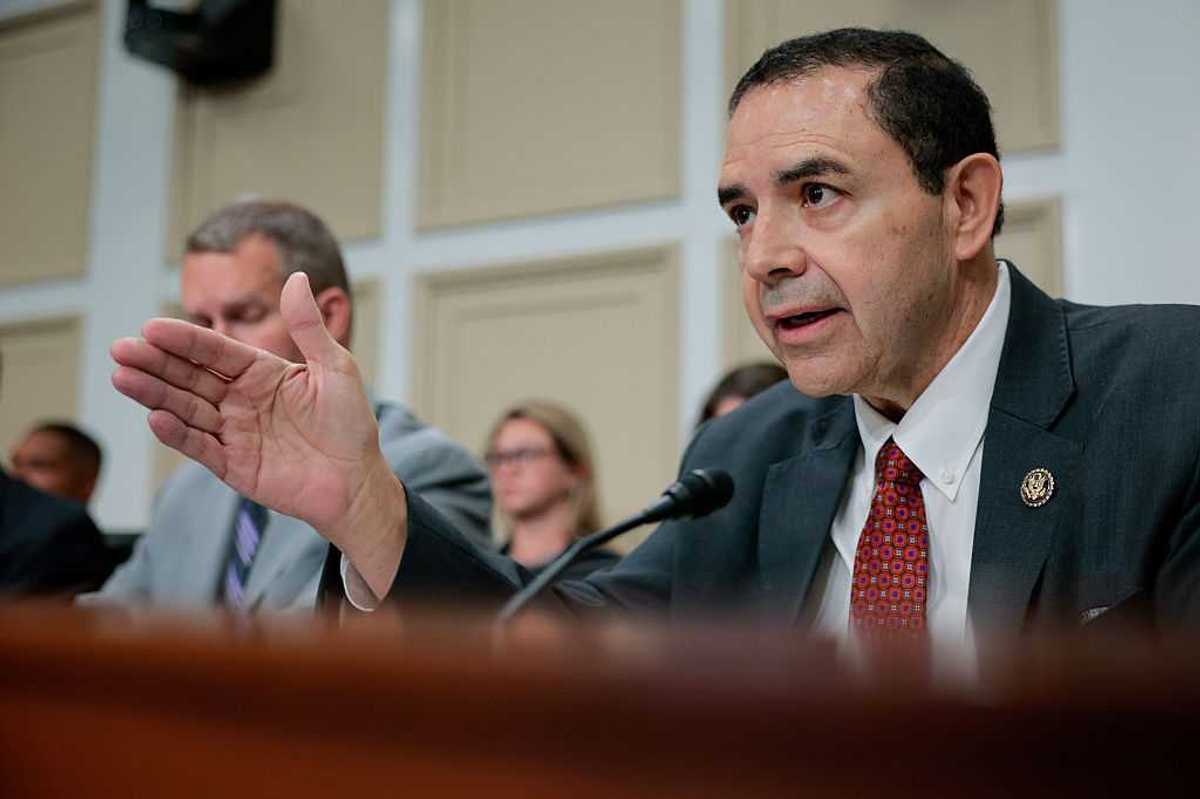
Programming note: we will be writing separately about yesterday's (March 26) Adjudicatory Hearing covering Rep. Cherfilus-McCormick's (D-FL20) ethics investigation.

The immediate effect is that the Ethics Committee says they believe she violated nearly all of the items listed in the Statement of Alleged Violations. They say they will decide on a recommendation for action to the full House when they return from the April recess.


Nope. Nevermind. Some DHS agencies still shut down. was originally published by GovTrack and is republished with permission.


Read More

The Founders Built Safeguards. Our Politics Rendered Them Useless
selective focus photo of U.S.A. flag
Photo by Andrew Ruiz on Unsplash

The Founders Built Safeguards. Our Politics Rendered Them Useless

The men who gathered in Philadelphia in 1787 were students of history, and it taught them a singular lesson: power corrupts, and unchecked power can destroy a republic.

They designed our experiment with overlapping safeguards to ensure that no single faction, branch, or man could hold the nation hostage. What remained unresolved was agency: who, exactly, can determine when to trigger those safeguards? History has since exposed this as the system's deepest vulnerability.

Keep ReadingShow less
House Bill Pushes Bipartisan Effort to Tackle Federal Benefits Fraud, Refocusing from Immigration

Expert witnesses testify on the issues facing federal benefits programs run by states at a House Government Operations hearing on Wednesday, April 15, 2026.

(Photo by Naisha Roy | Medill News Service)

House Bill Pushes Bipartisan Effort to Tackle Federal Benefits Fraud, Refocusing from Immigration

WASHINGTON — Rep. Pete Sessions, R-Texas, introduced a bill Wednesday morning that would create a permanent U.S. Treasury Inspector General position for fraud accountability as part of a broader effort to crack down on the misuse of federal benefits.

The bill would offer an alternative, bipartisan way to prevent federal benefits fraud, after several months of politically charged congressional hearings.

Keep ReadingShow less
Trump Wants To Kill Your Moon Joy

In this handout image provided by NASA, As the Artemis II crew flew over the terminator, the astronauts described this boundary between day and night as "anything but a straight line." Crater rims along the terminator stand out as "islands" in the night.

Photo by NASA via Getty Images

Trump Wants To Kill Your Moon Joy

Just last week, four astronauts left Earth’s orbit, journeyed around the moon, and returned safely home. In the midst of new lows for humanity–like someone threatening to destroy an entire civilization when they have the resources to actually do it–the human race is simultaneously reaching new heights. It is marvelous, miraculous, and a milestone for all humans to celebrate. It is almost unthinkable, however, that at this moment, as the world rallies behind NASA in amazement, Trump is dismantling many of its programs, threatening to slash its budget, and generally working to kill your “moon joy.” Houston, we have a problem.

Artemis II hit close to home for me. The astronauts splashed down off the coast of San Diego, where I was stationed as a Navy pilot for the last eight years. More astronauts come from Naval aviation than anywhere else, and I am proud to wear the same wings of gold as two members of the crew. Following multiple deployments as a pilot, I certified aviation departments of surface vessels and helped deploy tactical air control squadrons aboard them; one of those vessels is where the astronauts landed after getting scooped out of the ocean by H-60 helicopters, the aircraft I flew during my service. All to say: I know intimately the preparation, technical rigor, talent, and coordination required for even relatively insignificant pieces of a mission of astronomical proportions. If we want to shoot for the stars, then we'd better recommit ourselves to what gets us there: science and DEI.

Keep ReadingShow less
Experts Say Heavy Use of Reconciliation Bills Could Backfire
white concrete building under cloudy sky during daytime

Experts Say Heavy Use of Reconciliation Bills Could Backfire

WASHINGTON, DC—As midterm elections take place across the country, Senate Republicans are using the tactic known as “reconciliation” to bypass bipartisan agreements, all before a new Congress takes office.

In the latest example, the GOP-backed reconciliation bill to supplement funding for Immigration and Customs Enforcement and Border Patrol agents is expected to hit President Donald Trump’s desk no later than June first.

Keep ReadingShow less