




2018, a nonprofit worker in Michigan named Katie Fahey posted a message online asking if anyone else was tired of politicians drawing their own districts. She had no campaign experience and no political base.
Within two years, the ballot initiative she built, called Voters Not Politicians, had written an independent redistricting commission into the Michigan constitution. Hollywood eventually made a documentary about it, Slay the Dragon, which is a fairly accurate description of what she had actually done.
- YouTube www.youtube.com
California voters had already done something similar a decade earlier. The Independent Voter Project supported both Proposition 11 in 2008 and Proposition 20 in 2010, handing the state's congressional map to an independent citizens commission instead of the legislature.
Neither reform came from Congress, a caucus, a task force, a political consultant, or a framework; both came from voters who grew tired of waiting and took matters into their own hands.
This brings us to the Congressional Problem Solvers Caucus, which unveiled a Gerrymandering Reform Framework on July 1 calling for national standards and an end to mid-decade map redraws. (The particulars are covered by Independent Voter News here.)
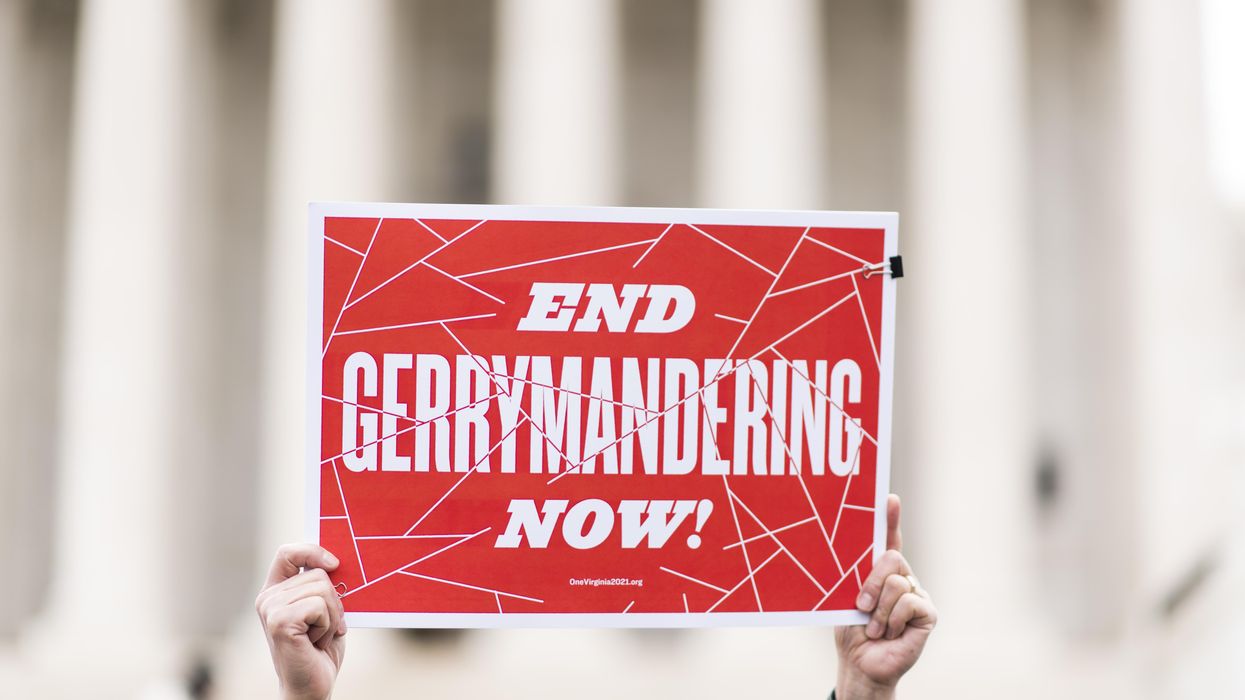
Their big plan landed a few months before a midterm election in which independent and No Party Preference voters have grown loud about their disgust with gerrymandering. That disdain is not exactly irrational, especially since 94% of House seats are considered safe for one party or the other, according to the Cook Political Report.
One of the framework's earliest fans is a California political consultant who reposted the caucus's press release, calling it important and necessary and adding that the country needed to enter 2031 with real, standardized reform.
He did not mention, in that post, that he has spent years drawing California's congressional districts for Democrats, or that he is paid each time those districts get redrawn. It is possible to cheer for the end of a war you are paid to help wage, though it is not obvious why anyone should mistake the cheering for sincerity.
The caucus's own math is not encouraging at all. Every single one of these representatives knows full well that nothing becomes law without a majority. No majority is attainable in the current House unless Republican Speaker Mike Johnson and Democrat Minority Leader Hakeem Jeffries agree on something—an event with no recent precedent.
The immediate mess we find ourselves did not start with Congress either. President Donald Trump pushed Texas to redraw its map outside the normal 10-year cycle, and Texas obliged him.
Governor Gavin Newsom then asked California voters for permission to respond, temporarily setting aside the state's own independent commission to draw a map of the legislature's choosing.
Voters agreed, wiping California's gold standard of independent redistricting off the books.
As of May 2026, 10 states—Alabama, California, Florida, Louisiana, Missouri, North Carolina, Ohio, Tennessee, Texas, and Utah—had new congressional maps. Before 2025, according to Ballotpedia, only two states had conducted voluntary mid-decade redistricting since 1970.
So here is one truth about partisan gerrymandering: the people in Congress or the political consultants currently getting any credit for wanting to fix it are not the people with the power to do so, and the people who do have that power were never in Washington to begin with.
Katie Fahey did not need Congress, and neither did the voters of California, thanks to the power of direct democracy.
Congress can keep issuing frameworks for as long as it likes; a framework requires no votes and changes nothing. A ballot initiative requires signatures, patience, and nobody's permission, not in Sacramento and not in Washington, which is presumably why it remains the only version of reform that has ever actually worked.
Cara Brown McCormick is the principal at Smart Campaigns and advises on strategy and research.
Don't Hold Your Breath Waiting for Politicians or Their Consultants to Fix Gerrymandering is republished as part of The Fulcrum’s partnership with IVN and the Latino News Network to expand voter‑first journalism and strengthen public‑centered coverage of democracy.