




The Senate is once again locked in a familiar pattern: a bill with clear support on one side, firm opposition on the other—and no obvious path forward.
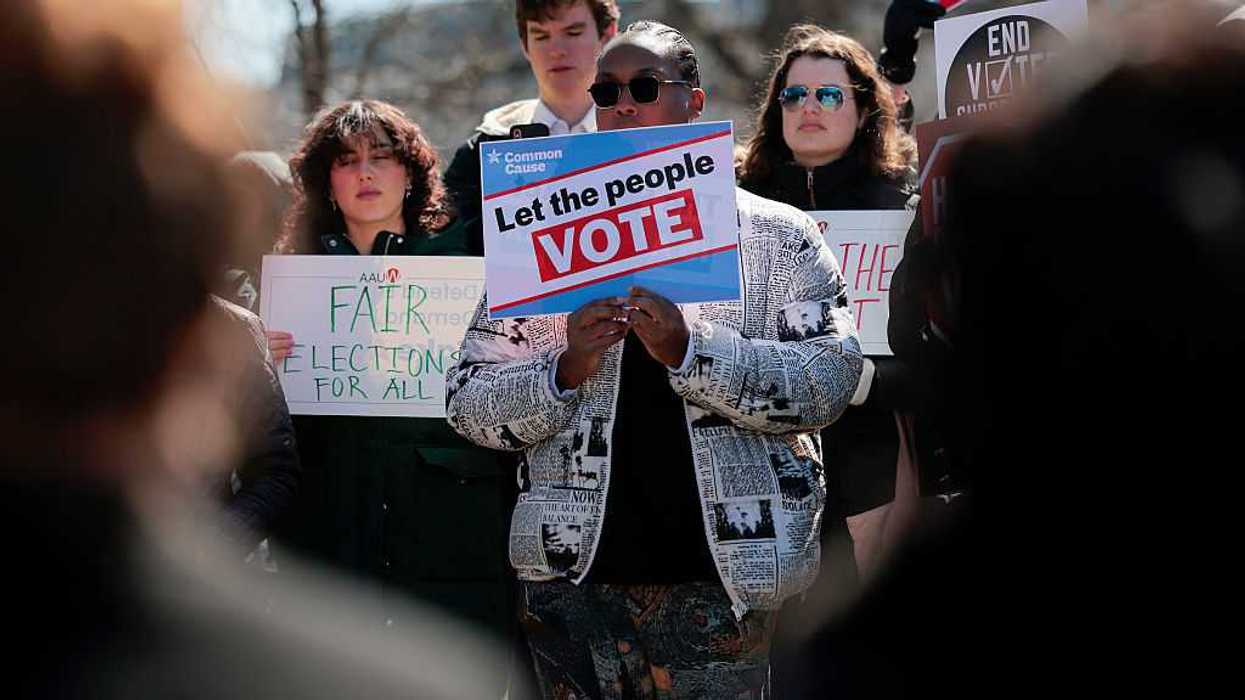
This time it’s the SAVE Act, framed by its supporters as a safeguard for election integrity and by its opponents as a barrier to voting access. The arguments are well-rehearsed. The positions are firm. And yet, beneath the policy debate sits a more revealing truth: in today’s Senate, the outcome of legislation is often shaped long before a final vote is ever cast.
That is not a quirk of the moment. It is a reflection of how the institution now works.
The United States Senate was never designed to move quickly. In fact, it was designed not to. The framers of the Constitution feared sudden swings in public opinion. They had seen what happens when passion outruns judgment. So they built a second chamber meant to slow things down—a place where legislation would be debated more carefully, where smaller states would have equal footing, and where elected officials would serve long enough terms to think beyond the next election cycle.
In simple terms, the House of Representatives was meant to reflect the will of the people. The Senate was meant to refine it.
Two senators per state ensured that California and Wyoming would stand as equals in one chamber of government. Six-year terms insulated senators from the daily winds of public opinion. Staggered elections prevented abrupt political reversals. All of it was intentional—designed to introduce friction into the system.
And for a long time, that friction worked.
The Senate slowed legislation. It forced negotiation. It demanded broader agreement. But it did not bring the machinery of governance to a halt.
That’s where the modern filibuster enters the story.
The filibuster, contrary to popular belief, is not part of the Constitution. It evolved over time as a quirk of Senate rules, eventually becoming a tool that allows a minority of senators to extend debate indefinitely unless 60 members vote to end it. In theory, it reinforces the Senate’s original purpose: it gives the minority a voice and encourages broader consensus.
In practice, however, it has become something else.
Today, the filibuster is no longer a rarely used tool of last resort. It is routine. It is expected. It is built into the process itself. Legislation does not need 51 votes to pass the Senate—it effectively needs 60 votes to move forward at all.
That shift changes the balance.
When combined with equal representation for states regardless of population, it allows a relatively small portion of the country to block legislation supported by a broader national majority. What was once a safeguard against overreach now functions, at times, as a standing veto.
And yet, it would be too simple to say the system is broken.
Because the original concern still holds. Majorities can be volatile. Public opinion can swing quickly. Policies rushed through in one moment can be regretted in the next. The Senate’s role as a stabilizing force remains essential.
The real question is not whether the Senate should slow things down. It should.
The question is whether it should be able to prevent action altogether.
Right now, the Senate too often operates on the wrong side of that line.
This is not a partisan problem. Both parties have used—and defended—the filibuster when it suits them, and both have criticized it when it stands in their way. That alone suggests the issue is structural, not ideological.
The uncomfortable truth is that the Senate has become so effective at stopping bad ideas that it is increasingly unable to advance good ones.
That may feel safe in the short term. But over time, it carries its own risks.
The framers feared both majority tyranny and institutional failure. They designed a system that balanced energy with restraint, action with deliberation.
What they did not design was a system where action becomes the exception rather than the rule.
There is no easy fix. Eliminating the filibuster entirely would invite the volatility the Senate was meant to guard against. But preserving it in its current form risks something else: a slow drift into irrelevance, where debate replaces decision and process replaces progress.
Somewhere between those extremes lies the balance the Senate was meant to strike.
Slowing the country down is not the same as holding it in place.
And if the Senate cannot rediscover that distinction, it may find that the institution designed to steady the republic has instead left it stuck.
Joe Palaggi is a writer and historian whose work sits at the crossroads of theology, politics, and American civic culture. He writes about the moral and historical forces that shape our national identity and the challenges of a polarized age.













The President Invited Iran to Bomb My Home