



One year after Donald Trump returned to the White House, the defining feature of his presidency is not turbulence or rhetorical provocation, but escalation as a mode of governance. Escalation, in this sense, does not simply mean doing more or acting faster. It refers to a sustained pattern of exercising power in ways that bypass, compress, or sideline democratic intermediaries, including Congress, courts, local governments, civil society, and even international partners.
Rather than treating institutional friction as a constraint, the administration has increasingly treated it as an obstacle to be overcome. The result is a presidency that appears more orderly than Trump’s first term, but more consequential in how it tests the guardrails of American democracy.
Unlike in 2017, Trump did not return to office needing time to adapt. He governed from the outset with speed, clarity of intent, and institutional memory. The objective was not consensus-building or repair, but control of tempo and narrative. Decisions were made first, with debate deferred or forced to catch up. That logic has shaped the administration’s relationship with democratic oversight and civic participation across policy areas.
Two democratic vulnerabilities stand out in this first year. The first is the erosion of institutional checks through executive-first decision-making. The second is the constriction of civic space, particularly for communities and actors most reliant on institutional protections.
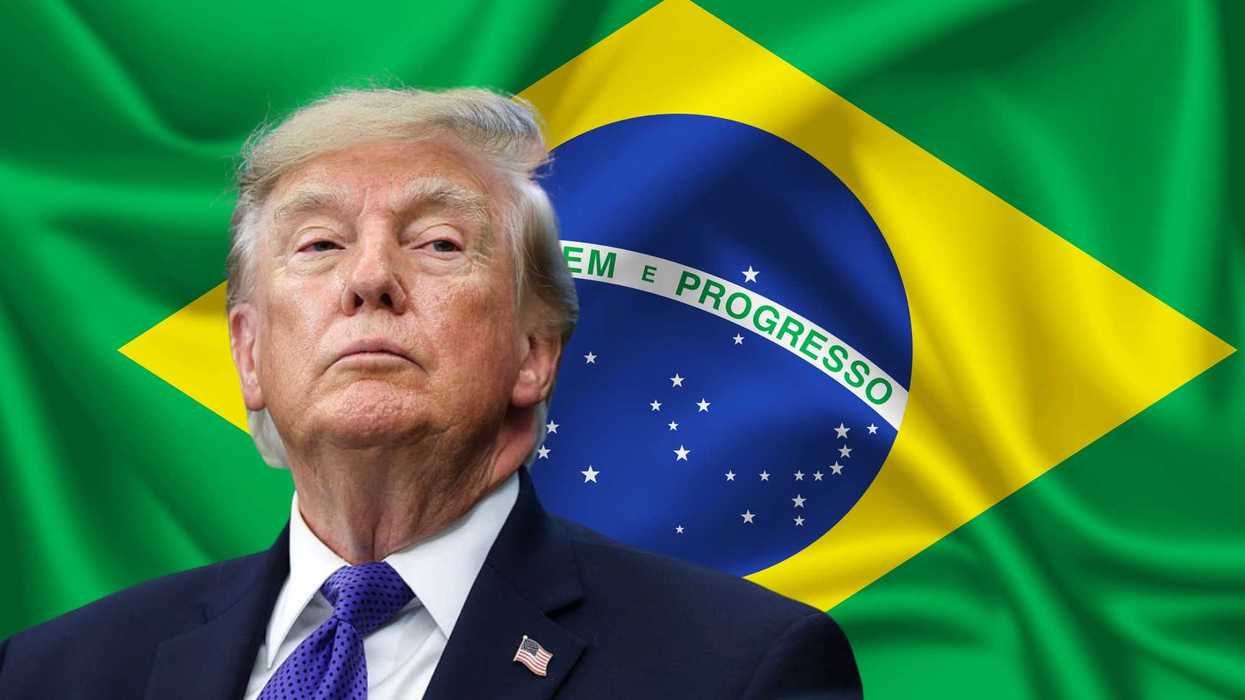
The episode that most clearly illustrates the first vulnerability was the U.S. operation in Venezuela that led to the capture of Nicolás Maduro in Caracas and his transfer to the United States to face narcotics trafficking charges. The operation was carried out without prior congressional authorization, triggering immediate international backlash. The administration framed the move as a necessary law enforcement action. Critics saw a unilateral use of force that set a precedent for executive action untethered from legislative consent.
The reaction in Washington underscored the shift. Lawmakers from both parties proposed measures to limit presidential authority over military and security operations. But those responses came after the action was complete. The sequence mattered. The executive acted first. Institutions were left to respond later. That pattern has repeated across the administration’s approach to governance.
Congress formally retains its powers, but its capacity to function as a deliberative check has weakened under the pressure of speed and party discipline. Decisions that might once have triggered constitutional crises are now absorbed with political resignation. Conflict has become normalized, not as an exception, but as a governing method.
This institutional acceleration is not only political. It is structural. Jason Breckenridge, a researcher who studies how political movements affect marginalized communities, told The Fulcrum that what distinguishes the second Trump term is the prioritization of ideological velocity over institutional stability. “The administration has adopted a logic of premature implementation of radical change,” he said, “without accounting for the economic and social consequences, including for its own supporters.”
Breckenridge’s analysis highlights a dynamic often missed in conventional political reporting. Speed itself becomes a democratic risk. When policy shifts outpace institutional capacity, communities that depend most on legal protections and due process feel the effects first. “If Trump’s first term was marked by internal resistance from bureaucracy,” Breckenridge said, “this one is defined by an apparatus built around loyalty and execution.”
That consolidation has been accompanied by a shift in narrative strategy. “This is no longer campaign populism,” Breckenridge added. “It is governance designed to preserve power structures and control the narrative, even at the expense of factual or historical rigor.”
The second democratic vulnerability, the narrowing of civic space, is most visible in immigration enforcement. The administration’s first year back has seen an intensification of raids and operations by U.S. Immigration and Customs Enforcement in major metropolitan areas. Enforcement has extended well beyond individuals with serious criminal records to include families, long-settled workers, and people with pending administrative cases.
Arrests at workplaces, schools, and courthouses have re-entered public view. Local governments and civil rights organizations report that fear has discouraged immigrant communities from accessing public services, seeking health care, or cooperating with law enforcement. Immigration policy, in this context, functions not only as enforcement but as a tool of deterrence and symbolic control.
International human rights organizations have warned that this constriction of civic space extends beyond immigration. Marking one year since Trump returned to office, Amnesty International sounded what it described as alarm bells over rising authoritarian practices in the United States.
In a report titled Ringing the Alarm Bells: Rising Authoritarian Practices and Erosion of Human Rights in the United States, Amnesty documented how the administration’s actions, including shrinking civic space and undermining the rule of law, are eroding human rights domestically and abroad. “We are witnessing a dangerous trajectory under President Trump that has already led to a human rights emergency,” said Paul O’Brien, executive director of Amnesty International USA, in comments to The Fulcrum. He warned that journalists, protesters, lawyers, students, and human rights defenders now face heightened risk as norms erode and power concentrates.
The administration has defended its actions as necessary to restore authority and enforce the law. Yet the absence of structural immigration reform reinforces the perception that visibility and deterrence, rather than durable solutions, are the primary goals.
Economic policy reflects a similar narrowing of priorities. Deregulation has favored energy, defense, and large corporate interests, while housing, labor protections, and social cohesion have been deprioritized. Inequality has not vanished from public debate, but it has been pushed out of the policy center.
Internationally, the United States has remained engaged, but in increasingly transactional terms. Alliances have become conditional. Predictability has weakened. The contradiction between peace rhetoric and the use of force, highlighted by controversy surrounding the Nobel Peace Prize and Venezuela, has further strained U.S. credibility abroad.
At the same time, Trump’s repeated public hints about a possible third term have tested another democratic norm. While no formal move has been made, the rhetoric itself matters. By questioning constitutional limits, the administration contributes to normalizing the idea that rules are negotiable if political support is sufficient.
Isvari Maranwe, a political analyst and lawyer specializing in technology governance and cybersecurity, told The Fulcrumthat while many of Trump’s moves were anticipated, their speed was not. “Those who listened closely or examined Project 2025 should not be surprised by the direction,” she said. “What is striking is the efficiency.”
Maranwe’s insight points to a different democratic risk. “This term has accelerated institutional change faster than public or institutional response,” she said. “That efficiency has altered the United States’ global position and intensified concern around freedom of expression, ICE enforcement, the welfare state, and escalating global conflicts.”
Taken together, Trump’s first year back does not represent a sudden democratic collapse. It represents something more incremental and potentially more durable: the normalization of executive escalation and the steady erosion of institutional friction.
For civic actors, the stakes are clear. Democratic resilience now depends less on formal rules than on whether institutions reassert their capacity to slow, question, and constrain power. Congress, courts, local governments, independent media, and civil society remain pressure points. Whether escalation continues will depend on whether those actors can reclaim space before speed becomes permanence.
This year has not merely marked Trump’s return. It has tested how much strain American democracy can absorb.
Alex Segura is a bilingual, multiple-platform journalist based in Southern California.






The President Invited Iran to Bomb My Home