




In October 2020, Utah’s Republican Senator Mike Lee delivered a startling but revealing civics lesson in the aftermath of that year’s vice-presidential debate between Kamala Harris and Mike Pence. He tweeted, The United States is “not a democracy.”
“The word ‘democracy,’’’ Lee wrote, “appears nowhere in the Constitution, perhaps because our form of government is not a democracy. It’s a constitutional republic….Democracy isn’t the objective….” The senator said that the object of the Constitution was to promote “liberty, peace, and prospefity (sic).”
As Lee put it, “We want the human condition to flourish. Rank democracy can thwart that.”
The New York Times reports that Lee’s sentiments are now being echoed in state legislatures in Utah, Missouri, Florida, and other red states, as Republicans seek to roll back citizens' right to make their views known through initiative and referendum.
As the Times explained, “The legislators argue that the nation’s founders never intended a pure democracy, and that in a representative democracy, elected legislators are entrusted to carry out their own judgments….’We live in a republic,’ Stuart Adams, the president of the Utah Senate, declared in a speech last year. ‘We will not let initiatives driven by out-of-state money turn Utah into California.’”
The right to petition the government for the redress of grievances is as old as the Republic itself. That right spurred a movement at the end of the nineteenth century to allow voters to use democratic processes, so-called direct legislation, to circumvent, or check, political institutions, which critics said were dominated by moneyed interests.
Today, twenty-four states, including places like Arkansas, California, Colorado, and Idaho, as well as Florida, Missouri, and Utah, allow citizens “to gather a certain number of signatures to bring a proposed statute or constitutional amendment to a public vote.” The District of Columbia does so as well.
While the nation’s attention is fixed on threats to democracy coming from Washington, DC, we should not neglect state-level efforts to curb popular participation in the political process.
The movement to allow direct legislation was one response to the gross inequality and rampant corruption of the Gilded Age. In 1896, Eltweed Pomeroy, a leading proponent of direct legislation, described the salutary effects of referenda and initiatives on cities and towns in Massachusetts.
“Many of them are so corrupt,” he said, “that the services they render their citizens are poor compared with the services given by the city officials in semi-barbarous countries, like Turkey and Russia.” He added, “If the Initiative was in force, a suitable minority of the voters could petition for any matter to…go to a poll of the people….As constructive is vastly superior to preventive work, the Initiative is vastly more important than the Referendum.”
Pomeroy denounced the “plutocracy,” which “knows full well that it must advocate high and noble principles and then not carry them into effect,” and called on “true patriots and lovers of their kind” to recognize that “democracy is not a failure in cities. Delegated responsibility is a failure.”
Progressives across the country agreed and pushed for direct legislation in their home states. As I have explained elsewhere, “They saw direct legislation as a way to supplement institutional politics, creating a parallel, democratic system less corrupted by the presence of professional politicians and their interests.”
South Dakota got the ball rolling in 1898, when it became the first state to create an initiative process. It was soon followed by Utah, Oregon, and Illinois.
By 1918, the number of states with initiative processes had risen to 22. Along the way, opponents said that direct legislation violated the United States Constitution, which guaranteed to the states a Republican form of government.
However, in 1912, the United States heard a challenge to a provision of the Oregon constitution which said that “the people reserve to themselves the power to propose laws and amendments to the constitution and to enact or reject the same at the polls, independent of the legislative assembly, and also reserve power at their own option to approve or reject at the polls any act of the legislative assembly." It ruled that how states implemented the guarantee of a Republican form of government was up to them.
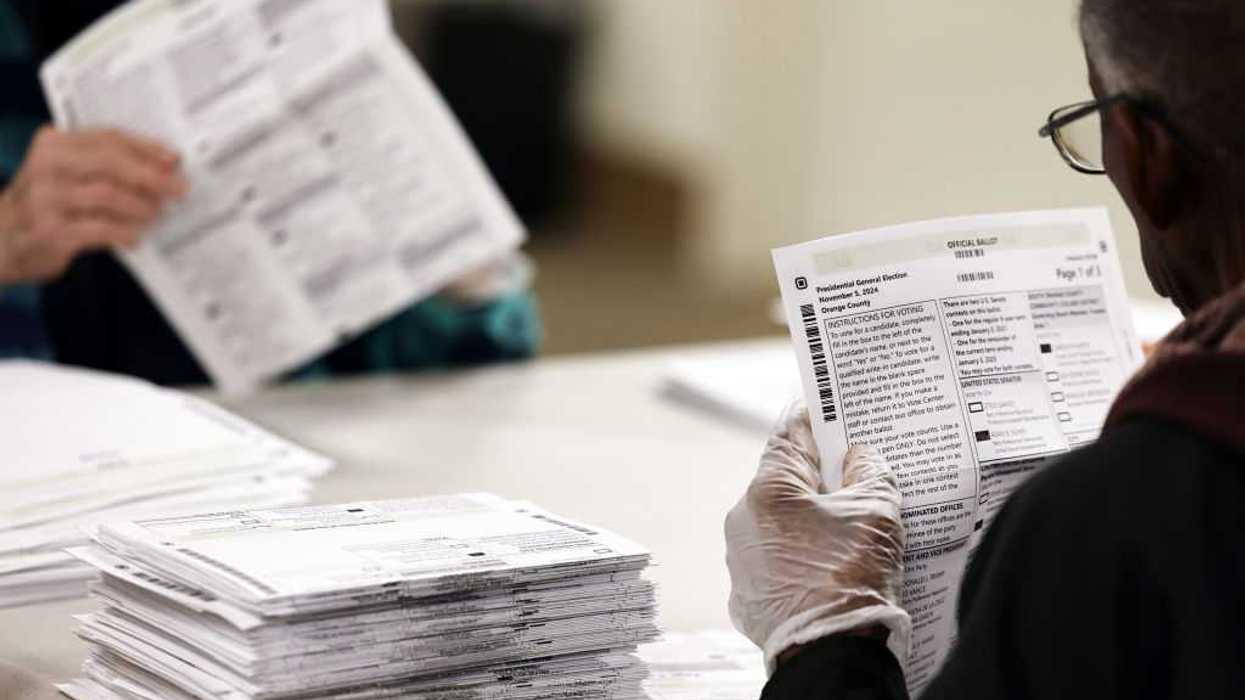
Since then, putting ballot measures to a vote of the people has become a regular occurrence in the United States. For example, in 2024, Ballotpedia, the best source for information about direct legislation, reports that “159 statewide ballot measures were certified for the ballot in 41 states. Voters approved 102 (64%) and rejected 57 (36%) ballot measures.”
As the New York Times explains, in recent years, “Voters frustrated by one-party control in Republican states…have increasingly turned to citizen-sponsored initiatives to enact policies that their legislatures won’t. They expanded Medicaid, adopted paid sick leave, raised the minimum wage and safeguarded access to abortion. Now, the legislators are striking back.”
It details various devices they are using in this effort. Some states are raising the threshold for passage of a ballot measure to 60%. Others are “imposing a raft of new requirements, fees and criminal penalties around collecting signatures on petitions for ballot measures.”
This year, Missouri voters will be asked to approve a measure requiring that “citizen-sponsored amendments to the state constitution would have to win in each of the state’s eight U.S. House districts.” If it passes, it will be virtually impossible for such amendments to pass again.
That’s the point: Make it as hard as possible for citizens to make their views known directly.
But this is more than a strategy to defeat progressives. A look at history reveals that ballot measures can advance both conservative and progressive causes.
For example, in criminal justice matters, voters often embrace tough-on-crime measures. In 2024, California voters approved an increase in “penalties for certain drug crimes and theft convictions and allow a new class of crime to be called treatment-mandated felony,” by a margin of 68% to 32%. In the same election, they rejected a measure that would no longer have allowed “involuntary servitude” to be used as punishment for a crime, 53% to 47%.
Over the course of a more than one-hundred-year period, those hoping to get voters to abolish the death penalty in their states have repeatedly failed to do so.
And let’s not forget the way opponents of gay marriage used ballot measures to prevent it from being legalized in the states. According to Ballotpedia, “Between 1994 and 2024, there were 45 statewide measures on the ballot related to same-sex marriage. Out of these measures, 36 measures were placed on the ballot to prohibit same-sex marriage or define marriage as between a man and a woman. Of these measures, 33 were approved, and three were defeated.”
With this record, it seems clear that efforts to curb the use of ballot measures are not just about liberal or conservative politics. They are about something much more fundamental: the future of democracy itself.
Chris Melody Fields Figueredo, executive director of the Ballot Initiative Strategy Center, got it right when she told the Times that the measures being pursued in red states are designed to “create a system that is so cumbersome and so expensive and hard that you’ve taken the teeth out of the will of the people and their ability to make change.”
Austin Sarat is the William Nelson Cromwell professor of jurisprudence and political science at Amherst College.