
Skip to content
Search

Latest Stories

Follow Us:
Top Stories

WI professor: Dems face breaking point over DHS funding feud

News

WI professor: Dems face breaking point over DHS funding feud

Republicans will need some Democratic support to pass the multi-bill spending package in time to avoid a partial government shutdown.

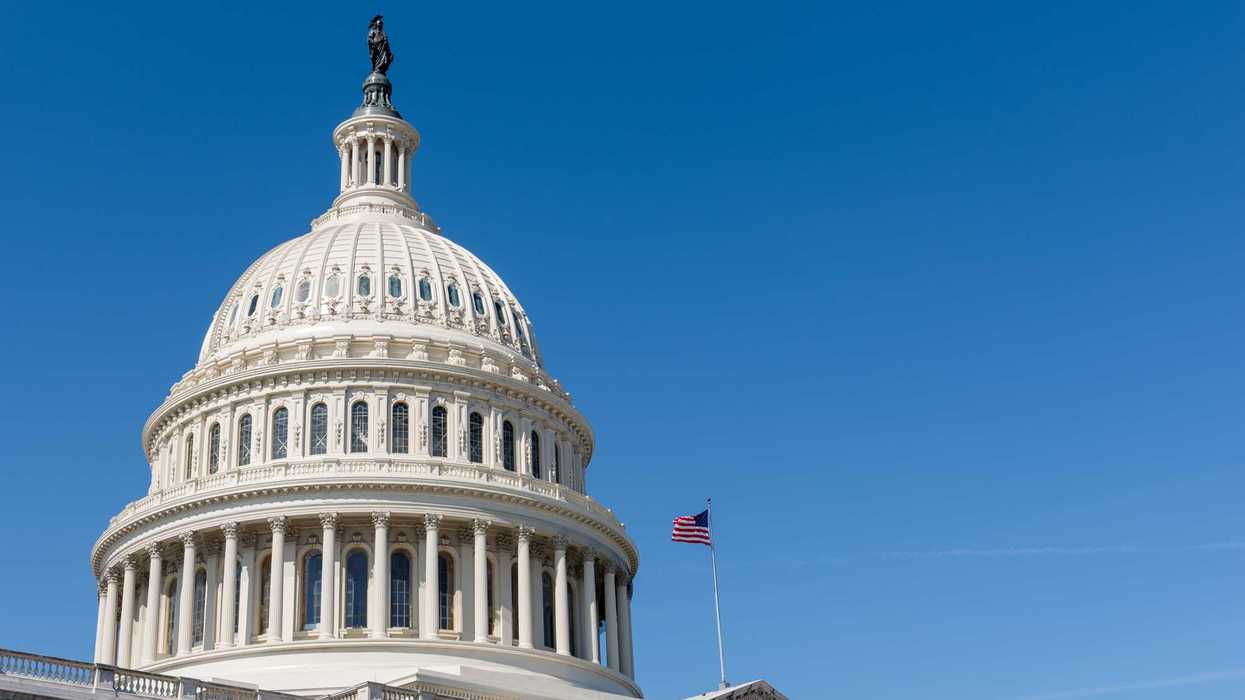
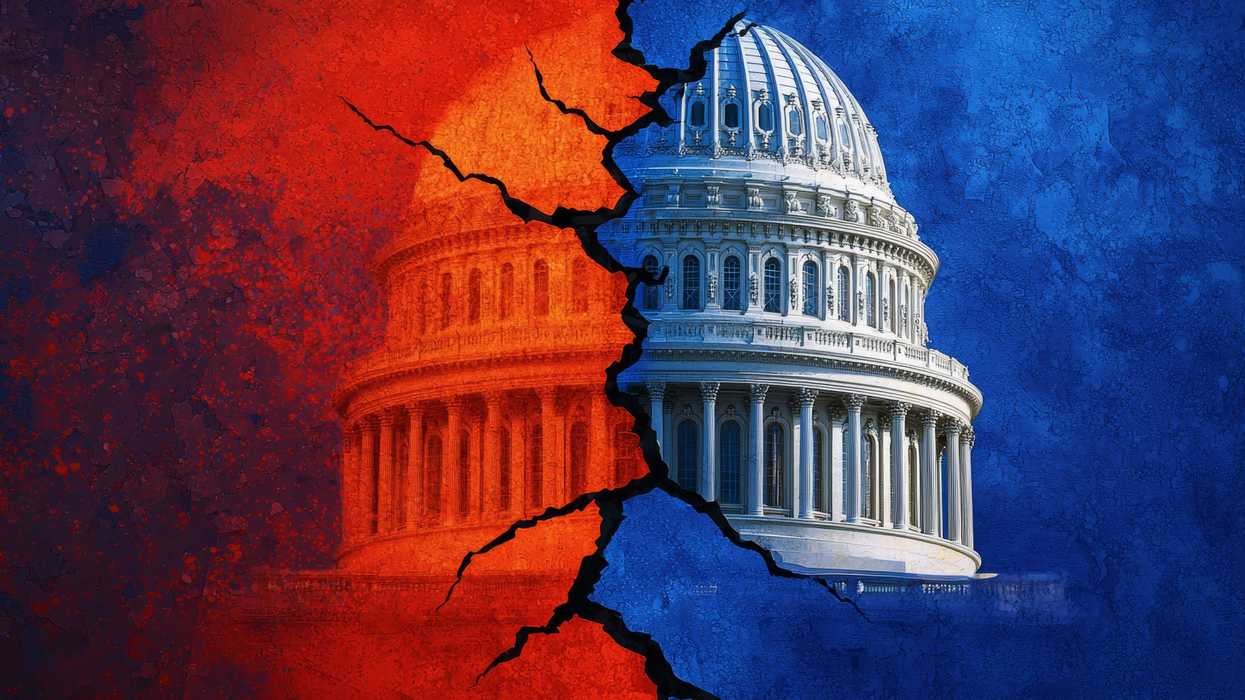
(Adobe Stock)

A Wisconsin professor is calling another potential government shutdown the ultimate test for the Democratic Party.

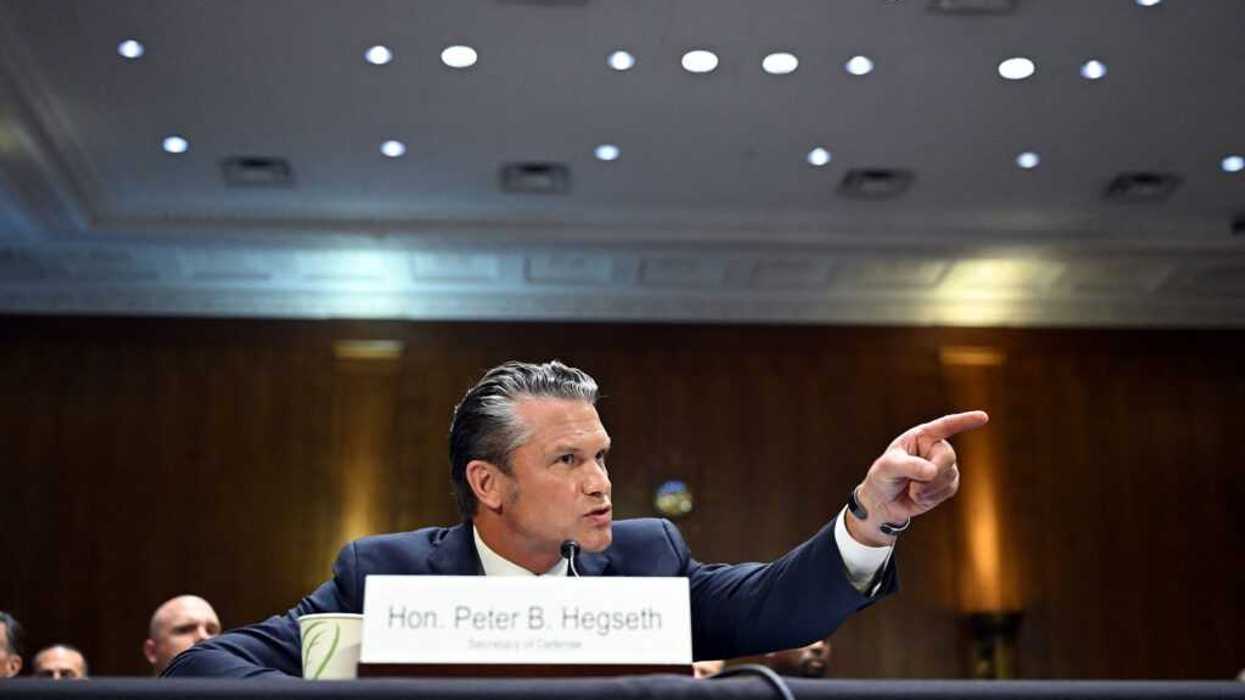
Congress is currently in contentious negotiations over a House-approved bill containing additional funding for the Department of Homeland Security, including billions for Immigration and Customs Enforcement, as national political uproar continues after immigration agents shot and killed Alex Pretti, 37, in Minneapolis during protests over the weekend.


Howard Schweber, professor of political science at the University of Wisconsin-Madison, argues that any compromise could result in a complete collapse of the Democratic Party.

"This is a moment of genuine crisis for the leadership of the Democratic Party," Schweber contended. "If they fail to either stand strong and shut down the government, or obtain dramatic spending cuts for DHS and constraints on DHS operations, I think that their leadership of the Democratic Party is over."

The multi-bill package budgets more than $64 billion for DHS. The Senate has until Jan. 30 to approve or amend it or they will risk another government shutdown.

Schweber emphasized Democratic voter support has significantly eroded due to leadership decisions perceived as concessions to Republican demands. He explained during the previous government shutdown, Democratic senators voted to continue funding the government based on promised compromises from the Trump administration, which never materialized.

"The stakes are incredibly high, much higher than they've been in past shutdowns," Schweber emphasized. "The usual arguments – about avoiding hardship to federal employees or avoiding being blamed for an economic negative consequence – I don't think have purchase this time around, because the issue of violence in the streets has reached a level of intensity that just creates a whole new political environment."

Schwaber noted the deployment of border czar Tom Homan to Minnesota might signal potential White House willingness to adopt more targeted, less aggressive deportation approaches. He's widely seen by GOP lawmakers as a more practical enforcer of current immigration strategies.

Judith Ruiz-Branch is an award-winning journalist with over a decade of experience as a reporter/producer for TV, radio, print and podcast news.



Read More

Why Greenland and ICE Could Spell the End of U.S. Empire
world map chart
Photo by Morgan Lane on Unsplash

Why Greenland and ICE Could Spell the End of U.S. Empire

Since the late 15th century, the Americas have been colonized by the Spanish, French, British, Portuguese, and the United States, among others. This begs the question: how do we determine the right to citizenship over land that has been stolen or seized? Should we, as United States citizens today, condone the use of violence and force to remove, deport, and detain Indigenous Peoples from the Americas, including Native American and Indigenous Peoples with origins in Latin America? I argue that Greenland and ICE represent the tipping point for the legitimacy of the U.S. as a weakening world power that is losing credibility at home and abroad.

On January 9th, the BBC reported that President Trump, during a press briefing about his desire to “own” Greenland, stated that, “Countries have to have ownership and you defend ownership, you don't defend leases. And we'll have to defend Greenland," Trump told reporters on Friday, in response to a question from the BBC. The US will do it "the easy way" or "the hard way", he said. During this same press briefing, Trump stated, “The fact that they had a boat land there 500 years ago doesn't mean that they own the land.”

Keep Reading Show less
Family First: How One Program Is Rebuilding System-Impacted Families

Close up holding hands

Getty Images

Family First: How One Program Is Rebuilding System-Impacted Families

“Are you proud of your mother?” Colie Lavar Long, known as Shaka, asked 13-year-old Jade Muñez when he found her waiting at the Georgetown University Law Center. She had come straight from school and was waiting for her mother, Jessica Trejo—who, like Long, is formerly incarcerated—to finish her classes before they would head home together, part of their daily routine.

Muñez said yes, a heartwarming moment for both Long and Trejo, who are friends through their involvement in Georgetown University’s Prisons and Justice Initiative. Trejo recalled that day: “When I came out, [Long] told me, ‘I think it’s awesome that your daughter comes here after school. Any other kid would be like, I'm out of here.’” This mother-daughter bond inspired Long to encourage this kind of family relationship through an initiative he named the Family First program.

Keep Reading Show less
Wisconsin Bill Would Allow DACA Recipients to Apply for Professional Licenses

American flag, gavil, and book titled: immigration law

Photo provided

Wisconsin Bill Would Allow DACA Recipients to Apply for Professional Licenses

MADISON, Wis. — Wisconsin lawmakers from both parties are backing legislation that would allow recipients of the Deferred Action for Childhood Arrivals program to apply for professional and occupational licenses, a change they say could help address workforce shortages across the state.

The proposal, Assembly Bill 759, is authored by Republican Rep. Joel Kitchens of Sturgeon Bay and Democratic Rep. Sylvia Ortiz-Velez of Milwaukee. The bill has a companion measure in the Senate, SB 745. Under current Wisconsin law, DACA recipients, often referred to as Dreamers, are barred from receiving professional and occupational licenses, even though they are authorized to work under federal rules. AB 759 would create a state-level exception allowing DACA recipients to obtain licenses if they meet all other qualifications for a profession.

Keep Reading Show less
Overreach Abroad, Silence at Home
low light photography of armchairs in front of desk

Overreach Abroad, Silence at Home

In March 2024, the Department of Justice secured a hard-won conviction against Juan Orlando Hernández, the former president of Honduras, for trafficking tons of cocaine into the United States. After years of investigation and months of trial preparation, he was formally sentenced on June 26, 2024. Yet on December 1, 2025 — with a single stroke of a pen, and after receiving a flattering letter from prison — President Trump erased the conviction entirely, issuing a full pardon (Congress.gov).

Defending the pardon, the president dismissed the Hernández prosecution as a politically motivated case pursued by the previous administration. But the evidence presented in court — including years of trafficking and tons of cocaine — was not political. It was factual, documented, and proven beyond a reasonable doubt. If the president’s goal is truly to rid the country of drugs, the Hernández pardon is impossible to reconcile with that mission. It was not only a contradiction — it was a betrayal of the justice system itself.

Keep Reading Show less