


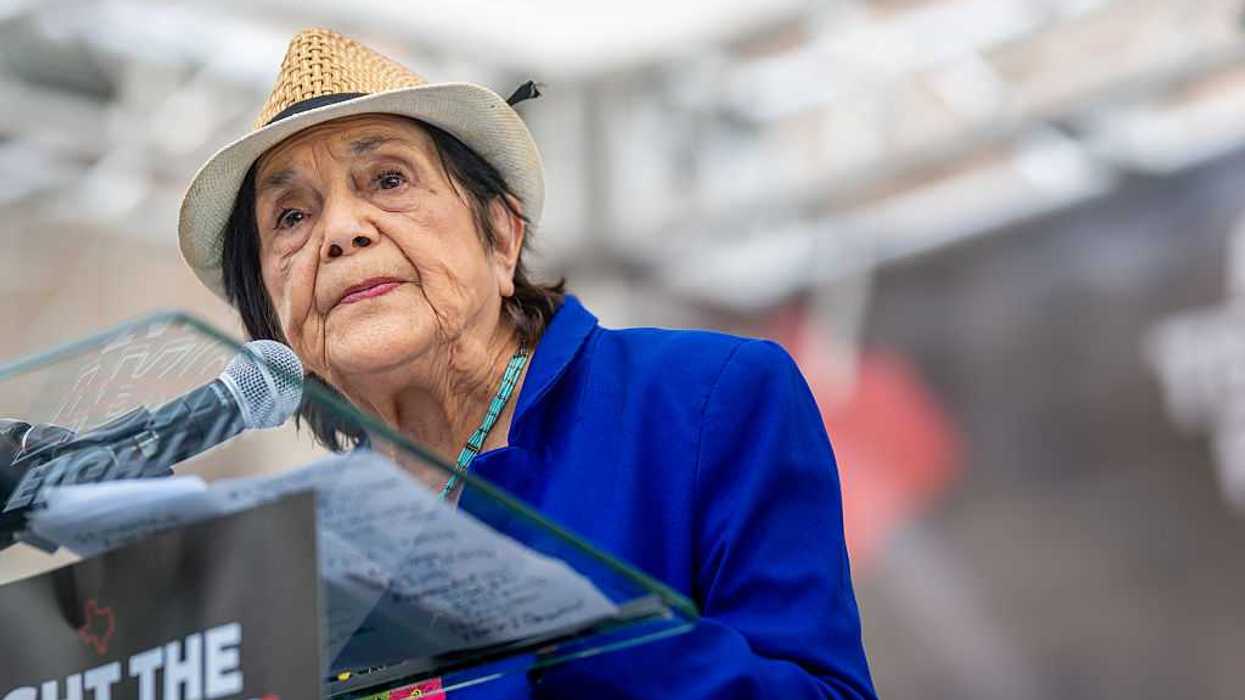
Dolores Huerta broke her silence 60 years after Cesar Chavez had assaulted her. In her statement, Dolores Huerta said, “I carried this secret for as long as I did because building the movement and securing farmworker rights was my life’s work”. She did not want to hurt the movement.
After 15 years of working with survivors and supporting domestic violence and sexual assault programs, I know this instinct well. Most survivors do not want to rock the boat or damage the reputation of leaders, bosses, or ex-partners. Speaking up can mean destabilizing families, workplaces, and entire communities. Survivors will deny their own pain to protect institutions and the people they care about, especially in oppressed and marginalized communities.
Latinos in the U.S. are already stereotyped as criminals and rapists. No one wants to contribute to this narrative. No one wants this to be true of their heroes, sons, friends, and neighbors; there is too much at stake.
Closer to home, here in San Francisco, Jon Jacobo, a community leader was accused of having assaulted several women. In many ways, I see parallels in which accusations against a charismatic leader divide a community between those who think “there’s no way” he could do that and those who believe the survivor. Often, the community has more concern for the person being accused of the assault and ruining their lives, vs the concern for the victim and how their lives are never the same after the assault.
And yet there is hope. I am relieved that the United Farm Workers (UFW) and the Chavez family are not denying these allegations and standing on their values. And that many in the Latino community are siding with survivors even when it means reexamining their views of revered figures. That shift matters.
Standing up and telling your story is the bravest thing a survivor can do. There is always the fear of not being believed. Professionally, I supported dozens of women who were assaulted while working in the fields, by employers, by co-workers, and by family members. Most of the women I worked with were undocumented, and their immigration status was used to coerce their silence. There were also bystanders who knew of the abuse but chose to do nothing out of fear of retaliation.
As I read the stories of Ana Murguia and Debra Rojas recalling how they were groomed and abused by Cesar Chavez, I could not help but wonder what would have happened if they had come forward as teens. Would they have been believed? Abuse is made possible in silence. Abuse is reinforced when abusers are protected by religion, culture, and status. Society is complicit and creates environments where abuse is enabled.
Personally, I grew up in Christian community and was taught to “not bear false witness” and to not cause men “to stumble”. I was also taught that sex before marriage was a sin.
So, when I was in middle school, and one of my friends was gang raped, members of the church questioned why she had those friends in the first place. She was judged instead of protected.
As an adult, these experiences stayed with me. When I experienced abuse firsthand, I didn’t confide in anyone in my Christian community because how do you talk about assault when you’re not supposed to be having sex in the first place? The conversation about consent, and its lack, gets thrown out the window. And the assailants walk away, shielded from accountability because the community would often see survivors suffer rather than leaders disgraced.
Dolores Huerta’s decision to come forward now matters. No matter how long she lived with this secret, she was brave enough to tell her story. It's because of her and others that more of us will come forward, regardless of who, when, where, and what the circumstances of the assault were.
Because at the end of the day, what is a justice movement without justice for women?
Elisabet Avalos is a leader in housing justice, developing programs for survivors of violence experiencing homelessness, and a Public Voices Fellow of The OpEd Project on Domestic Violence and Economic Security.











The President Invited Iran to Bomb My Home