




July 25 marked World Drowning Day. More than 4000 people die from unintentional drowning in the United States each year. This translates into an average of 11 drowning deaths per day. Children ages one to four are at greatest risk, making drowning the leading cause of death for that group and the second leading cause of death for children ages five to 14.
Two emerging trends could make those numbers worse: federal funding cuts that have weakened drowning prevention efforts and hotter summers that are driving more people to water to cool off. Together, these trends threaten to deepen long-standing disparities that already place Black, Indigenous, autistic, and low-income communities at greater risk.
According to the Centers for Disease Control and Prevention (CDC), drowning death rates are 2.6 times higher among Black children ages five to nine and 3.6 times higher among those ages 10 to 14 than among their White peers. The largest disparity is among American Indian and Alaska Native adults ages 25 to 29, whose drowning rate is 3.5 times higher than that of White adults. Autistic children are also especially vulnerable because many are drawn to water and may be less aware of danger. They are 160 times more likely to die from drowning than other children.
Those disparities could widen as federal support for drowning prevention continues to shrink. Last August, the Trump administration eliminated the CDC’s drowning prevention program as part of a broader effort to reduce the federal workforce. The small team of health experts tracked drowning data and helped answer critical public health questions, including who is drowning, where incidents occur, and which interventions are most effective.
Climate change may further compound those risks. Drowning deaths surged in both France and Germany during this summer’s heat waves in Europe, suggesting that extreme temperatures drive more people to seek relief in rivers, lakes and other unattended bodies of water. In the United States, public pools often become crowded during extreme heat days. In lower-income communities, overcrowding and lifeguard shortages can increase the risks of fatal drownings.
For Arkeisha Reese, drowning statistics are deeply personal.
It has been 20 years since Reese lost her five-year-old son Kareem in a drowning accident in central Florida. In mid-June 2006, she dropped him off at summer camp before heading to work. The last thing on her mind was her son’s safety. Kareem was enrolled in a reputable camp and under adult supervision. With hindsight, she wonders why the camp’s intake forms never asked about his swimming ability or sought permission to take him to a pool.
“The camp was organized by the school he was supposed to attend in the fall. They went on a field trip, and he was left unattended. I don’t think there was a lifeguard on duty, and to this day I am not exactly sure how it all happened,” explains Reese during a phone interview with the Fulcrum. “From the moment he drowned and died, no one was allowed to talk. He is my forever five.”
Ten years after her son’s death, Reese founded the Team Kareem Memorial Foundation to promote water safety through public education, including an annual 5K walk/run, CPR training, and swim lesson scholarships.
“I started researching, and I didn't like the answers I was getting, so I tried to make a change, share his story, and get partners who are willing to help and keep his memory alive.”
For Miriam Lynch, Executive Director of Diversity in Aquatics, a national network building a more inclusive, accessible, and representative aquatic community, drowning is also a systemic issue.
“We must be honest about the history of what has led us to disparities,” says Miriam Lynch in an interview with the Fulcrum. “There are 250 years of history that has led us to today’s disparities. They affect many different groups, including those with different abilities and people living in rural areas. We see it in politics, in geography, and in economics. And guess what? Water safety fits right in there. It’s not about fixing one problem only. We must change policy, funding, and accessibility.”
- YouTube youtu.be
The good news is that most drownings are preventable, according to water safety advocates, but many families underestimate the risks until tragedy strikes. “Drowning is 100% preventable, but only with all the layers of protection in place. Swim lessons are not the end-all deal,” says Kerri Morrison, founder and executive director of Live Like Jake Foundation, in an interview with the Fulcrum. Morrison and her husband established the nonprofit after their three-year-old son, Jake, drowned in 2013.
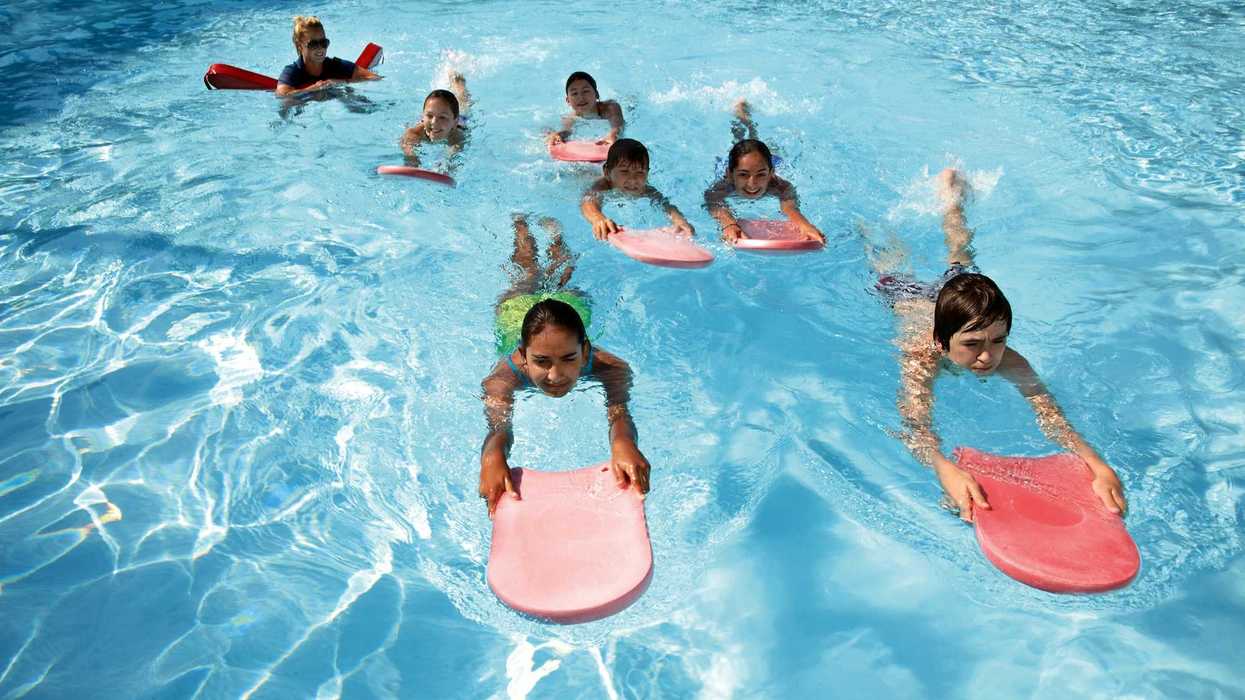
Experts recommend multiple layers of protection against drowning, including pool fences, door alarms, brightly colored suits, qualified supervision around water, and CPR training. Swim lessons can start as early as six months of age. Among the foundation’s programs are scholarships for Infant Swimming Resource skills or ISR, a one-on-one self-rescue swimming method that teaches children to become competent and confident in the water.
“It teaches young children to swim, float, and swim,” says Morrison, without surrendering to panic.
Because ISR instruction is individualized, it can be costly. The foundation partners with ISR instructors nationwide and has awarded 4,700 scholarships in 42 states, about 400 each year to families in need.
The consequences of drowning extend far beyond fatalities. “For every child that drowns,” says Morrison, “there’s at least five more that have survived but are left with brain damage. These children will not lead normal lives and will require regular therapies.”
Many health insurance plans do not cover those therapies, and Medicaid cuts could further limit access for low-income families. The Live Like Jake Foundation also provides small grants to about 25 families each year to help offset rehabilitation and other expenses often associated with a near-fatal drowning.
Some states with historically high drowning rates—Florida, Texas, New Mexico, and California— have expanded prevention efforts through initiatives like swimming lessons voucher programs, water safety education, and other initiatives.
Florida enacted a new drowning prevention law that came into effect July 1. Sponsored by Representative Anna V. Eskamani (D), the law requires hospitals, birth centers, and home birth providers to educate new parents about drowning prevention and expands eligibility for free swim lessons. Another legislative proposal that would have required licensed vacation rentals with pools or nearby water to install additional safety measures, including exit alarms and pool fences, failed to pass.
As federal support for drowning prevention shrinks, community organizations are increasingly filling the gap by educating families, pediatricians, and teachers, while expanding access to swim lessons and advocating for stronger policies.
For Lynch, the ripple effects extend well beyond public health. “If you survive a drowning but don’t have the resources to overcome your fear, you are not going to think about becoming a swim coach or a water polo coach or a sailing coach. It is also about the loss of opportunity in aquatics. Everyone stands to lose.”
Beatrice Spadacini is a freelance journalist for the Fulcrum. Spadacini writes about social justice and public health.