
I didn’t love seeing the charge for the baseball tickets hit my credit card. Like Americans, I’ve watched expenses and discretionary costs rise. A night at the ballpark felt like a luxury rather than a routine outing. Still, I wanted time with my two grandsons—one a devoted Los Angeles Dodgers fan, the other a loyal Arizona Diamondbacks fan.
That alone promised an interesting evening.
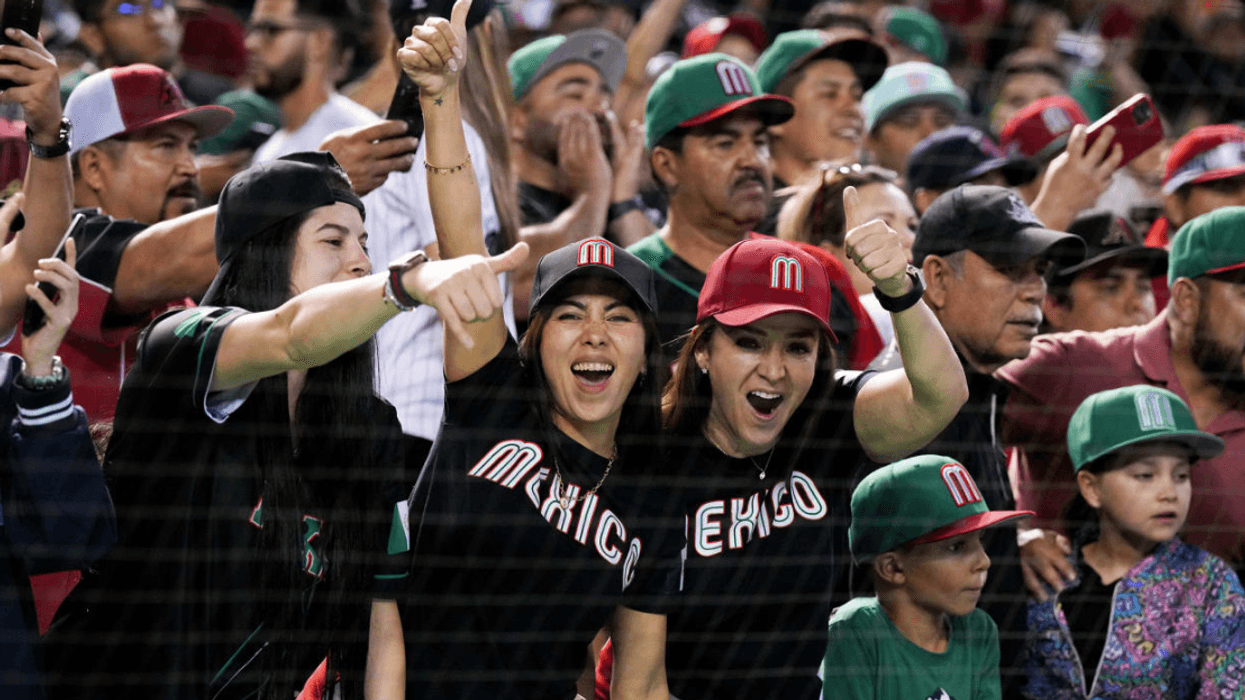
But when we walked into Chase Field in Phoenix, we stepped into something larger than a baseball game. It was Mexican Heritage Night. Families filled the stadium. Music, color, and celebration were everywhere—mariachi bands, dancers, and cultural pride shared openly with the crowd.
Before the first pitch was thrown, something happened that stayed with me. As the Himno Nacional Mexicano—the Mexican national anthem—began, the crowd rose. People stood with quiet dignity, honoring a culture woven into Arizona’s identity. Moments later, everyone remained standing for The Star‑Spangled Banner.
In those opening minutes, the stadium felt less like a battleground of rival teams and more like a shared community.
What struck me most wasn’t the celebration itself. It was the people experiencing it together.
Everywhere I looked, I saw Americans from different backgrounds sharing the same space. Latino, Black, White, Asian. Young and old. Families, friends, and strangers. Arizonans and Californians. Republicans, Democrats, and Independents. Fathers with their young children. Multi‑ethnic groups of friends. People who, on paper, are supposed to be at odds.
And somehow, they got along.
The crowd was anything but quiet. Diamondbacks fans shouted, “Beat L.A.!” Dodgers fans responded just as loudly. Thousands of people passionately rooted for opposite outcomes.
Yet no one seemed offended by others' disagreement.
The fans beside us wore Dodgers blue. The fans behind us supported the Diamondbacks. Two couples in front of us came together, laughed together, and left together—while cheering for opposite teams. My grandsons did the same, sitting side by side while rooting for different sides.
The cheers that followed weren’t divided by team or background. There were cheers of pride and unity.
It was a reminder: belonging is not a zero‑sum game.
As I watched, I thought about my years as a school principal. Our staff reflected much of America. We came from different racial and ethnic backgrounds. We were men and women, younger educators and seasoned veterans. Some were Catholic, Protestant, Jewish, or held other beliefs. Some were Democrats, some Republicans.
Yet those differences rarely defined our work.
We focused on the children we served. Because we shared a common purpose, differences did not divide us. In fact, they often strengthened our work.
The same lesson was visible at Chase Field.
Arizona is often portrayed as politically combustible—a competitive swing state. But the crowd that night told a different story. People were not scanning one another for political cues. They were not suspicious of who sat beside them. They were not treating strangers as enemies.
They were simply living together.
That reality stands in stark contrast to the rhetoric we often hear from national leaders. In 2025, at a memorial event in this same state, the president told a crowd he “hates” his opponents—a comment reported by PBS, the New York Times, and TIME. The applause that followed showed how normalized political hostility has become in some corners of public life.
But what I saw at Chase Field was the opposite: thousands of people from every background, cheering for different teams, standing for two national anthems, and sharing the same space without hostility. No one was told to hate their neighbor. No one acted as if they should.
What I witnessed was diversity, equity, and inclusion in their most natural form—not as a policy debate, but as a lived experience. Everyone belonged. And when the game ended, everyone left together.
Diversity and inclusion promote cultural understanding and empathy toward different customs and traditions. That is exactly what unfolded during Mexican Heritage Night. When citizens value diversity, they create environments—whether in workplaces, schools, communities, or public life—that are more innovative, empathetic, and resilient. I saw that resilience in the ease with which thousands of strangers shared space without incident.
Inclusion is also essential for breaking new ground in the pursuit of freedom and progress. When people feel valued and safe, they contribute more fully to the life of the community. That is how democracies grow stronger.
This truth is not new. It is woven into the country’s founding ideas.
James Madison wrote in Federalist No. 10 that a free society would always contain many factions—different interests, beliefs, and backgrounds. He believed the strength of the republic depended on our ability to coexist despite those differences.
George Washington warned in his Farewell Address that political factions could turn Americans into enemies. He urged unity, not uniformity, but a commitment to the common good.
And the Declaration of Independence reminds us that all people are created equal and endowed with unalienable rights to life, liberty, and the pursuit of happiness. Those rights are not theoretical. They become real only when we treat one another with dignity in everyday life.
What they feared—and what they hoped for—was on display in that ballpark.
As the nation approaches its 250th anniversary, we need this spirit more than ever. A diverse, inclusive America is not only truer to our founding ideals—it is the America capable of meeting the challenges ahead. Embracing diversity drives innovative thinking, breaks down barriers, and leads to solutions worthy of a nation entering its next chapter.
It is easy to believe the country is more divided than it is. The daily noise of politics often tells us that Americans cannot coexist without hostility. But that night at Chase Field revealed something different—something quieter and truer. When people are not pushed into categories or told to fear one another, they remember how to live side by side.
In that stadium, people were not abstractions. They were neighbors. They were families enjoying a night out. They were fans sharing a common experience. They were people laughing, talking, and cheering in the same space. The America I saw there was not fractured or fragile. It was functional, familiar, and deeply human.
And it offered a lesson worth carrying forward. If we want a country that looks more like that ballpark and less like the churn of political feeds, we must do our part. We can show up in shared spaces. We can talk to people we don’t already agree with. We can choose curiosity over assumption. And we can support leaders—at every level—who value diversity, demonstrate empathy, and rise above the temptation to divide for personal gain.
A “stadium climate” for America means creating public spaces—literal and civic—where everyone belongs, everyone is respected, and everyone plays by the same rules. It means remembering that disagreement is normal, but dehumanization is not. It means recognizing that diversity is not a threat to the republic—it is one of its greatest strengths.
For a few hours under the roof of Chase Field, that truth was impossible to miss. And by the end of the night, even the charge on my credit card felt a little more worth it—not because of the game, but because of what it revealed about the country we still share.
A night at Chase Field revealed a different America—one that still exists, still works, and is still within our reach if we choose it.
Carolyn Goode is a retired educational leader and former principal who writes about civic responsibility, democratic values, and the everyday experiences that reveal who we are as a nation. She lives in Arizona.






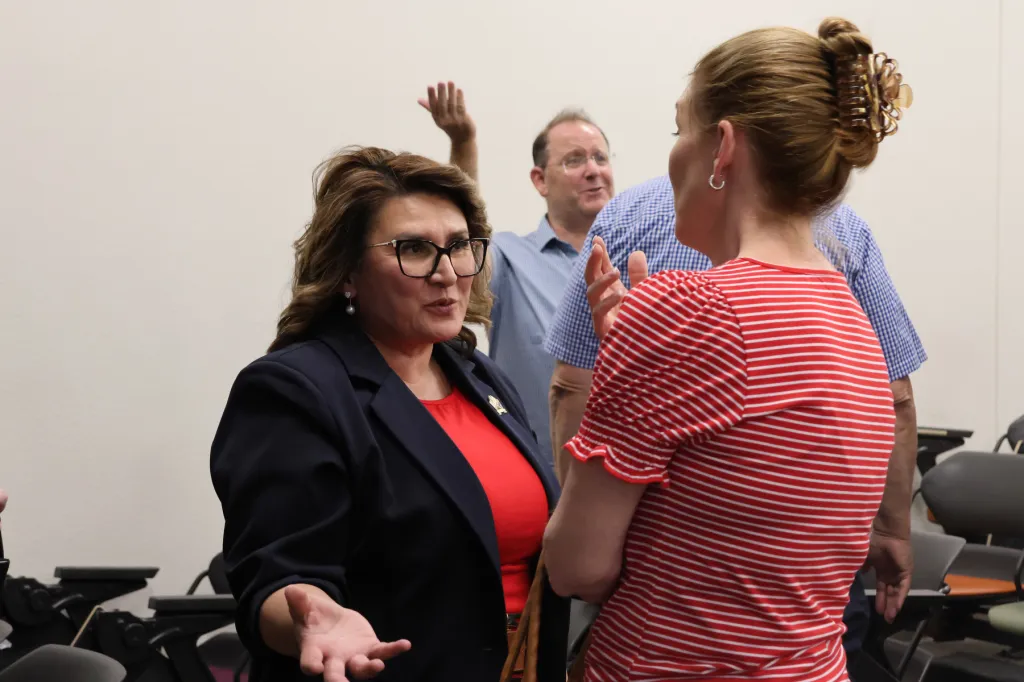 Congressional candidate JoAnna Mendoza has leaned into her working class background as she runs for a seat in the U.S. House to represent Arizona’s 6th congressional district. (Courtesy JoAnna Mendoza campaign)
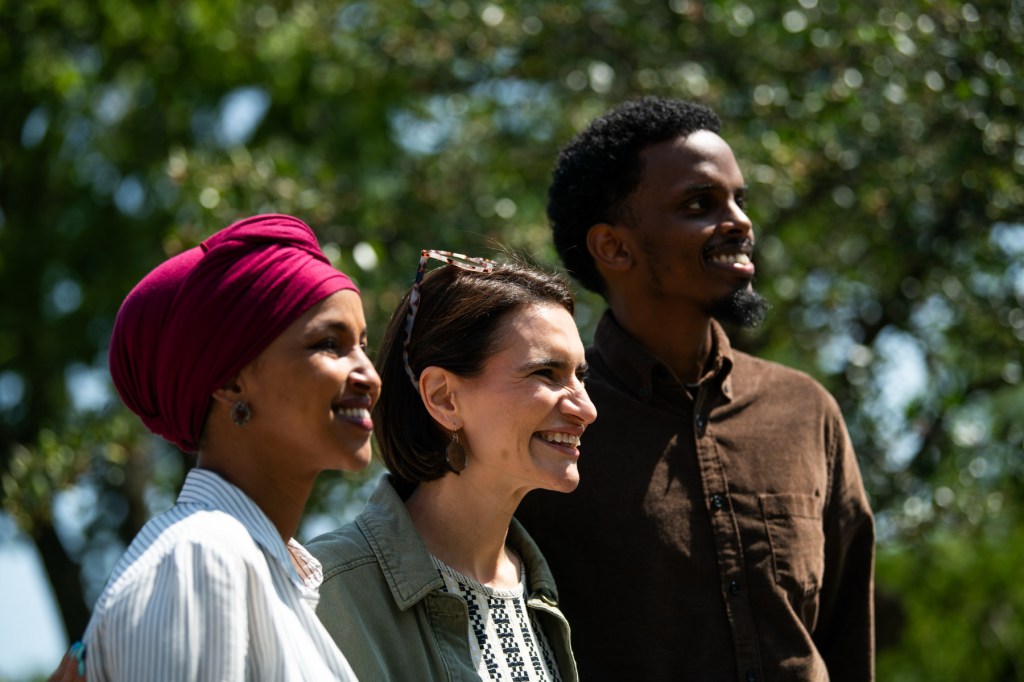 Politicians who come from working class backgrounds, like Minnesota Lt. Gov. Peggy Flanagan (center) and Minnesota state Sen. Omar Fateh (right), are resonating with voters during a particularly challenging economic period. (Stephen Maturen/Getty Images)