


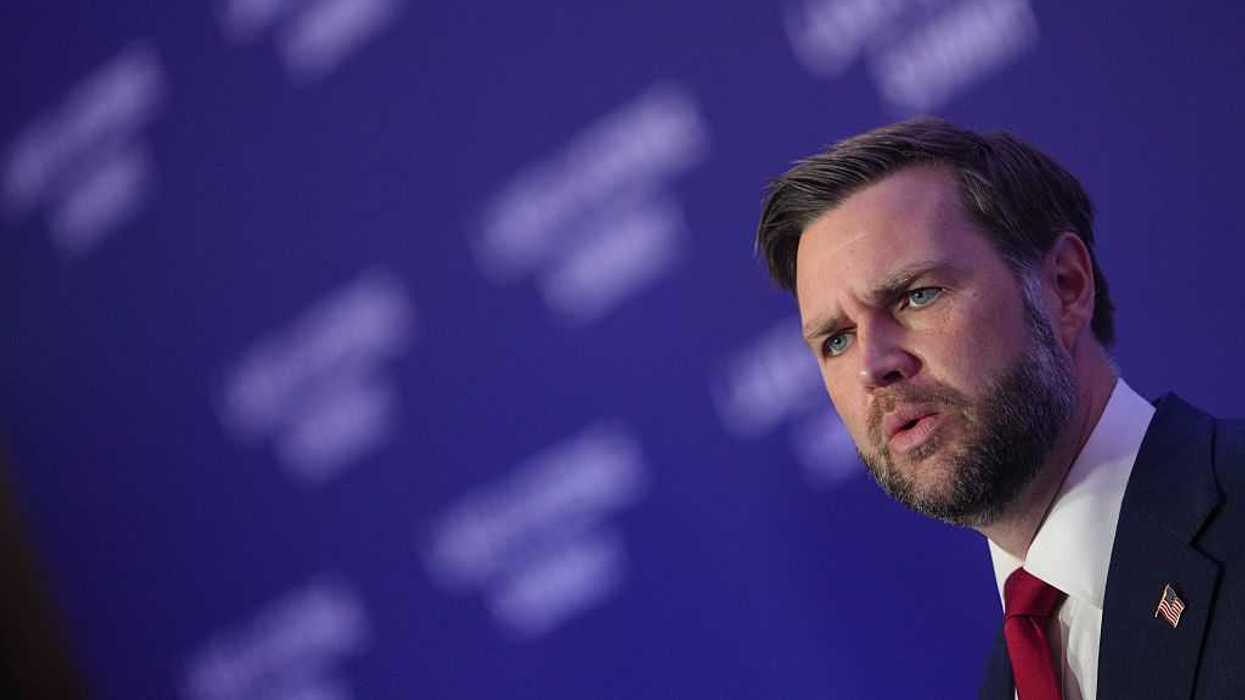
"What did Black people do to this administration that has allowed it to really stigmatize folks of color?" Whoopi Goldberg asked Vice President JD Vance last week, when he joined The View to discuss his new memoir. Rather than answer the question, Vance's first response was to feign ignorance. But he wasn't confused. Vance has simply learned that feigned confusion buys him room to say what an entire administration actually believes—not that Black people are hated, but that we are an inconvenience to be erased.
Goldberg and her cohost, Sunny Hostin, followed up with specifics: the removal of Black history from government buildings, Black military leaders sidelined, and contributions denigrated at every turn. Vance's response was to insist everyone is welcome in their political coalition. It wasn't an answer.
Then he accused Goldberg of calling the administration anti-minority. She hadn't. "I didn't say that," she cut in. "Don't get me in trouble." Vance heard an accusation nobody made — because the word was already sitting in his mind, waiting for permission to surface.
His third deflection was crime statistics. Vance noted that Washington, D.C.—one of the "most Democratic and Blackest cities"—had seen a "radical decrease" in violent crime, sexual assault, and murder. Vance never answered the actual question. Asked about erasure, he talked about inclusion. Asked about inclusion, he heard an accusation. Asked about denigration, he reached for crime, sexual assault, and murder, some of the oldest stereotypes attached to Black people in this country. That association is not an accident. It's the administration's worldview leaking through an unscripted moment.
- YouTube youtu.be
The pattern isn’t limited to deflection. This administration has shown that subtlety is not a priority, especially in consideration of Black people. On the White House lawn, UFC fighter Josh Hokit called Michelle Obama a man during a post-fight interview with Joe Rogan, while President Trump sat in the audience. Hokit then walked over and placed a medallion around Trump's neck. The president said nothing — he posted on Truth Social, celebrating the night as "incredible" without ever mentioning the remark.
Weeks earlier, the Department of Justice had announced a nearly $1.8 billion “Anti-Weaponization Fund” to compensate Trump supporters — including, potentially, members of the mob that stormed the Capitol on January 6. Acting Attorney General Todd Blanche told Congress the fund was “not going forward, period,” but the administration still won’t put that commitment in writing, and Trump himself has said that if it were up to him, he’d “pay them the kind of money that they deserve.” The willingness to extend nearly $2 billion to insurrectionists, even in retreat, stands in stark contrast to this administration’s resistance to DEI programs and reparations initiatives for the descendants of enslaved people.
Even the calendar isn’t safe. The National Park Service, under presidential direction, dropped both Martin Luther King Jr. Day and Juneteenth from its 2026 free entrance day calendar, replacing them with Flag Day — also Trump's birthday. The removals followed an earlier administration-led pause on these days of remembrance as part of a broader DEI ban. NAACP President Derrick Johnson called it "more than petty politics," saying it amounts to "an attack on the truth of this nation's history."
This is the backdrop against which the country just celebrated Juneteenth—a federal holiday meant to mark the end of slavery, observed days after a sitting vice president couldn't answer a direct question about Black erasure, and weeks after the very holiday itself was stripped from federal recognition in National Parks. There's a specific hollowness that comes with celebrating Black freedom while every material mechanism of repair is being dismantled. That hollowness intensifies when the architects of that erasure feign ignorance to avoid the truth—when they say Black history isn't being erased while signing executive orders that argue otherwise, when they say they aren't anti-minority while doing everything in their power to erase minoritized people from historical memory and replace the truth of Black achievement with stereotypes of criminality, violence, and incompetence.
If everyone is welcome, as Vance claims, but no one's specific history or needs are named, welcome becomes a word without weight. When he can’t say “Black American history” without immediately adding “all American history,” it’s the same reflex behind “all lives matter,” a refusal to let the specific claim stand, as if naming Black history on its own terms is itself the threat. And if days of remembrance are deliberately erased, the goal is not subtle. It's an attempt to stop people from remembering, from attaching feeling and meaning to history at all.
Vance is not confused. This administration is not confused. The pattern is too consistent to be a misstep or an accident. It's by design, a carefully curated set of steps to hide the inconvenience of Black history.
And with this pattern in view, I can answer Whoopi's question. What did Black people do to this administration?
Exist.
Stephanie Toliver is a Public Voices Fellow and a member of the OpEd Alumni Project sponsored by the University of Illinois.








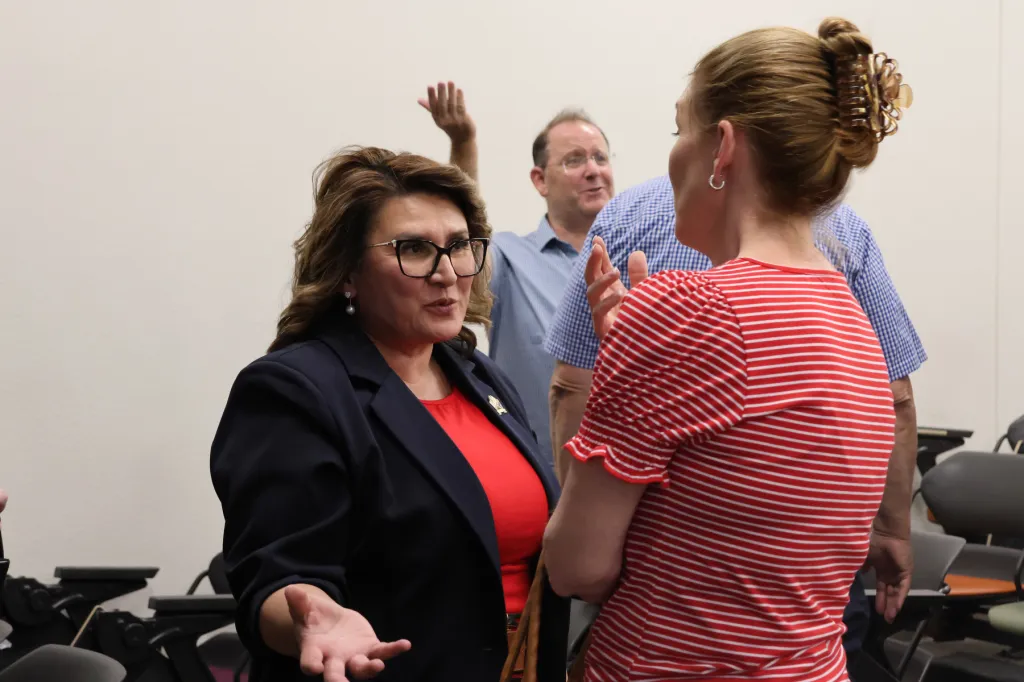 Congressional candidate JoAnna Mendoza has leaned into her working class background as she runs for a seat in the U.S. House to represent Arizona’s 6th congressional district. (Courtesy JoAnna Mendoza campaign)
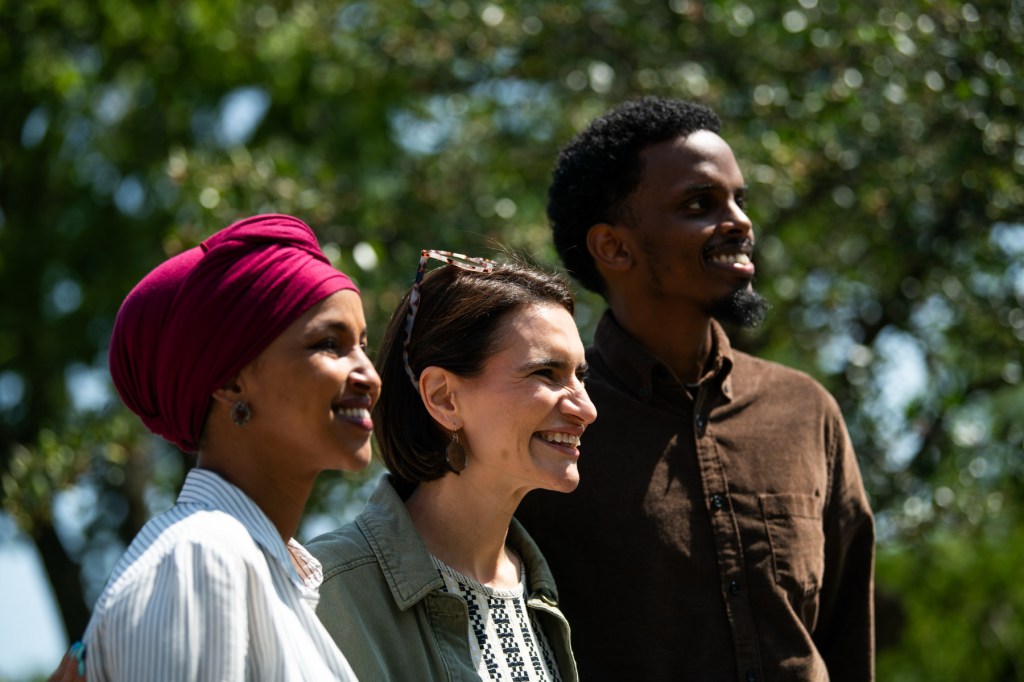 Politicians who come from working class backgrounds, like Minnesota Lt. Gov. Peggy Flanagan (center) and Minnesota state Sen. Omar Fateh (right), are resonating with voters during a particularly challenging economic period. (Stephen Maturen/Getty Images)
The President Invited Iran to Bomb My Home