


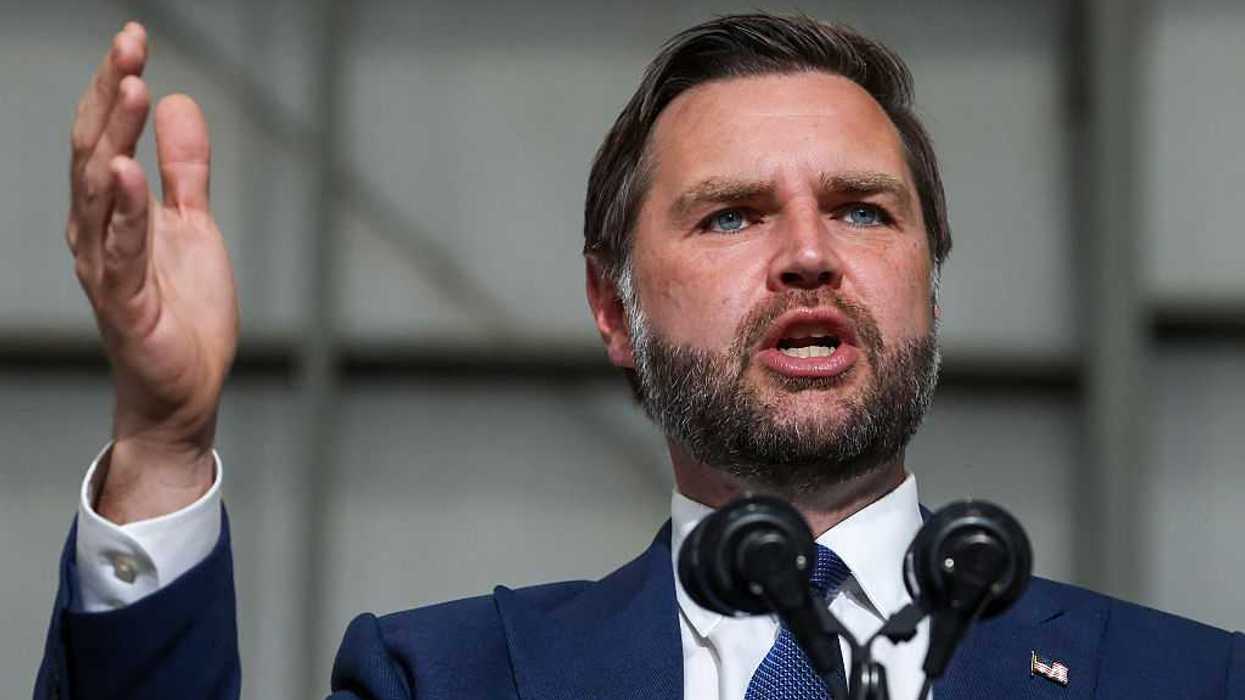

MILWAUKEE, Wisconsin– Vice President J.D. Vance visited Milwaukee on July 8 to promote the Trump administration’s crackdown on fraud at the state and federal levels in programs like Medicare and SNAP.
Speaking inside an aircraft hangar at the Wisconsin Air National Guard’s 128th Air Refueling Wing, in front of a banner reading “Protect Taxpayer Dollars,” Vance cast the anti‑fraud efforts to protect both taxpayers and the programs themselves.
“We’re here to talk about fraud, we’re here to talk about protecting your taxpayer money, and most importantly, we’re here to talk about protecting the programs that exist that are funded by the generosity of the people in this room and that ought to go to the people they’re meant for, and not to make fraudsters rich,” Vance said.
During his speech, the vice president pointed to Milwaukee as an example, highlighting the case of Markita Barnes, a Milwaukee woman convicted of stealing more than $2.3 million through Medicaid fraud tied to prenatal care and sentenced earlier this year. Barnes was first indicted in 2023, during the Biden administration.
Vance also highlighted the administration’s efforts to crack down on suspicious medical equipment billing and skin‑graft reimbursements and announced new investigations into alleged fraud in the H‑1B visa program, arguing that “American jobs ought to go to American workers and not foreign fraudsters.”
Vance was joined by Dr. Mehmet Oz, who heads the Centers for Medicare & Medicaid Services, along with several Republican candidates for office, including U.S. Reps. Bryan Steil and Derrick Van Orden, as well as Tom Tiffany, the GOP nominee for governor.
In his speech, Tiffany said he would “root out fraud” and promised to audit the entire government if elected governor. He called on Tony Evers to release SNAP benefits enrollment lists, a cry he has repeated since last year.
“We need the other side to stop turning a blind eye to this fraud that’s going on in Wisconsin,” Tiffany said
When asked by a local reporter what would happen if Evers did not turn over the SNAP rolls, Vance said it showed where Evers’ allegiance lay.
“He cares more about protecting illegal aliens than he does the good citizens of Wisconsin. It’s a scam, and it has to stop,” Vance said.
Evers spokesperson Britt Cudaback did not address the vice president’s remarks but attacked presumptive GOP gubernatorial nominee Tom Tiffany for saying that there would be “zero fraud” under his administration.
“Newsflash: ‘all of state government’ is already ‘audited’ by the Legislative Audit Bureau as overseen by the Republican-controlled Legislature, which you would think someone who wants to run state government should already know,” Cudaback wrote on X.
While Republicans focus on tightening eligibility for public benefits, the numbers behind FoodShare show how many Wisconsinites rely on the program.
SNAP, or FoodShare in Wisconsin, provides benefits to US citizens and qualified immigrants with incomes at or below 200% of the federal poverty level. In March 2026, 653,721 Wisconsinites received FoodShare benefits, or about 11% of the population. According to the Center on Budget and Policy Priorities, more than 60% of SNAP participants are families with children. Although it is a federally funded program, there is no legal requirement for state governments to share the information of SNAP enrollees.
In 2025, under Trump’s “One Big Beautiful Bill,” the federal government created new restrictions on SNAP benefits for refugees, asylees and other legally present immigrants. The restrictions took effect in Wisconsin on July 1. Under the new rules, only refugees and asylees who have obtained green cards remain eligible for benefits.
According to reporting by Wisconsin Watch, these changes are putting pressure on Wisconsin refugee support organizations and food banks, which worry affected families won’t be able to make up the gap between lost benefits and the help they can provide.
In his speech, Vance cast the Trump administration’s approach as a necessary tool to ensure those most in need receive benefits, warning that “when… money that ought by rights go to feed poor children, but instead goes to fraudsters, we destroy the social fabric of the United States of America.” But in Wisconsin, eligibility for programs like SNAP is shrinking, leaving many families in need without access.
Abbey Osborn is a journalist based in Milwaukee, Wisconsin.











The President Invited Iran to Bomb My Home