


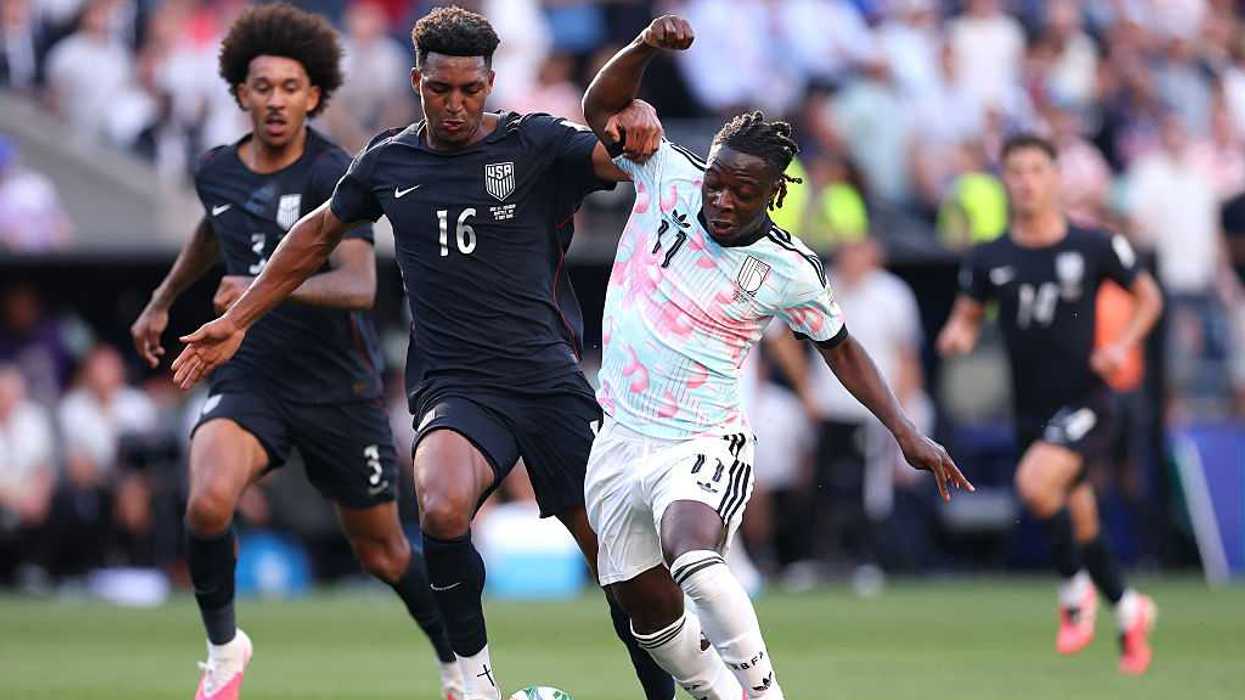

Scan the faces on this summer’s European World Cup squads: France, England, Germany, the Netherlands. The jerseys hang on shoulders brown, black, olive, fair. These are not the sanitized, single-story teams that once stood for “nation.” They’re unruly, multicolored, undeniably global. And for once, the United States—so often an outlier—seems less exceptional and more like a willing participant in this reimagining of who “belongs” on the field.
Football—let’s call it what it is, the world’s game—has always reflected the societies that shape it, sometimes as a mirror, sometimes as a funhouse. For decades, European countries clung to self-mythologies, their national teams meant to be pure expressions of heritage: the most French of Frenchmen, the most English of the English. But the game, like the world, refused to stand still. The children and grandchildren of immigrants kept arriving, first in club academies and then on national teams, until no one could deny what was already on the field.
France lifted the 2018 World Cup with a roster more United Nations than Bastille Day parade. Just look at Kylian Mbappé: born to a Cameroonian father and Algerian mother, raised in the Paris suburbs, he stunned the world with his speed and scored in the final at only 19, becoming a symbol of new French possibility. People outside the country noticed the shift and cheered. Inside, some bristled, wrestling with the idea that their newest national hero represented so many heritages. But the truth was clear: the tricolor looked more like the banlieues than the palaces, and that was the point. Two World Cup tournaments later, Mbappé adorned the captain’s band for the French.
England, always slower to this party, now fields a team whose star striker might have Jamaican roots, whose midfield general bears a Ghanaian surname—like the rise of Raheem Sterling, once an immigrant kid from Jamaica, now the hope of Wembley. Germany, after years of denying its own multicultural reality, now leans on Turkish, Ghanaian, and Cameroonian heritage to chase trophies, with players like Mesut Özil and Serge Gnabry closing the distance between past and future.
This year, the U.S., a country that wears its diversity on bumper stickers but struggles to live it, finally caught up. The American squad is, for once, not just a melting pot on paper but in cleats and sweat. Names like Folarin Balogun, whose roots trace from Brooklyn to Nigeria through London; Ricardo Pepi, the son of Mexican immigrants from El Paso; and Sergiño Dest, with Surinamese ancestry and a Dutch upbringing, all run out for the anthem. Black, Latino, Asian, Arab, first-generation, fifth-generation—they stand together, even as the nation argues about who counts as "real." Watching them, you see the same pattern that played out in Europe: talent making space, demanding acceptance, forcing the country to ask bigger questions about belonging.
But here, the story turns. Europe’s current embrace of footballers of color was neither automatic nor painless. It took riots, reckonings, and years of bitter backlash—players enduring slurs from the stands, racist abuse on social media, and open doubts about their loyalty from politicians and pundits alike. Some fans saw them as outsiders, scapegoating them for defeat, as when three Black England players were targeted after the 2021 Euro final. Yet out of these wounds came activism, with athletes like Lilian Thuram, Marcus Rashford, and Mesut Özil speaking out, organizing campaigns, and demanding accountability. They refused to let their countries forget that you can love a flag and still be more than its history allows. The U.S. has its own lineage—Briana Scurry, Clint Dempsey, DaMarcus Beasley—but there’s a difference between being tolerated and being celebrated. We are only beginning to learn the latter.
The irony, of course, is that football—the most global of games—has become a stage for countries to show off their diversity precisely when politics in both Europe and the U.S. are retreating into tribalism. You can watch a team made up of the world and then hear politicians talk of building walls, closing borders, restoring some mythical past. The contradiction is glaring. Football, though, does not care about purity tests. The scoreboard is supposedly colorblind; the only thing that matters is what happens when the whistle blows. Yet on another level, what happens on the pitch often spills over into society itself. When diverse lineups win championships and become heroes, they challenge old prejudices and offer models of belonging that ripple beyond stadiums and into public opinion. The visibility of these athletes can shift conversations, prompting both backlash and progress, and sometimes driving real change in how nations perceive themselves. In this way, the beautiful game does not just mirror our societies—it has the power to nudge them forward.
Here is the beautiful game, doing what parliaments and presidents cannot: showing us a version of ourselves that is messier, more honest, and—dare I say—better. Each time a kid with a hard-to-pronounce last name scores a goal and lifts his country’s hopes, we glimpse what national pride could look like if it grew up a little.
The revolution, in the end, may not be televised, but it just might be scored in the 89th minute by a kid whose parents crossed oceans, whose story confounds the old mythologies, but who wears the jersey like he was born for it. And maybe, just maybe, the rest of us will cheer him on—not despite his difference, but because of it.
Rev. Dr. F. Willis Johnson is a spiritual entrepreneur, author, scholar-practioner whose leadership and strategies around social and racial justice issues are nationally recognized and applied.











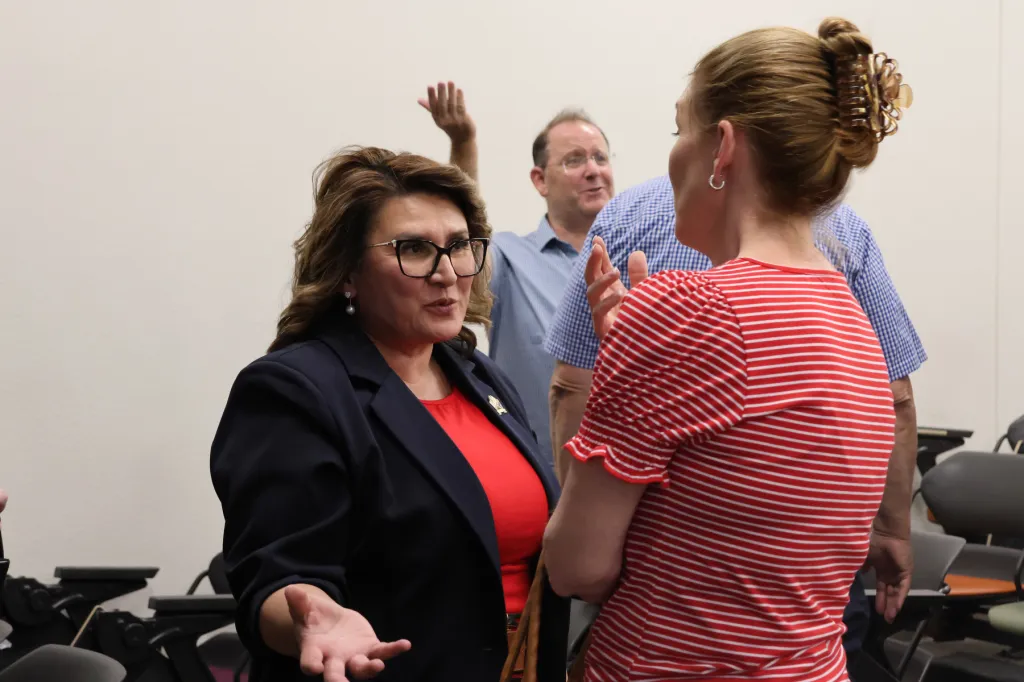 Congressional candidate JoAnna Mendoza has leaned into her working class background as she runs for a seat in the U.S. House to represent Arizona’s 6th congressional district. (Courtesy JoAnna Mendoza campaign)
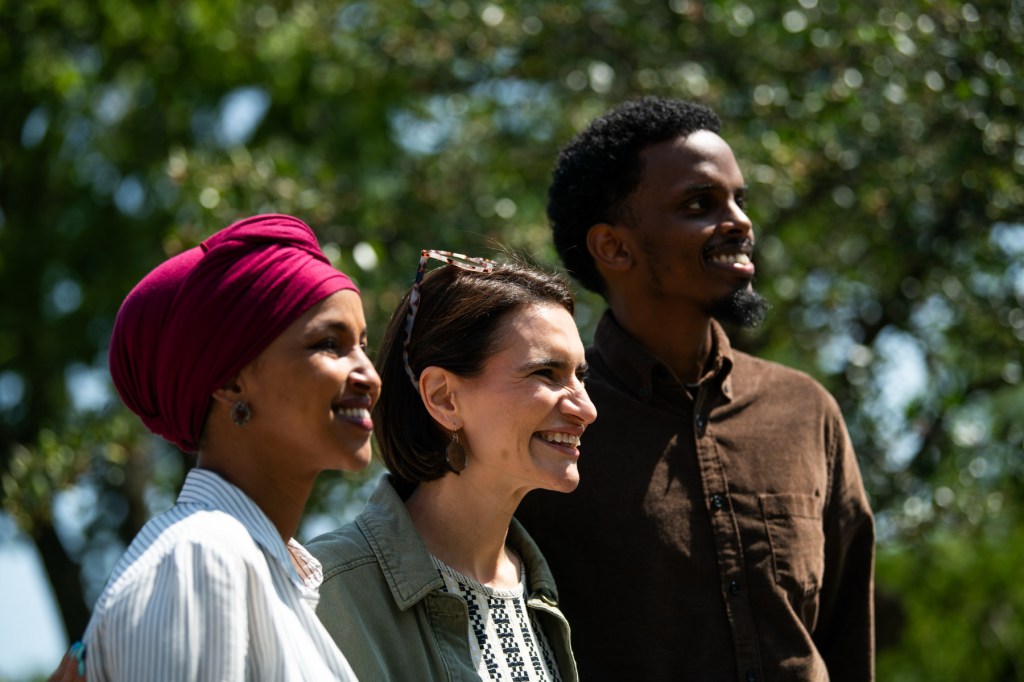 Politicians who come from working class backgrounds, like Minnesota Lt. Gov. Peggy Flanagan (center) and Minnesota state Sen. Omar Fateh (right), are resonating with voters during a particularly challenging economic period. (Stephen Maturen/Getty Images)
The President Invited Iran to Bomb My Home