
Skip to content
Search

Latest Stories

Follow Us:
Top Stories

The USMNT’s World Cup Win Is a Reminder of the America We Still Can Be

Opinion

The USMNT’s World Cup Win Is a Reminder of the America We Still Can Be

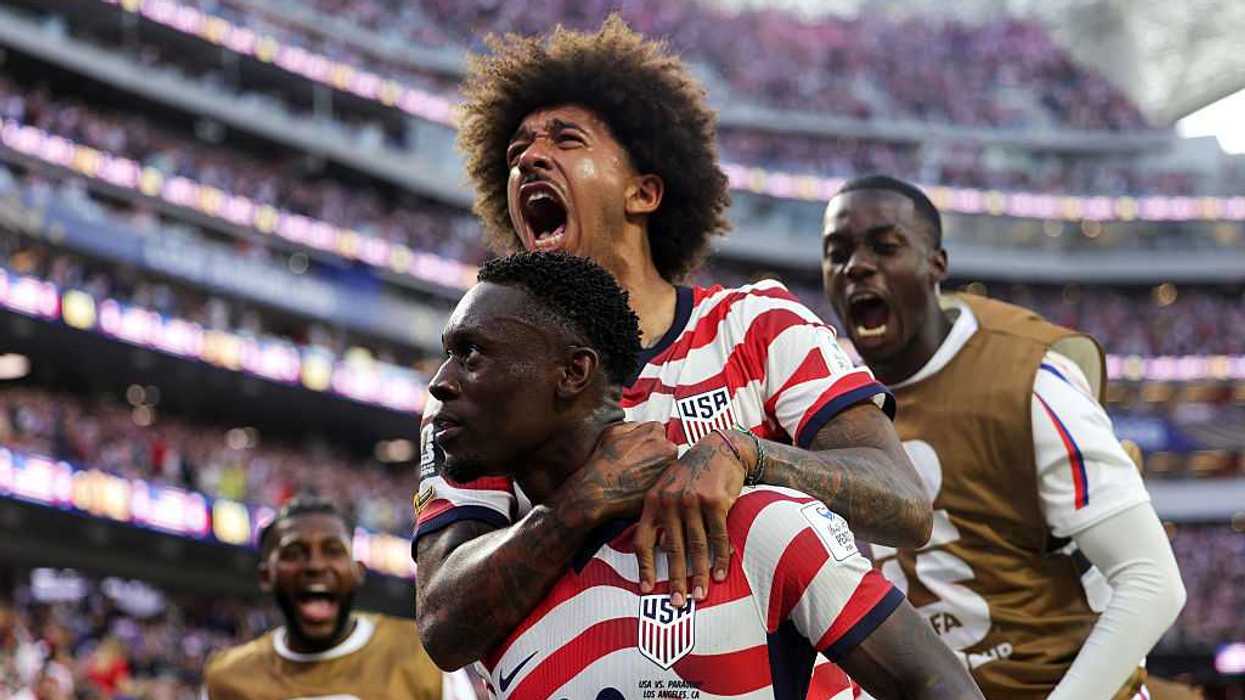
Folarin Balogun #20 of the United States celebrates scoring his team's third goal with Chris Richards #3 during the FIFA World Cup 2026 Group D match between USA and Paraguay at Los Angeles Stadium on June 12, 2026 in Los Angeles, California.

(Photo by John Dorton/USSF/Getty Images)

LOS ANGELES, CA — The United States Men’s National Team opened its 2026 World Cup campaign with a commanding 4–1 victory over Paraguay, a performance that electrified fans across the country and reminded us — if only for a night — of the power of coming together. Folarin Balogun, and Gio Reyna delivered the goals, but the real story was the team itself: a roster whose roots stretch across Latin America, Africa, the Caribbean, and Europe. The USMNT is more than a soccer team. It is a living portrait of the multicultural nation we are, and the nation we still aspire to be.

That matters now more than ever. We are living through one of the most politically polarized moments in modern American history. The Trump administration has been widely criticized by civil rights groups and international organizations for policies that restrict entry into the United States for certain foreign nationals — policies that have even affected fans and FIFA referees attempting to enter the country for the World Cup. When a global celebration of unity is taking place on our soil, it is painful to see barriers erected that keep some of the world’s people out.


And yet, inside stadiums and fan zones, something different is happening. Something hopeful. Something American.

Sports — like music, art, and food — have always had the power to bring people together, even if only briefly. For 90 minutes, millions of Americans who disagree on almost everything found themselves cheering for the same team, the same goals, the same dream. In a divided nation, that is no small thing.

You can see this unity in places far from the pitch. In Seattle, for example, Washington Latino News recently reported on a beautiful scene during the city’s World Cup festivities: traditional Mexican Catrinas — the iconic figures of Día de los Muertos — appearing in full costume among the crowds. They weren’t part of an official event. They were part of the community. Fans from every background stopped to take photos, ask questions, and share in the moment. The Catrinas became a symbol of Latino pride, yes — but also of something bigger. They showed how culture can invite connection, how tradition can spark curiosity, how celebration can dissolve division. That is the World Cup at its best. That is America at its best.

Traditional Catrinas bring Latino pride to Seattle’s FIFA World Cup
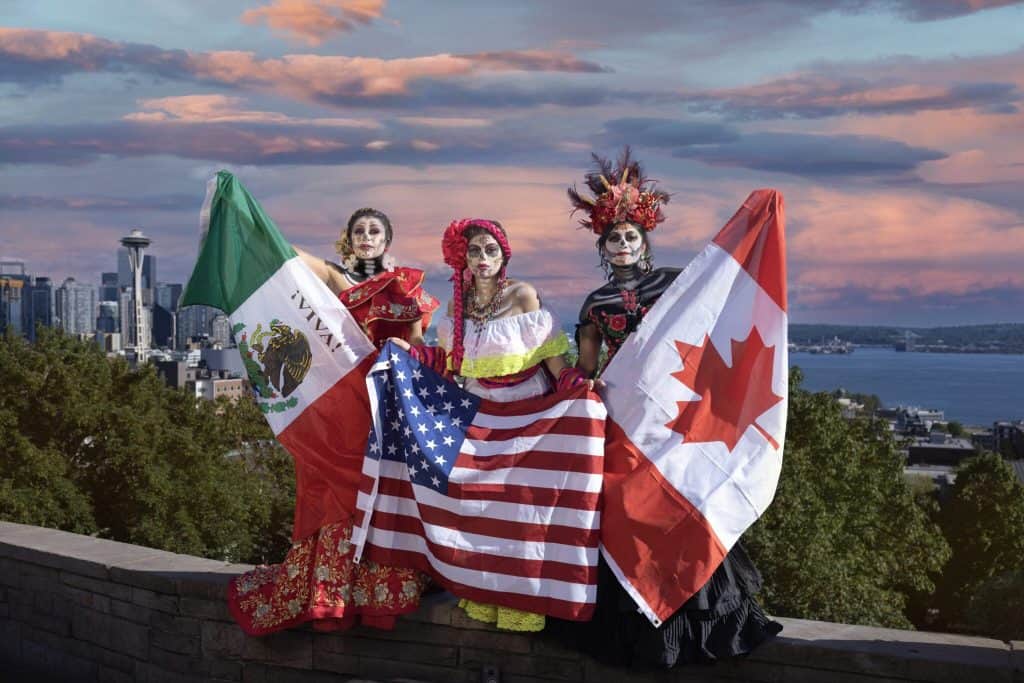
Three women in traditional Mexican and Canadian costumes holding flags with city skyline background.

Women dressed in Mexican and Canadian traditional costumes holding flags against a city skyline at sunset.

I have believed in the unifying power of sports my entire career. From 2011 to 2018, when I served as Director of Multicultural Content at ESPN, I helped launch One Nación, a bilingual, bicultural editorial initiative built on a simple truth: sports can bridge divides that politics cannot. One Nación told stories that reflected the full breadth of the U.S. Latino experience — in English and Spanish — and connected fans across cultures through the shared language of competition, pride, and passion. After I left ESPN, the initiative was discontinued. But today, as publisher of the Latino News Network, I am bringing One Nación back. Because our country needs it more than ever. One Nación was a great idea then — and a necessary idea now.

ESPN and ESPN Deportes debut One Nación in celebration of Hispanic Heritage Month
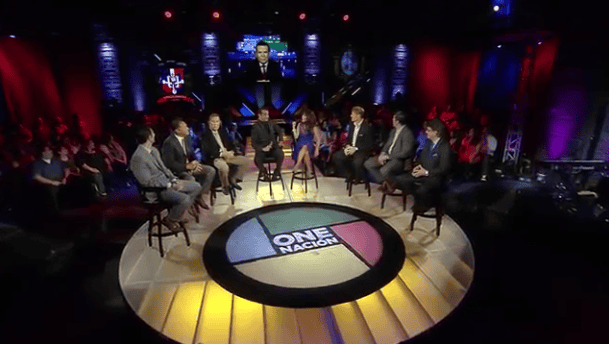
Latino News Network panel discussion on Hispanic issues and community topics.

The USMNT’s victory over Paraguay will be remembered for its goals and its implications for the tournament. But it should also be remembered for what it revealed about us. Despite the noise, despite the division, despite the forces pulling us apart, we are still capable of coming together. We are still capable of seeing ourselves in one another. We are still capable of celebrating the diversity that defines us.

For one night, America cheered as one nation. The challenge — and the opportunity — is to carry that spirit beyond the final whistle.

The USMNT’s World Cup Win Is a Reminder of the America We Still Can Be was first published on the Latino News Network and was republished with permission.

Hugo Balta is the executive editor of The Fulcrum and the publisher of the Latino News Network, and twice president of the National Association of Hispanic Journalists.
Read More

The Reward — Angela and James: An American Dynasty

Ring–Fitzgerald Homestead, Will County (1987). A house still true to its original form, carrying forward the Rings’ steadiness, aspiration, and good citizenship across five generations.

Photo courtesy by Patrick Fitzgerald.

The Reward — Angela and James: An American Dynasty

They got an early start; the morning light came on fast. The Ring siblings were headed to the Joliet depot with young Angela in tow — the same depot where Lincoln’s funeral train had passed in silence thirty years earlier. Now they were bound for the White City, forty miles northeast. The Columbian Exposition was a turning point for both Angela and America. Buffalo Bill’s Wild West Show, pitched just outside the fairgrounds, rivaled the Exhibition itself.

One photograph captured it all. Taken in a fairground photo booth, the Ring siblings stood in their summer clothes, huddled around eleven-year-old Angela. Their faces were bright and open — a single moment preserved in time. Determined to outshine the 1889 Paris Exhibition and its Eiffel Tower, Chicago answered with George Ferris’s great wheel. At night, the city glowed, outlined in electric white light.

Keep ReadingShow less
The Knicks and the Practice of Us

Jalen Brunson #11 of the New York Knicks celebrates with the Larry O'Brien Championship Trophy during the New York Knicks Championship ticker tape parade and victory rally celebrating winning the 2026 NBA Finals on June 18, 2026 in New York City.

(Photo by Angelina Katsanis/Getty Images)

The Knicks and the Practice of Us

I didn’t grow up anywhere near Madison Square Garden. My childhood unfolded in the Midwest, far from New York’s tangled boroughs and yellow cabs. My father brought the city with him, tucked in the vowels of his accent and the teams he rooted for. He was a Jersey boy at first. Then, a reluctant Midwesterner. Geography, though, never truly loosened its grip. In our house, sports allegiance wasn’t a choice. It was inherited—an expectation passed like a family recipe. Or a story retold until it blurs into fact.

For my father, and then for me, the Knicks were never just a team. They were a test of endurance. Before I could distinguish a pick-and-roll from a triangle offense, I understood Knicks loyalty: you waited. You hoped in public, persisted when heartbreak was routine. Knicks fandom was boot camp for disappointment. The main skill was getting up after being knocked down.

Keep ReadingShow less
Reclaiming Patriotism: Between Nationalism and Pessimism

People gather over a giant Declaration of Independence

Photo by Mario Tama/Getty Images.

Reclaiming Patriotism: Between Nationalism and Pessimism

As America approaches the 250th anniversary of its independence, I am more in the mood to protest than to celebrate. Does that make me unpatriotic? The answer depends on how we understand “patriotism.” For a nation that is founded in revolution, let’s affirm a deeper and more profound love of country, a civic patriotism celebrative of our larger ideals including pluralism, dissent, and a commitment to social change.

Two Types of Patriotism

Keep ReadingShow less
A New Path to Depolarization: Media That Brings Us Together
Political polarization
Polarization and the politics of love

A New Path to Depolarization: Media That Brings Us Together

As we face ever-growing partisan polarization in American society, the need for large-scale action becomes increasingly urgent. As James Coan and I have written about in the Fulcrum during my time at More Like US, there are approaches grounded in a significant body of social psychological research that can help address this rapidly growing problem, namely different variations of social contact theory, especially vicarious contact. Until recently, much of the research and thus much of the basis for our articles has been focused on applying social contact theory to other problems facing society: prejudice against members of the LGBTQ community, individuals with autism, and immigrant schoolchildren, among other examples.

It was therefore exciting when last fall I saw the publication of an article in Political Science Research and Methods titled "Content That's as Good as Contact?: Vicarious Intergroup Contact and the Promise of Depolarization at Scale." The study, conducted in 2022 in conjunction with YouGov, finally attempted to measure the effectiveness of indirect contact as a path to depolarization, primarily through the vicarious experience of productive political conversation. Encompassing over 2,000 participants gathered from a nationally representative sample recruited by YouGov’s online panel, the study looked to test affective polarization, measured attitudinally, and interest and investment in depolarization, measured behaviorally. To this end, the study tested multiple media interventions, namely a 50-minute Braver Angels documentary featuring a “Red-Blue” depolarization workshop; a 50-minute placebo nature documentary about wildebeest migration; a 5-minute version of the Braver Angels documentary; a second 5-minute version that emphasized partisan misperception correction; and a pure control group, with no treatment.

Keep ReadingShow less