




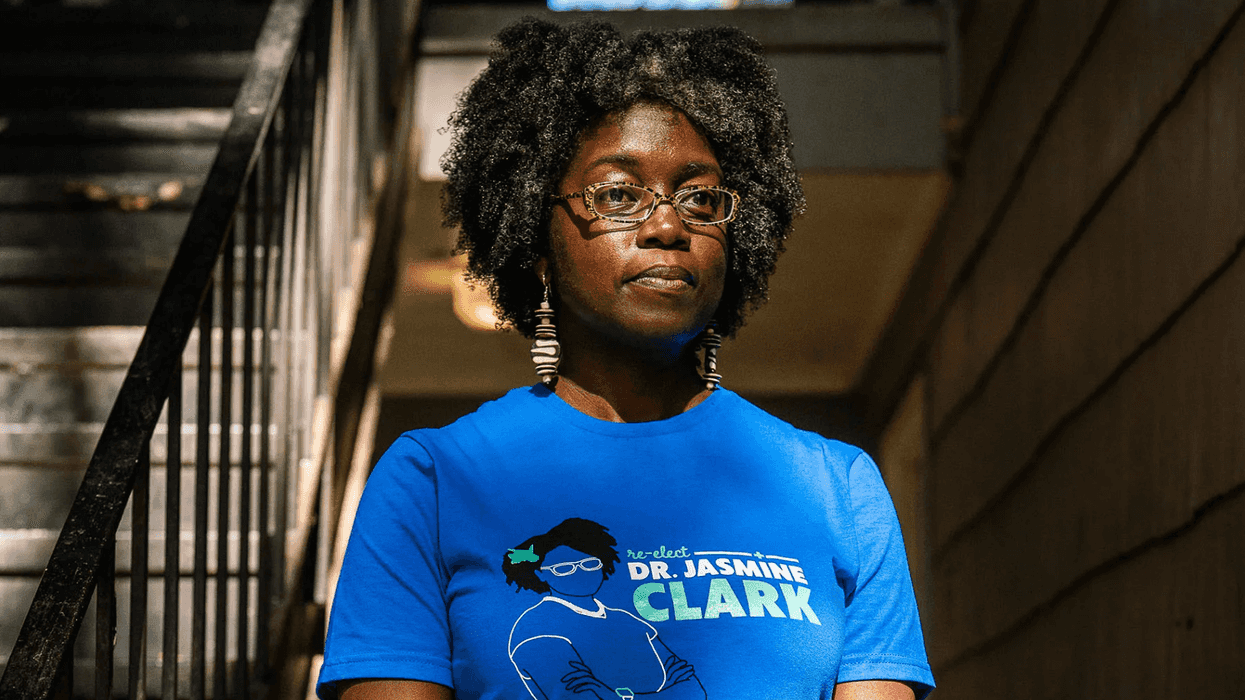

LILBURN, GEORGIA — When state Rep. Jasmine Clark launched her campaign for Congress on a mission to enact generational change, she didn’t realize she could also make history.
Now, she’s poised to become the first Black woman Ph.D. scientist to serve in Congress. If she wins, she’ll be representing Georgia’s 13th Congressional District.
“Whenever you’re the first, it’s almost like you become representative of what that will be, and so I do not take that lightly,” Clark told The 19th in a Monday interview at a coffee shop overlooking a lake in Lilburn, where she lives.
“I feel like what I have, what I’ve accomplished, the things that I’ve been able to do, I do feel as if I’m ready for this moment,” she added.
“I feel like what I have, what I’ve accomplished, the things that I’ve been able to do, I do feel as if I’m ready for this moment,” she added.
Clark, a mother of two who earned her doctorate in microbiology from Emory University and teaches at the university’s nursing school, first ran for office and flipped a Republican-held state legislative district in 2018. Last year, she announced she was challenging the former Rep. David Scott in the safely Democratic and majority non-White seat located in the racially diverse suburbs east of Atlanta.
Scott, the district’s longtime representative, had filed to run for another term despite concerns from other Democrats about his health and fitness for office before he died in April at the age of 80.
Clark, who had already exceeded Scott and her other opponents in fundraising, is now projected to win the Democratic primary for the seat, which includes several counties east of Atlanta, according to Decision Desk HQ. Scott’s name remained on the ballot, but his votes were disqualified.

(Demetrius Freeman/The Washington Post/Getty Images)
Clark is one of several younger Democrats who lined up to challenge older incumbents in safe blue seats. They are part of a growing conversation in the Democratic Party about age, one that increased in urgency after President Joe Biden dropped out of the 2024 presidential race amid widespread concerns about his age and mental acuity, and after several House Democrats, including Scott, died in office.
“I think the call for generational change is basically a call for lack of stagnation and making sure that we’re moving forward as a country,” Clark said. “We have to be intentional about making sure that the institutional knowledge doesn’t leave with us.”
Her race has drawn both national attention and outside spending from groups like 314 Action Fund, which supports candidates with backgrounds in science. The largest outside investment has come from Protect Progress, a political action committee that is part of the pro-cryptocurrency Fairshake network and spent at least $4.2 million on ads and mailers supporting her campaign.
In Congress, Clark said she wants to tackle issues like healthcare access and maternal mortality, which affects Black women at the highest rates.
President Donald Trump’s second administration has slashed public health funds programs and medical research, especially in areas disproportionately affecting women, people of color and LGBTQ+ people. The cuts hit the Atlanta area, a hub for scientific research and the home of the Centers for Disease and Control and Prevention, particularly hard.
“Looking at our public health system, it’s an absolute mess in a way I couldn’t have even imagined it could get.” Clark said. “Having [Robert F. Kennedy Jr.] as the head of Health and Human Services has been an absolute disaster for our country.”
Defunding that research, Clark argued, is cutting a “lifeline” for communities like hers. She highlighted the need for more research into diseases like prostate cancer and triple-negative breast cancer, which affect Black patients at higher rates and in more aggressive forms.
“There are people in this district that will get the scariest diagnosis they will ever get in their life,” she said. “And they’re going to want to know what is out there that can prolong my life or save my life, and that stuff comes from research.”
Clark said that she’ll bring her expertise as a scientist working directly in academic research settings and with federal grants to Congress.
“It’s just a perspective that’s not in the room right now,” she said. “And I’m not saying that people aren’t fighting for these things, but they’re not fighting for them from the perspective I’m fighting for them — having a Ph.D. in microbiology, but also just having that science lens.”
Jasmine Clark Is Poised To Be the First Black Woman Ph.D. Scientist in Congress was originally published by The 19th and is republished with permission.













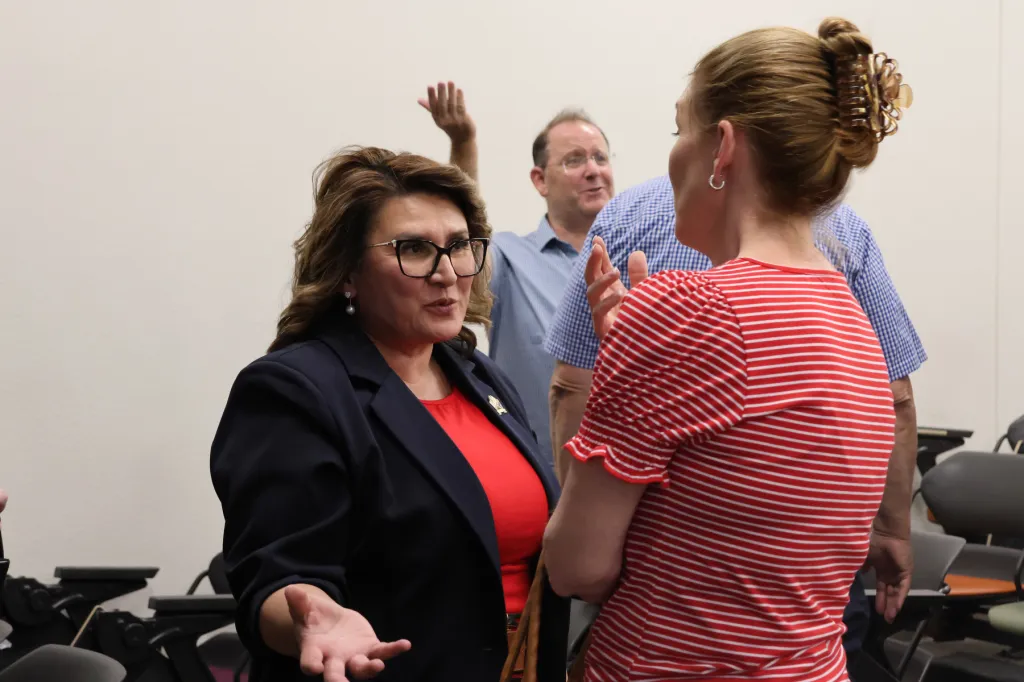 Congressional candidate JoAnna Mendoza has leaned into her working class background as she runs for a seat in the U.S. House to represent Arizona’s 6th congressional district. (Courtesy JoAnna Mendoza campaign)
 Politicians who come from working class backgrounds, like Minnesota Lt. Gov. Peggy Flanagan (center) and Minnesota state Sen. Omar Fateh (right), are resonating with voters during a particularly challenging economic period. (Stephen Maturen/Getty Images)
The President Invited Iran to Bomb My Home