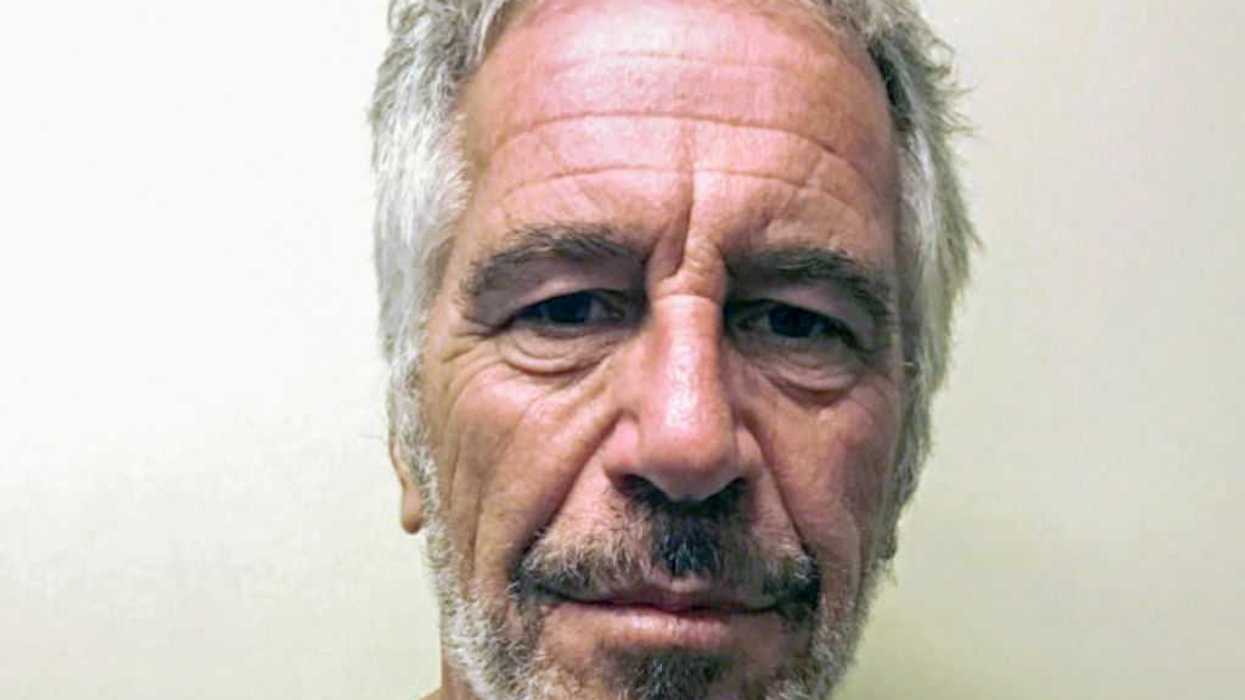




A story like Jeffrey Epstein’s is easy to treat as an anomaly—one ambitious man, one grotesque circle, one horrific chapter of American life that many would rather seal shut and forget. But I keep coming back to a harder question underneath it: do we actually believe in equal accountability, or only in accountability for the people we can easily punish?
This isn’t a left-right question. It’s a legitimacy question. A democracy can’t function if power purchases are exempted and proximity is treated as guilt. The details change depending on the arena—policing, corruption, finance, exploitation—but a familiar pattern repeats: our institutions tend to prosecute what is simple, visible, and winnable, and struggle to reach what is complex, insulated, and costly.
Which brings me back to a fact that still lands with a thud: only one woman is in prison for a global sex trafficking scandal.
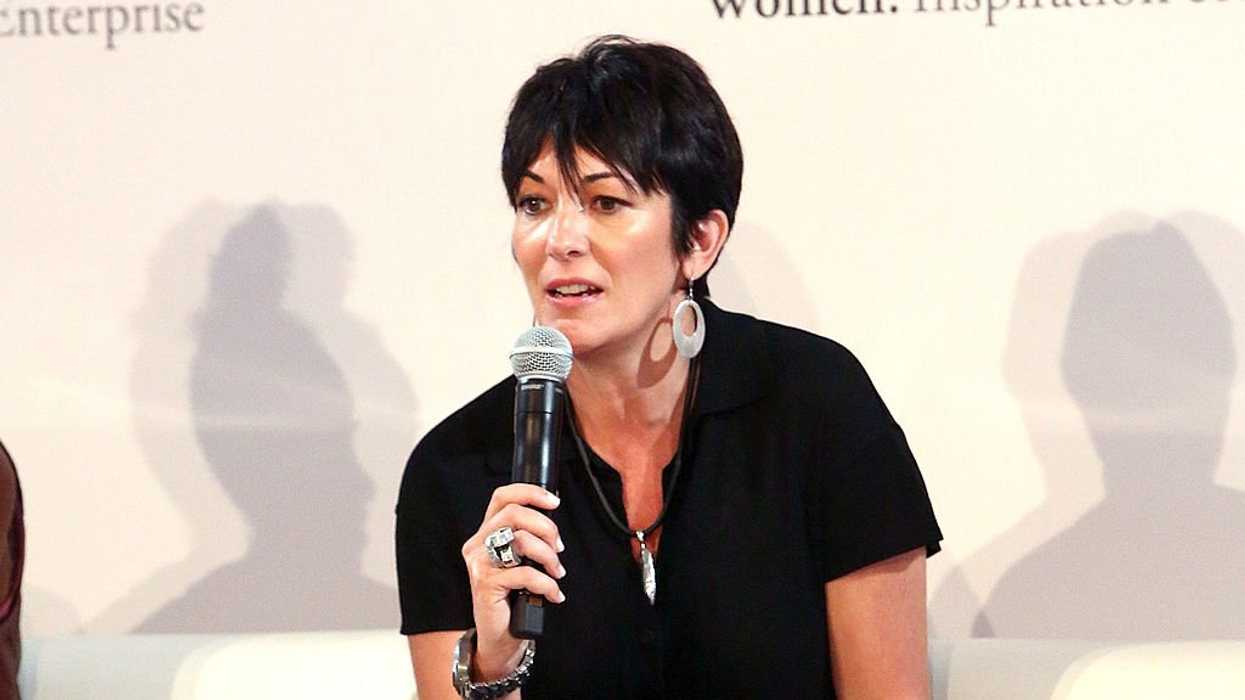
That sentence carries particular weight in the Epstein story—an ecosystem of wealth, access, and exploitation spanning years and crossing borders. Whatever you believe about who knew what, the most visible conviction in that orbit belongs to Ghislaine Maxwell. And it leaves me with a question that won’t let go: is our justice system built to punish the person who can be prosecuted, not the powerful person?
I don’t mean this as a conspiracy. I mean it as mechanics. As incentives. As what’s easiest to prove in court, and what’s hardest.
When crimes happen inside elite networks, the story is rarely a clean “bad guy” with a single set of victims and a neat timeline. It’s a web: intermediaries, gatekeepers, fixers, assistants who keep the machine running. The justice system—especially prosecutors—has limited time, limited staff, and a duty to bring cases that can be proven beyond a reasonable doubt. So when a case is sprawling, ugly, and politically radioactive, the system often moves toward the person it can most clearly see.
The “prosecutable person” is usually the one closest to the victims and logistics. They’re the ones whose actions are most clear to a jury: recruiting, arranging, transporting, communicating, and managing access. Those actions can be profoundly harmful and fully criminal. But they also leave footprints. They can be reconstructed with records, patterns, testimony, and a timeline that holds up under cross-examination. They fit the courtroom’s appetite for a story that can be shown step by step.
The powerful beneficiaries of the system often sit farther back. Their participation may be real, but it is buffered by layers of insulation. They can route through intermediaries. They can avoid direct communication. They can keep payments indirect, meetings private, and accountability diffuse. Even when the social reality is widely suspected, the legal reality requires something narrower: proof beyond a reasonable doubt, tied to specific acts, supported by evidence that survives a defense team built to create doubt.
The higher you go, the more the fog thickens—not because the law can’t reach it in theory, but because proving it in practice is brutal.
And when the harm is sexual exploitation, that fog is reinforced by forces we rarely name directly. Victims are often pushed toward silence through fear, shame, and the expectation they won’t be believed. In the Epstein case, add death threats. Even when they are courageous enough to speak, the defense playbook is predictable: attack memory, motives, credibility. Time becomes an accomplice. Evidence disappears. Witnesses move, recant, or simply cannot keep reliving what happened to them. Statutes of limitations can become trapdoors. The case grows riskier to bring, and the risk is not abstract—it is public, professional, and political.
This is where the system’s incentives quietly shape outcomes. Prosecutors tend to choose cases they can win. That’s not always cowardice; sometimes it’s responsibility. A failed prosecution can harm victims twice—first by what they endured, then by what it costs them to testify with no outcome. So the system often takes the winnable case. It takes the case that can be proven. It takes the prosecutable person.
Here’s the pivot I can’t ignore: this dynamic isn’t unique to one scandal. It’s a recurring feature of how American justice functions under inequality. When power concentrates, accountability often slides downhill. The system becomes excellent at punishing proximity and clumsy at confronting status. Over time, that doesn’t just fail victims—it trains the rest of us to lower our expectations of fairness.
And now we arrive at the part that feels difficult to say out loud without being accused of “making it about gender.” But gender is already in the room. In many exploitation systems—especially those built around men’s demand—women are often positioned in roles that touch the victims directly. Recruiter. Handler. Trusted bridge. The person who makes an introduction feel safe. Those roles can be empowered or coerced, chosen or pressured, or a mix of both. But whatever the origin story, they share a common feature: proximity. Proximity creates evidence. Evidence creates convictions.
Meanwhile, men with money and status who benefit from the system can remain “theoretically reachable” and practically elusive. They don’t need to be saints to avoid accountability. They only need distance—enough insulation that the courtroom story becomes too complex, too uncertain, too expensive, or too risky to pursue.
I’m not claiming that no powerful men ever go to prison. They do, sometimes. But there is a pattern worth naming: our system punishes what it can prove, not necessarily what caused the most harm. Which means the question isn’t only “Who is guilty?” The deeper question is: what kinds of guilt does our system know how to hold accountable?
If we want something closer to justice, we have to design for the hard cases. That means resourcing investigations that follow networks rather than stopping at the most visible node. It means protecting witnesses so the truth can be told without destroying the person telling it. It means reducing the off-ramps that divert accountability into private settlements and reputational containment. And it means having the courage to pursue the demand side, not only the supply side—even when the demand side comes with names that make institutions and corporations flinch.
Because when the system punishes the most prosecutable person in the room and calls it closure, the machine survives. It learns. It adapts. And the next version gets even better at hiding the people at the top.
What we refuse to prosecute becomes an ongoing profitable business model with no accountability to anyone.
Debilyn Molineaux is a storyteller, collaborator & connector. For 20 years, she led cross-partisan organizations. She currently holds several roles, including serving as a catalyst for JEDIFutures.org and as the podcast host of Terrified Nation. She previously co-founded BridgeAlliance, Living Room Conversations, and the National Week of Conversation. You can learn more about her work on LinkedIn.