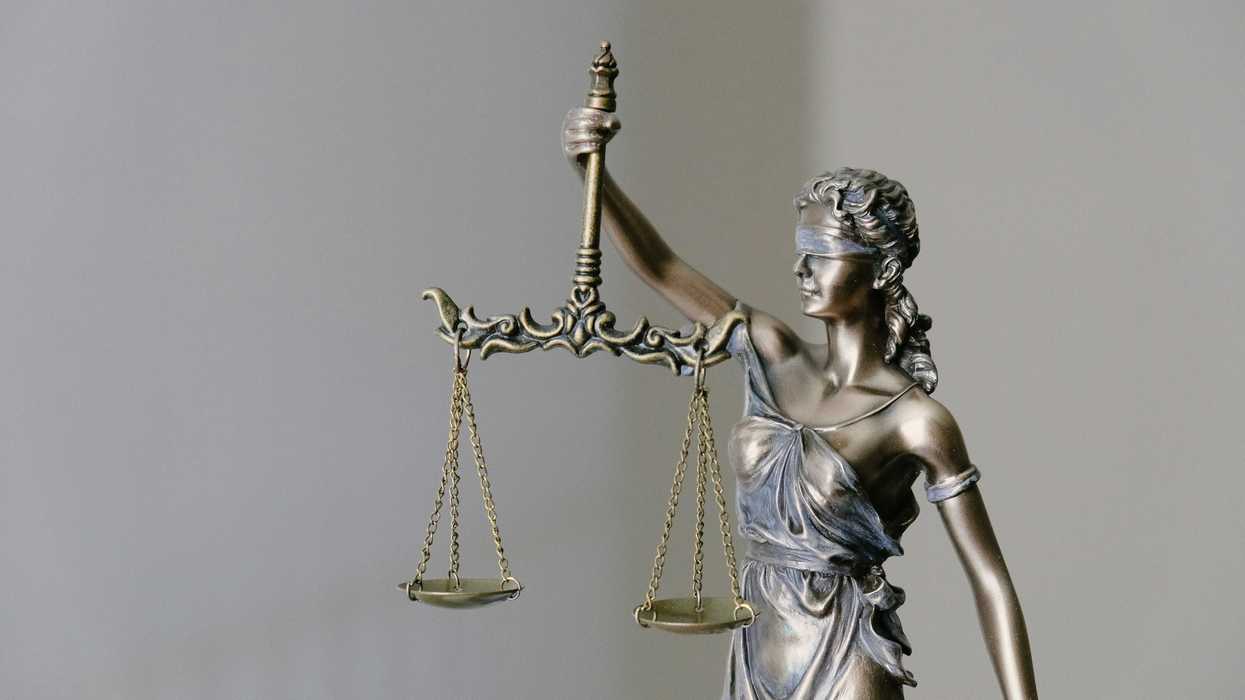





On Tuesday, Bill of Rights Day, Keep Our Republic (KOR), a nonpartisan civic education organization committed to preserving American democracy, announces the launch of the Alliance of Former Chief Justices—a nonpartisan initiative committed to educating the public about the role of the judiciary and safeguarding the constitutional balance envisioned by the Founders.
Keep Our Republic’s Alliance of Former Chief Justices will lead a broad public-education effort, working with civic organizations, the media, educational institutions, policymakers, and the legal community to explain how courts function and why they matter. This outreach will highlight the constitutional role of courts, the importance of judicial independence, judges’ duty to apply the law impartially, and how the separation of powers protects Americans’ fundamental freedoms.
“Trust in our institutions is declining, and that is especially dangerous for the judiciary, which depends on public confidence to ensure that its decisions are accepted and obeyed,” said Thomas Phillips, former Chief Justice of the Texas Supreme Court. “It is important for Americans to remember that judges are very different from elected officials: they apply the law, not politics. As former chief justices, we can speak freely about why that distinction matters and why an independent judiciary is essential to our democracy.”
Bill of Rights Day marks the ratification of the first ten amendments—protections that rely on courts capable of applying the law fairly and free from political pressure. The justices note that this day is a fitting moment to launch an effort to reinforce the rule of law and public trust in the judiciary.
“As a lawyer for over 50 years and a former Chief Justice and Justice of the Florida Supreme Court, I am deeply concerned over partisan attacks on judges and attempts to undermine the rule of law,” said Barbara Pariente, former Chief Justice of the Florida Supreme Court.” Our country was founded on the deeply important principle of three equal branches of government and checks and balances. At present, those principles are being undermined in a highly partisan and political way. Sitting judges and justices, both in the state and federal courts, cannot speak out for themselves. It is important that those of us who are retired justices and chief justices use our voices to speak out for them.”
Keep Our Republic’s Alliance of Former Chief Justices will lead a broad public-education effort, working with civic organizations, the media, educational institutions, policymakers, and the legal community to explain how courts function and why they matter. This outreach will highlight the constitutional role of courts, the importance of judicial independence, judges’ duty to apply the law impartially, and how the separation of powers protects Americans’ fundamental freedoms.
“I am joining this educational effort because we are at a moment when the principles of our democracy and the rule of law face stresses unlike any I have seen in my lifetime,” said Dan Wathen, former Chief Justice of the Maine Supreme Court. “It is critically important that everyone understands what is at stake in safeguarding our constitutional system built on the separation of powers, an independent judiciary, and equal justice under law."
The launch comes at a time when judges across the nation face heightened political pressure and public attacks aimed at influencing outcomes or casting the judiciary as partisan. The justices caution that while debate over decisions is healthy civic engagement, portraying judges as “politicians in robes” undermines equal justice and weakens the constitutional safeguards that protect all Americans.
“We are facing unprecedented challenges to the rule of law. Former state chief justices have a unique perspective on the critical role of the judiciary in our democracy,” said Mark E. Recktenwald, former Chief Justice of the Hawaii Supreme Court. “We each led court systems that, in total, deliver equal justice to millions of people each year. Those courts make decisions based on the law and facts of each case, regardless of the power or popularity of the parties. We need to explain to the public that our judicial system has integrity and is worthy of the trust and confidence of the American people. That’s why I strongly support the Alliance of Former Chief Justices.”
In their founding statement, the justices underscore that the U.S. and state constitutions divide governmental power among three branches to prevent the concentration of authority—what James Madison called “the very definition of tyranny.” Judges, they emphasize, differ from elected officials because they serve only one constituent: the rule of law.
“I have been a public servant most of my professional life, and the maintenance of democratic institutions is a critical part of my mission. Public servants, by raised voice and action, must help the public reaffirm their trust in their government. To that end, each branch of government must be accountable to the people,” said Conrad Mallett, former Chief Justice of the Michigan Supreme Court. “Every day, the judiciary acts as a check on the other two branches, and the public’s awareness that independent jurists—unconnected to the parties and focused solely on answering the questions presented—is essential to maintaining trust in their government.”
This article was written in part from a press release by KOR.