
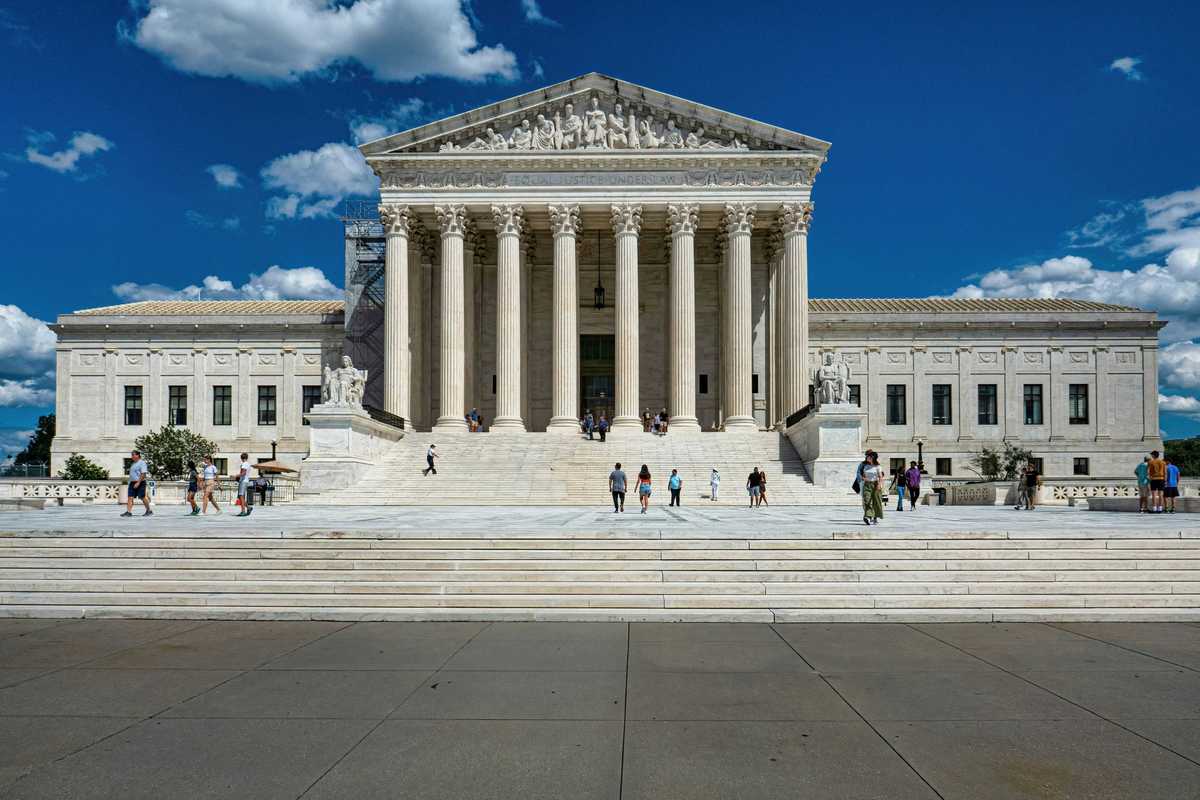

For most Americans, the phrase “rule of law” sounds like a civic virtue—important, but abstract. Yet in a functioning democracy, the rule of law is not a slogan. It is an operating system. It determines whether power is constrained by rules that apply to everyone, or whether rules become tools used selectively by those who hold power.
The rule of law is tested not in calm seasons but in storms—when leaders face incentives to bend institutions toward short-term advantage. In those moments, the central question is rarely “Is the Constitution still there?” It is: Are our institutions still willing and able to enforce it consistently, even when enforcement is unpopular?
Pressure works by changing incentives
Political pressure doesn’t always look like a dramatic constitutional crisis. More often, it works like corrosion. It changes incentives—quietly, persistently—until what once seemed unthinkable becomes routine.
Consider how pressure can be applied across the system:
- To courts: through public attacks that delegitimize judges, threats to ignore rulings, or strategic efforts to reframe judicial independence as partisan obstruction.
- To prosecutors and enforcement agencies: through signals—explicit or implicit—about which cases are worth pursuing and which are not, and against whom the machinery of enforcement should turn.
- To independent or semi-independent institutions: through loyalty tests, personnel changes, funding threats, or public campaigns designed to make technocratic neutrality appear illegitimate.
- To the public: through a steady narrative that equates lawful constraint with weakness and treats limits on power as obstacles rather than safeguards.
The result is not necessarily a dictatorship. It can be something more American and more subtle: a democracy where power still changes hands, elections still occur, courts still rule—but the practical meaning of “equal justice” becomes negotiable.
What precedent is really for
Much of today’s anxiety about the legal system revolves around precedent. When courts reverse or reinterpret established doctrine, critics worry that the law is being reshaped to suit politics.
But precedent is not simply about stability for its own sake. At its best, precedent functions as a promise: the rules will not change simply because the political winds shift. It reduces the chance that citizens and businesses must live at the mercy of whoever holds power in a particular moment.
When precedent becomes fragile, a few things follow:
- Uncertainty grows. People cannot plan their lives around the law if the law behaves like a pendulum.
- Compliance becomes conditional. If the law is seen as political, citizens begin to treat it as optional—something to be obeyed when convenient.
- The court itself becomes politicized. Not necessarily in intent, but in perception—which becomes reality when trust collapses.
Reasonable people can disagree about when a precedent should be revisited. But a society cannot function when every major rule feels temporary. A democracy needs a legal foundation that is firm enough to support disagreement.
The “two systems” problem
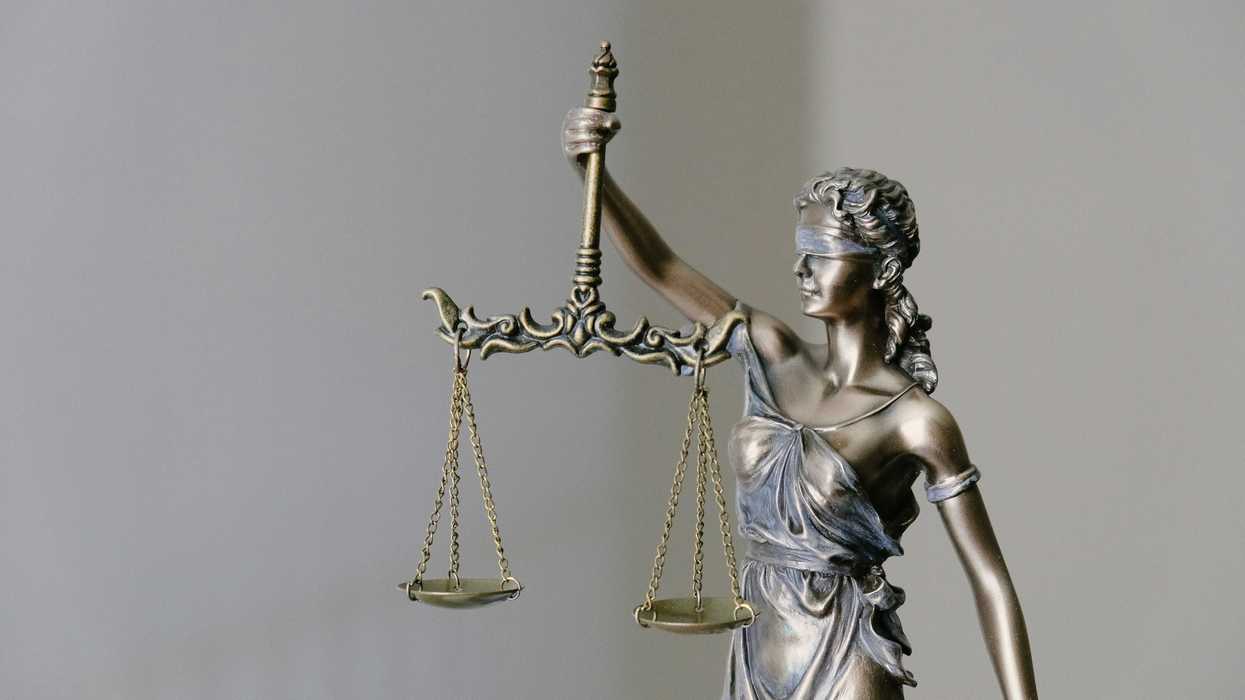
Nothing undermines the rule of law faster than the widespread belief that there are two systems of justice—one for the powerful and connected, another for everyone else. When people suspect unequal enforcement, the issue isn’t just fairness; it’s legitimacy.
Legitimacy is the quiet asset that allows institutions to operate without constant coercion. Courts have no armies. They rely on acceptance. When legitimacy erodes, compliance becomes a partisan decision rather than a civic habit.
This is why selective enforcement is so dangerous. Even if justified in a particular case, the broader pattern teaches a lesson: law is politics by other means. And once enough citizens have absorbed that lesson, the system begins to unravel from within.
Civic education is a national security issue
One reason political pressure works is that the public often lacks clear mental models for what institutions are supposed to do. If people don’t understand the distinct roles of courts, legislatures, agencies, and independent bodies, it becomes easier to portray constraint as sabotage.
Civic education, then, is not nostalgia for high school government class. It is an immune system. It helps citizens recognize when normal institutional friction is being mischaracterized as illegitimate resistance. It equips voters to demand fidelity to process—even when they dislike a particular outcome.
Importantly, civic education is not partisan. A citizen who understands the Constitution does not always agree with its current interpretation. But that citizen is more likely to recognize that how we decide is as important as what we decide.
What can citizens do now?
The healthiest democratic response to political pressure is not panic; it is practice. Citizens can:
- Insist on consistent standards. If a rule applies to your opponents, it must apply to your allies.
- Reward leaders who respect process. Even when the process slows the outcome you want.
- Support independent journalism and legal literacy. The public cannot defend what it cannot see or understand.
- Refuse the rhetoric of inevitability. The rule of law fails only when enough people decide it has already failed.
The question for the coming years is not whether we will have disagreement—we will. The question is whether our disagreement will remain bounded by shared rules, or whether rules themselves will become the battlefield.
Event note (for readers who want to go deeper): I’ll be hosting a free webinar on The Unity Forum Wednesday, March 4, 2026 at 1:00 PM ET with Professor Stephen Wermiel (American University Washington College of Law; former Wall Street Journal Supreme Court correspondent; biographer of Justice William J. Brennan, Jr.) to discuss The Constitution and Today’s Legal Challenges.
Register to attend or receive a link to the recording: https://us06web.zoom.us/webinar/register/WN_E8Ad4as9SYya1zQ25gTUmw
Chris Malone is the host of The Unity Forum.











The President Invited Iran to Bomb My Home