
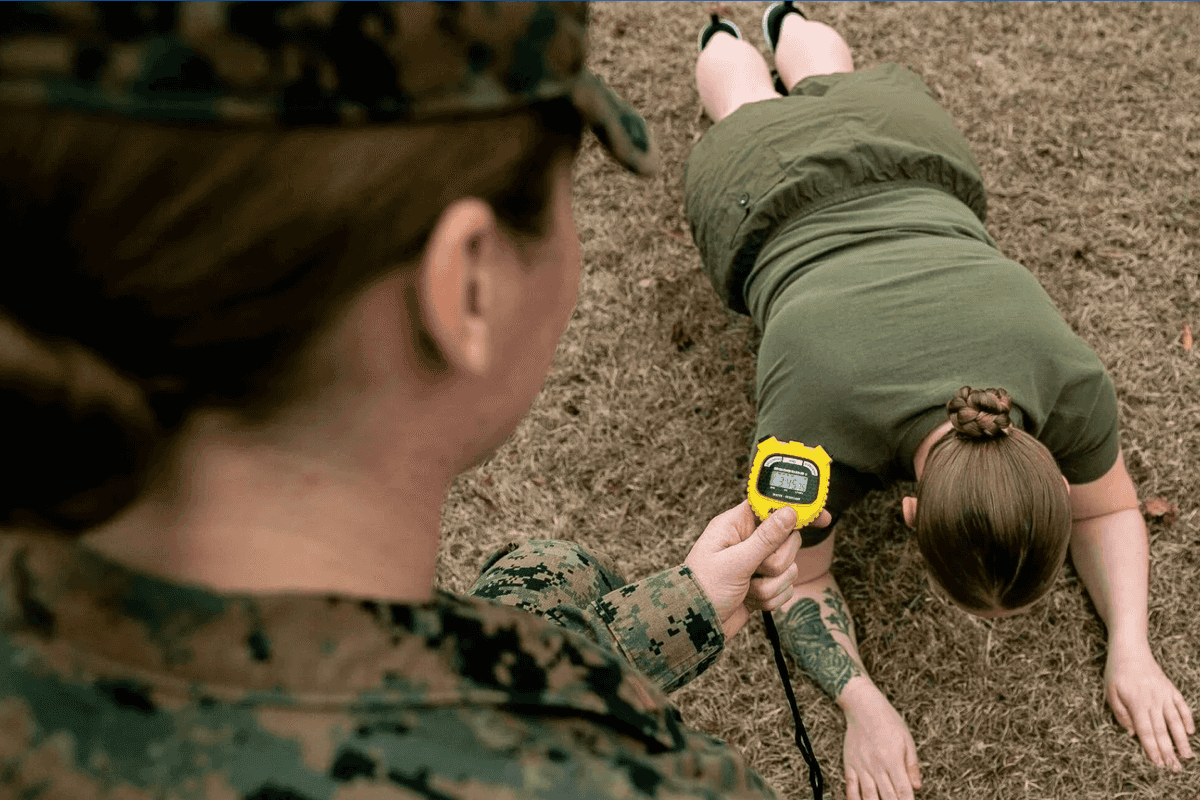



When the Trump administration announced the Patriot Games, many people laughed. Selecting two children per state for a nationally televised sports competition looked too much like Suzanne Collins’ Hunger Games to take seriously. But that instinct, to laugh rather than look closer, is one the Capitol is counting on. It has always been easier to normalize violence when it arrives dressed as entertainment or patriotism.
Here’s what I mean: The Hunger Games starts with the reaping, the moment when a Capitol official selects two children, one boy and one girl, to fight to the death against tributes from every other district. The games were created as an annual reminder of a failed rebellion, to remind the districts that dissent has consequences. At first, many Capitol residents saw the games as a just punishment. But sentiments shifted as the spectacle grew—when citizens could bet on winners, when a death march transformed into a beauty pageant, when murder became a pathway to celebrity.
Tiny shifts made over time resulted in a complacent citizenry, subtly trained to see cruelty as patriotism.
And while I don’t believe Trump is preparing the nation to watch children kill each other, I can’t help but notice those same mechanisms of shock, awe, spectacle, and eventual numbness being used on us every single day.
Every day we are barraged by absurdity. We’ve waited for social media posts to tell us if we’re at war. We’ve laughed when our Secretary of Health did push-ups in a sauna while drinking raw milk with a former rock star. We’ve chuckled at the incompetence of a made-up task force, DOGE. We’ve guffawed every time the president fell asleep on camera.
But between the jokes, we saw glimpses of violence. We saw two U.S. citizens murdered on the street, and we marched for them, at least until the cameras disappeared. Because police brutality is our new normal. We saw video evidence of U.S. bombings of Iran played to a popular culture mixtape, and we wondered more about copyright infringement and music artists' responses than the lives lost in an unnecessary war, because the culture of virality has normalized violence, as long as it arrives in the right format, set to the right beat.
Soon, we begin to laugh at it all, the violent and the absurd, out of discomfort, out of incredulity, as a trauma response. We click, share, and repeat until we learn to scroll past brutality without flinching. We hold our anger inside because outrage over absurdity feels…well…absurd. And in this holding, we participate in a slow conditioning where we can no longer tell where entertainment ends and violence begins.
Ours is a society that has practiced looking away from the suffering of children for a long time. So, the psychological and emotional destruction of children has already become background noise. We crossed that line of complacency a while ago.
We crossed it when school shootings were met with thoughts and prayers instead of policy. We crossed it when the pleas of Latinx children kidnapped by ICE went unheard, save for the few viral moments the news cycle deemed worthy. We crossed it in the fleeting outcry against legislation lifting the ban on conversion therapy for minors, protecting the speech of those causing harm while erasing the needs of the children in the room.
Many of our children are already participants in the Hunger Games. Their suffering is already treated as content instead of a crisis. The one thing we’re missing is a way to bet, to gamify their pain.
As a literacy researcher who studies dystopian fiction, I’ve spent my career asking: what if this story is warning us about something real? I take that question seriously because these stories exist to help us see the world as it is and as it could become.
What if a country that imprisons adults for existing on its soil turns its attention to the mass jailing of children? What if a country that classifies certain people as nonexistent due to their gender identity or relationship preferences decides children must conform or be erased? What if a country that’s made it possible to bet on everything from basketball games to military strikes turns to gambling on the lives of young people?
To be sure, the Patriot Games and the Hunger Games are distinct, and we have not slid completely into dystopia. But the mechanisms—spectacle, desensitization, the disposal of children dressed as patriotism—are the same, and mechanisms do not wait for permission to accelerate.
In The Hunger Games, Katniss accepted her role as a symbol of rebellion even when naming it cost her. Cinna fought the Capitol from within, using art as defiance for the people he loved. Gale chose to fight in whatever ways he could, and he never normalized what others had learned to accept.
We can do all three. We can name what we see without waiting until we’re certain. We can use our art, curricula, policies, and stories as acts of resistance. And we can refuse to scroll past without flinching.
Because that’s how we resist the pull toward dystopia. We learn from the mistakes of other worlds in hopes that our own will survive.
Stephanie Toliver is a Public Voices Fellow and a member of the OpEd Alumni Project sponsored by the University of Illinois.