

In 2018, WAMU 88.5 – Washington, D.C.’s NPR member station – saved beloved local publication DCist from certain death. WAMU’s funding and support kept DCist alive and enabled it to continue serving the community with the thoughtful journalism readers had come to love. Six years later, however, WAMU announced it would shut down DCist in favor of prioritizing audio-first content. DCist then joined the thousands of newspapers and news sites that have disappeared across the United States in the last 20 years.
Frustrated by decisions to axe newsrooms being made by suits in high offices, six former workers of DCist and WAMU decided to build their own, employee-run newsroom — and thus, The 51st was born.
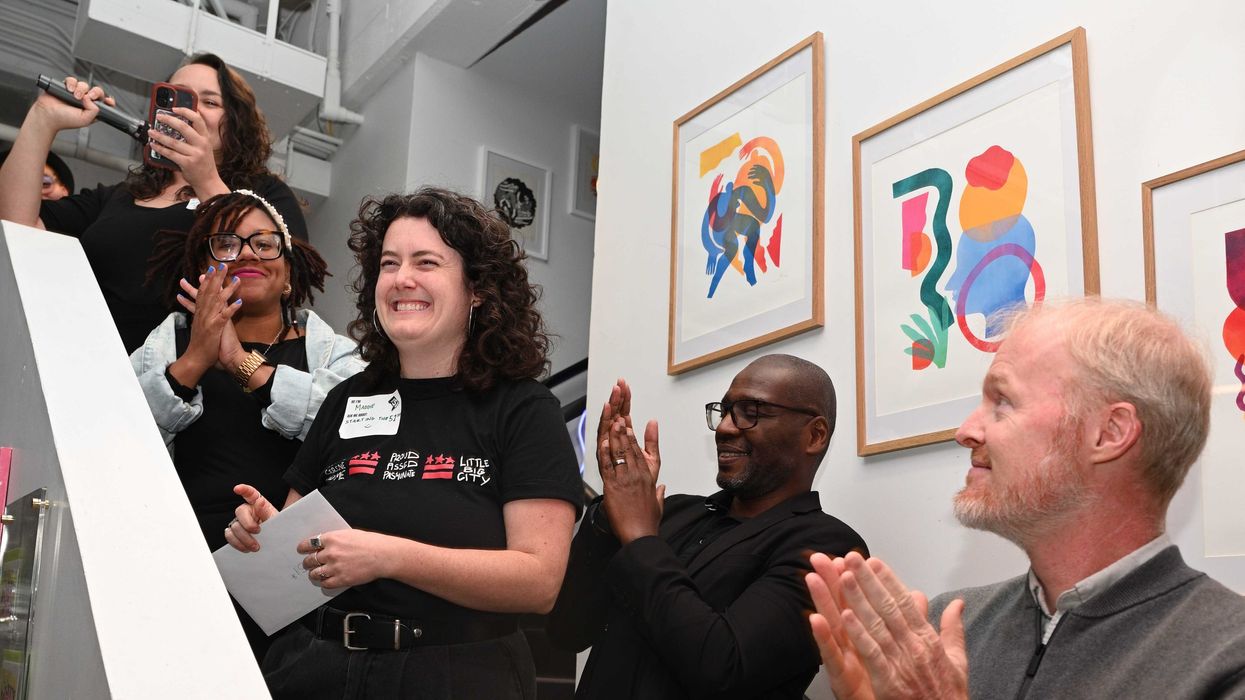
To launch The 51st, Abigail Higgins, president and senior editor, and her team asked the public for help raising enough money to get off the ground — and they got it. Within one month, the crew raised more than their $250,000 goal (thanks in part to a large donation in the 11th hour) and began publishing in October 2024. One year later, its editors are optimistic that they have built a sustainable publication, thanks in large part to the D.C. community.
In the year since its inception, The 51st has won the hearts of D.C. readers both online and offline. The outlet has over 3,000 paid subscribers (and about 4 times as many free subscribers) and just over 68,000 followers across X, Instagram, and BlueSky. Higgins said she owes this in part to DCist's reputation and reporting, which they relied on for some marketing, as well as the city’s residents' reputation for being very active in civic institutions.
“D.C. is a city of people who really care about things and who are really engaged and who are really paying attention to the news,” Higgins said. “Their jobs are often directly impacted by politics and by the news. So I think it's a really incredible city to try and launch something like this in.”
The team at The 51st also decided to see if they could bring on another local icon: beloved former WAMU reporter Martin Austermuhle. With limited funds, The 51st launched another crowdfunding campaign to raise enough money to hire Austermuhle full-time and maintain a salary for the paper’s Executive Editor, Christina Sturdivant Sani. In just over a month, supporters raised over $127,000 — more than enough to cover the costs for both.
Most of how this up-and-coming outlet has managed to stay in publication as a new venture during an uncertain era for news, however, is not simply by producing good journalism (which they do) and looking back to the legacy of DCist; The 51st has leaned on the community it serves for feedback, input and support since its inception, creating and maintaining initiatives to make D.C. residents stakeholders in their local paper.
“Journalism can sometimes be unidirectional, where journalists are doing more of the work, determining or deciding what makes a story or how a story should be told,” Higgins said. “We've always really wanted to make sure that our community is playing a direct role in answering those questions and sharing that story.”
Before they began publishing, The 51st’s founders showed up at local farmers’ markets and built what Higgins described as a “middle school science fair energy” setup—a tri-fold poster with a question for visitors about how the outlet could shape its coverage to serve them.
While some of the answers were not news to Higgins, she said she was surprised that so few people asked about crime, given the damage irresponsible coverage of the issue has caused in the past.
“I was a little worried that we would get a lot of feedback, that what people were worried about was crime,” Higgins said. “Local news has often [spurred] crime panics; there are plenty of examples of racist crime coverage.”
Instead, she said respondents wanted to hear more about the root causes of crime or similar topics such as community safety, the housing crisis, and opportunities to keep youth in the city occupied. Higgins said the staff appreciated the ability to hear these concerns in person because it allowed them to really connect with the people they would be writing for.
“We need much more complicated measurements for what kind of journalism resonates with people, and clicks only tell part of that story,” she said. “These direct conversations we're having with readers are such an important way to think in a much more nuanced way about what kind of coverage people want to see.”
One program by The 51st that aims to continue those conversations is Community Connectors, an initiative that brings D.C. residents onto its staff as ambassadors for crucial and underrepresented reader groups in the district, serving as embedded liaisons between the editors and the people. These Connectors are not trained journalists, though they do learn journalistic practice as they write pieces for The 51st about their assigned communities.
Dwayne Lawson-Brown is The 51st’s Community Connector assigned to D.C. Natives, residents who were born and raised in the district. Raised in the city’s Southeastern quadrant, Lawson-Brown joined the 51st four months ago when they hosted an edition of “Ask A D.C. Native Live,” a trivia event based on the running column by Sturdivant Sani, and was enamoured by the outlet’s mission.
“I fell in love with the idea that DC folks are covering DC news and having things be hyperlocal and very intentional in being connected to what is happening with and for DC,” they said. “So I asked, ‘How could I be involved?’”
Lawson-Brown said they feel that their status as a member of the community who has joined this team, rather than a journalist from outside the community, has helped them gain the trust of the community and potential interviewees.
“We're specifically meant to be friendly folks, in some cases popular opinion leaders, people that are already trusted in the community,” they said, “ and that opens the door. We get to be a bridge between the people living their lives and the news outlet covering and sharing the lives that are being lived.”
Higgins said part of the reason The 51st launched its Community Connectors program was to combat the rising distrust of journalism in the United States; the latest Gallup report found that only 28% of respondents said they trust the media “a fair amount” or “a great deal.” While local news is generally more trusted than national media, Higgins emphasized that they are not exempt from maintaining a good reputation in their community.
“Community Connectors are one way that we really want to acknowledge that local journalism is about relationships,” Higgins said, “and relationships take a lot to build, and you can't just expect because we've launched a local news organization that everybody is going to trust and support that local news organization.”
Higgins said these efforts have kept subscribers coming to The 51st, but those who give money are not paying to read; The 51st has no paywall. This has proven to her that the community is here to support The 51st as long as it keeps doing what it does.
“The people who are subscribing to us are subscribing to us just because they believe in what we're doing, and they believe that local news matters, and they believe in it enough to use their dollars in this incredibly difficult economy to support local journalism,” Higgins said. “We've really felt from day one that The 51st wasn't just about those of us who started it, but was really about the community in D.C. that showed up to allow us to do this.”
Unfortunately for the team at The 51st, building a newsroom was not the only challenge they faced in the outlet’s infancy. On the same day, they announced that their second fundraising goal had been met. The 51st began covering the Trump administration’s takeover of their city. Higgins said doing double duty — building a newsroom and covering unprecedented times — has been an immensely difficult task; she also said she has no regrets.
“Trying to cover this administration's impacts on this city is like drinking out of a fire hose,” she said. “But the necessity of having independent worker-run newsrooms that produce high-quality journalism is more vital than ever … it also means that we're more committed than ever.”
Lawson-Brown said they have learned a valuable lesson: the readers want to drive the news. And in this challenging time, they said, it is crucial for programs like theirs to exist.
“The biggest thing is that we are in this together,” they said. “The paper is in its infancy, at a time when free speech and democracy are being actively attacked …We're at a time when when media is being bought and so and I'm learning that the community has a vested interest in being part of the conversation and hopefully controlling the conversation around what is happening.”
Lawson-Brown also shared that they have seen other communities ask The 51st to teach them what they are doing to build similar initiatives of their own, which has made them even more proud to be part of the team.
“I felt a sense of pride that these folks are saying that they want to do what we're doing,” they said. “It shows that [the work] is being noticed. It shows that it does matter. And I think that's the most rewarding thing, above all, in being involved with The 51st.”
Similarly, Higgins’ message to those considering taking on the challenge of building a local outlet is that they absolutely should, no matter what it takes.
“Starting something like this is really overwhelming and is really daunting, but I think it's one of the most important things that we can be doing right now,” she said. “For folks who are feeling depressed about the state of the world or scared about the future of this country, I really think getting involved in or supporting or being a part of local news and community information-gathering more broadly is a really important weapon that we have in this fight.”
As for The 51st itself, neither Higgins nor Lawson-Brown says it’s going anywhere anytime soon. The support (financially and morally) from the community has made it possible for the outlet to continue publishing for a while, a thought they have cherished amid all the chaos in D.C. at the moment.
“The fact that we are in this position, a year in of publishing, is amazing,” Higgins said. “We're all still a little giddy, and we're all still delighted and a little overwhelmed that we're in the position for this to be a long-term prospect.”
Jennifer Nehrer is a senior at USC Annenberg.
The Fulcrum is committed to nurturing the next generation of journalists. To learn about the many NextGen initiatives we are leading, click HERE.
Editor's Note: A previous version of this story stated that the Community Connector program is new, although their first community connector started a few months after the organization launched.